London Daily

Focus on the big picture.
Wednesday, May 13, 2026

Microsoft's passwordless plans lets users switch to app-based login

Microsoft's passwordless plans lets users switch to app-based login

Microsoft has announced users can now delete all passwords from their accounts and instead login using an authenticator app or other solution.

The technology giant made passwordless accounts available for business users of its products in March.

And that system is now being made available to all Microsoft or Windows users.

It said "nearly 100% of our employees" were already using the new, more secure system for their corporate accounts.
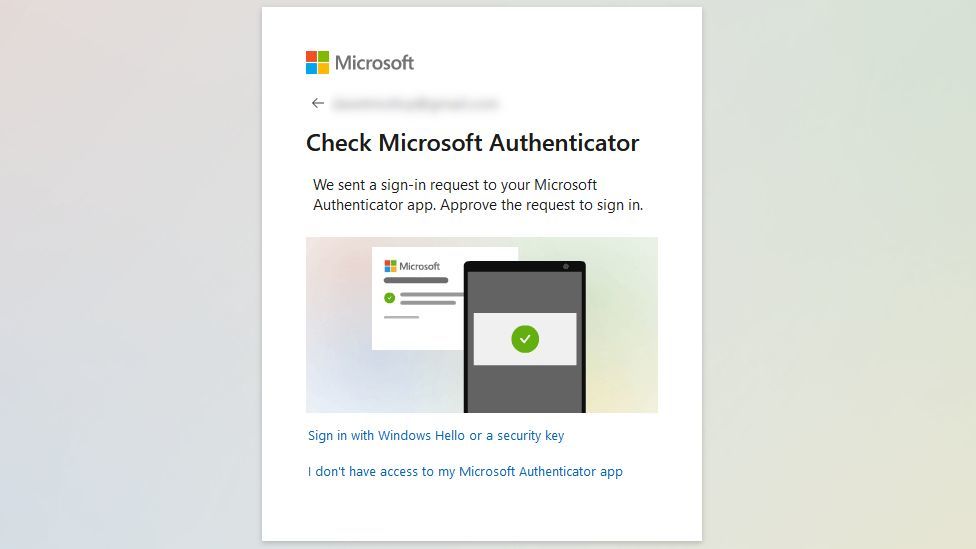

If passwordless login is enabled, users re-logging in to a Microsoft account will be asked to give their fingerprint, or other secure unlock, on their mobile phone.

And this is far more secure than using passwords, which can be guessed or stolen, according to Microsoft.

"Only you can provide fingerprint authentication or provide the right response on your mobile at the right time," it said.

Windows users will still be able to use quick-login features such as a Pin code, though.

Some rare exceptions will still need passwords, such as Office 2010, Xbox 360 consoles, and Windows 8.1 or earlier machines.

And if access to the authenticator app is lost - for example, if the phone it is installed on is lost or stolen or a user forgets when upgrading - backup options can be used, including:

*  Windows Hello facial recognition, which requires a compatible laptop or special camera
*  a physical security key, which must be used on the device logging in
*  Short Message Service (SMS) or email codes

But SMS and email are two of the most common channels for cyber-criminals targeting specific individuals

And Microsoft says security-conscious users who have two-factor authentication set up will need to have access to two different recovery methods.
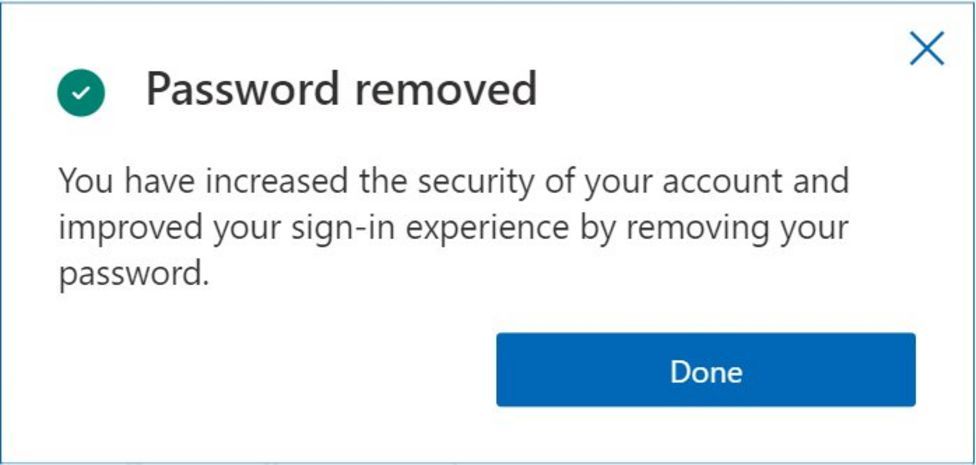
Microsoft's messaging tells customers no passwords are more secure

Prof Alan Woodward, part of a research team investigating passwordless authentication, at the University of Surrey, called it "quite a bold step from Microsoft".

"This isn't just logging into PCs, it's logging into online services as well" - including important ones such as cloud storage, he said.

Microsoft laid out its reasons for the new system in a series of blog posts.

Security vice-president Vasu Jakkal wrote: "Passwords are incredibly inconvenient to create, remember, and manage across all the accounts in our lives.

"We are expected to create complex and unique passwords, remember them, and change them frequently - but nobody likes doing that."

The separate authenticator app - not pictured in this stock photo - is claimed to be more secure than a password

Instead, people tended to create insecure passwords that technically cleared the bar for using symbols, numbers or case sensitivity - but in order to remember them, used a repeated formula or the same password on multiple websites.

And that led to hackers guessing them or revealing them in a data breach and reusing them.

"Hackers don't break in, they log in," the blog post read.

'Pummelled home'


The new passwordless feature greets users with a box saying: "A passwordless account reduces the risk of phishing and password attacks."

And once the feature is set up, a confirmation tells users: "You have increased the security of your account and improved your sign-in experience by removing your password".

Microsoft's claims about poor password use were largely true, Prof Woodward said.

"The message has been pummelled home about what good password hygiene looks like - but it's easier said than done," he said.

Passwords were a decades-old concept "and maybe the time is now right to start looking for something different".

But there were no currently agreed standards.

"There are a number of different ways this could be done - and it would be good if everybody moved on, really, and tried to find a way of doing this," Prof Woodward said.

Newsletter

Related Articles

0:00
0:00
Close
The Great Western Exit: Why Best Citizens Are Fleeing the Rich World [PODCAST]
The New Robber Barons of Intelligence: Are AI Bosses More Powerful Than Rockefeller?
The End of the Old Order [Podcast]
Britain’s Democracy Is Now a Costume
The AI Gold Rush Is Coming for America’s Last Open Spaces [Podcast]
The Pentagon’s AI Squeeze: Eight Tech Giants Get In, Anthropic Gets Shut Out [Podcast]
The War Map: Professor Jiang’s Dark Theory of Iran, Trump, China, Russia, Israel, and the Coming Global Shock [Podcast]
Labour Is No Longer a National Party [Podcast]
AI Isn’t Stealing Your Job. It’s Dismantling It Piece by Piece.
Lawyers vs Engineers: Why China Builds While America Litigates [Podcast]
Churchill’s Glass: The Drunk, the Doctor, and the Myth Britain Refuses to Sober Up From
Apple issues an unusual warning: this is how your iPhone can be hacked without you doing anything
Kennedy’s Quiet War on Antidepressants Sparks Alarm Across America’s Medical Establishment
The Met Gala Meets the Age of Billionaire Backlash
Russian Oligarch’s Superyacht Crosses Hormuz via Iran-Controlled Route
Gunfire Disrupts White House Correspondents’ Dinner as Trump Is Evacuated
A Leak, a King, and a Fracturing Alliance
Inside the Gates Foundation Turmoil: Layoffs, Scrutiny, and the Cost of Reputational Risk
UK Biobank Breach Exposes Health Data of 500,000, Listed for Sale on Chinese Platform
KPMG Cuts Around 10% of US Audit Partners After Failed Exit Push
French Police Probe Suspected Weather-Data Tampering After Unusual Polymarket Bets on Paris Temperatures
CATL Unveils Revolutionary EV Battery Tech: 1000 km Range and 7-Minute Charging Ahead of Beijing Auto Show
Crypto Scammers Capitalize on Maritime Chaos Near the Strait of Hormuz: A Rising Threat to Shipping Companies
Changi Airport: How Singapore Engineered the World’s Most Efficient Travel Experience
Power Dynamics: Apple’s Leadership Shakeup, Geopolitical Risks in the Strait of Hormuz, and Europe's Energy Strategy Amidst Global Challenges
Apple's Leadership Transition: Can New CEO John Ternus Navigate AI Challenges and Geopolitical Pressures?
Italy’s €100K Tax Gambit: Europe’s Soft Power Tax Haven
News Roundup
Microsoft lost 2.5 millions users (French government) to Linux
Privacy Problems in Microsoft Windows OS
News roundup
Péter András Magyar and the Strategic Reset of Hungary
Hungary After the Landslide — A Strategic Reset in Europe
Meghan Markle Plans Exclusive Women-Focused Retreat During Australia Visit
Starmer and Trump Hold Strategic Talks on Securing Strait of Hormuz Amid Rising Tensions
Unofficial Australia Visit by Prince Harry and Meghan Expected to Stir Tensions with Royal Circles
Pipeline Attack Cuts Significant Share of Saudi Arabia’s Oil Export Capacity
UK Stocks Rise on Ceasefire Momentum and Renewed Focus on Diplomacy
UK to Hold Further Strategic Talks on Strait of Hormuz Security
Starmer Voices Frustration as Global Tensions Drive Up UK Energy Costs
UK Students Voice Concern Over Proposal for Automatic Military Draft Registration
Rising Volatility Drives Uncertainty in UK Fuel and Petrol Prices
UK Moves to Deploy ‘Skyhammer’ Anti-Drone System to Strengthen Airspace Defense
New Analysis Explores UK Budget Mechanics in ‘Behind the Blue’ Feature
Man Arrested After Four Die in Channel Crossing Tragedy
UK Tightens Immigration Framework with New Sponsor Rules and Fee Increases
UK Foreign Secretary Highlights Impact of Intensified Strikes in Lebanon
UK Urges Inclusion of Lebanon in US-Iran Ceasefire Framework
UK Stocks Ease as Ceasefire Doubts in Middle East Weigh on Investor Confidence
UK Reassesses Cloud Strategy Amid Criticism Over Limited Support Measures
×