

Meet the Beauty Community That Just Wants You to Finish Your Makeup
When Tara* was in college, makeup was her biggest hobby. She was shopping for it all the time. New makeup arrived in the mail every single day. She’d even factored her makeup spending into her student loan applications. At the height of her collection, she estimated that she had $3,000 to $5,000 worth of makeup.
She shopped so much that sometimes, packages would arrive and sit on her desk for days before she would get to them. That was when she first realized she might have a problem. “That's not great if you're getting so excited about something that you have to buy it within an hour, and then you just, like, let it sit in the package,” Tara says.
She graduated college in 2018, and for the first few months of post-grad life, she had no income. She started to sell some of her makeup, wanting a more practical collection. She had been watching videos about minimalist lifestyles, about different kinds of consumption. And she remembers looking at her Anastasia Beverly Hills Modern Renaissance palette-the first real palette she’d ever bought, “and just being like, I want to try to use that up.”
Two years later, in November 2020, Tara finished her project. She posted the photo of the empty palette on Reddit: the velvet packaging now held 12 empty metal pans. In the process, she’d repurposed certain shades into brow gels, others into cheek products. She decluttered all her other palettes, downsized her collection, and completely changed her relationship to makeup.
Tara is part of a growing community of makeup enthusiasts-on Reddit, on Instagram, on Facebook groups, and Youtube-who are rethinking their approach to makeup and consumption. Makeup panners celebrate used makeup-the more used, the better. They thrill over the first sighting of a crack in the metal pan of an eyeshadow or blush-a “baby pan” (“the best feeling in the world,” Tara says), and document their progress in periodic updates towards a “true pan”-a completely empty product. They photograph skin care or hair care “empties,” and often track their spending through what they’ve used. Instead of celebrating makeup hauls and constant new releases, the panners want to use what they have-and take a more mindful approach to consumerism.
“The makeup industry is so incredibly saturated that we have more makeup brands and more people than ever that we can choose to financially or socially support,” says Glowymino, 24, a panner who focuses on cruelty free and socially-responsible brands. “I have a lot of information in my head about what brands are and are not cruelty free, what brands have fucked over Black influencers, or what brands have, like, lobbied to keep animal testing.” Glowymino is a nursing student who started her panning Instagram in March of 2020. When she began, she picked a somewhat controversial approach: instead of using up products she loved, she decided to focus on the products in her collection that she most disliked.
For her first project pan (as a panner calls the products they’re dedicated to finishing), she picked a ten-year-old Ulta eyeshadow palette, two concealers with formulas she disliked, a cream blush she didn’t reach for, and a mascara with the worst formula she’d ever tried. She wanted those products out of her collection, but couldn’t bear to throw them away and create that waste. Maybe it’s a sunken cost fallacy, Glowymino says-the idea that once you’ve invested your time or money in something, it becomes harder to walk away from even when it’s actually more beneficial to let it go. But she was also thinking about something she heard on Youtube: a reminder that when you buy a new product, that product’s packaging has already been created. Whether you use the product or not, the packaging would stay, perhaps up to 100 years, in a landfill.
The booming $532 billion global beauty industry plays a serious role in creating waste: according to a Euromonitor report sent to Teen Vogue, in 2017, the beauty industry created 76.8 billion plastic units in packaging alone. Even when companies work on more recyclable packaging, the rapid rate of new releases and new products is still contributing to the industry’s waste problem. In just one week in March 2021, a slower year for the beauty industry due to the pandemic, Trendmood, a beauty news and new releases Instagram account, showed off over 30 new releases in makeup, skincare and accessories-including plastic palettes, skin-care containers, and containers for makeup brushes or lipsticks. For Glowymino, it almost felt like she had a social contract to use up the products she’d already spent her money on, the products with their plastics and packaging that had already come into the world.
Panning did change her mind about some of her products: she grew to like the two concealers she’d thought too cakey for her dry skin. “In being forced to use them, I was able to find different application techniques that worked better with the formula,” she says. The mascara with the worst formula she’d ever tried didn't fare as well even when she repurposed it as a brow gel. But still, she committed and finished it. “It was a moment of relief,” she says, ”an absolute moment of euphoria.”
In a way, panning is the perfect completion of the consumer cycle, says Elease, who started her panning account, @pan_de_replay, on Instagram in 2018. When you buy something, you get the instant gratification of the purchase. Then you use a product until you finish, mark it as being empty or panned, and celebrate with others in the community, “because they know that that takes consistency, hard work, and discipline.”
Elease discovered panning through Facebook groups. She’d first joined beauty box communities (beauty boxes like Ipsy or Boxycharm send consumers a surprise array of sample-size products each month), and got into swapping samples. Then she found the panning groups on Facebook, which encouraged members to try makeup projects according to pop culture themes. She started her own panning page on Instagram because she saw very few Black women or BIPOC in the panning community (she still hopes to see more diverse panners-sometimes, she notes, it gets lonely). Today, she has over 4,000 followers, and regularly posts themed project pan challenges along with detailing her own progress. The themed projects are a different approach to panning: rather than focusing on completely using up specific products, it’s about finding inspiration from a theme like Care Bears or Golden Girls, and selecting products that fit the theme. The themed projects revitalized Elease. “Golden Girls was one of my favorite shows growing up,” Elease says. “And so having a project pan that tied into that, I was like, ‘Oh! I can look at my makeup differently.’ And I can feel empowered to think of something that brought me joy when I was younger, or even to this day.”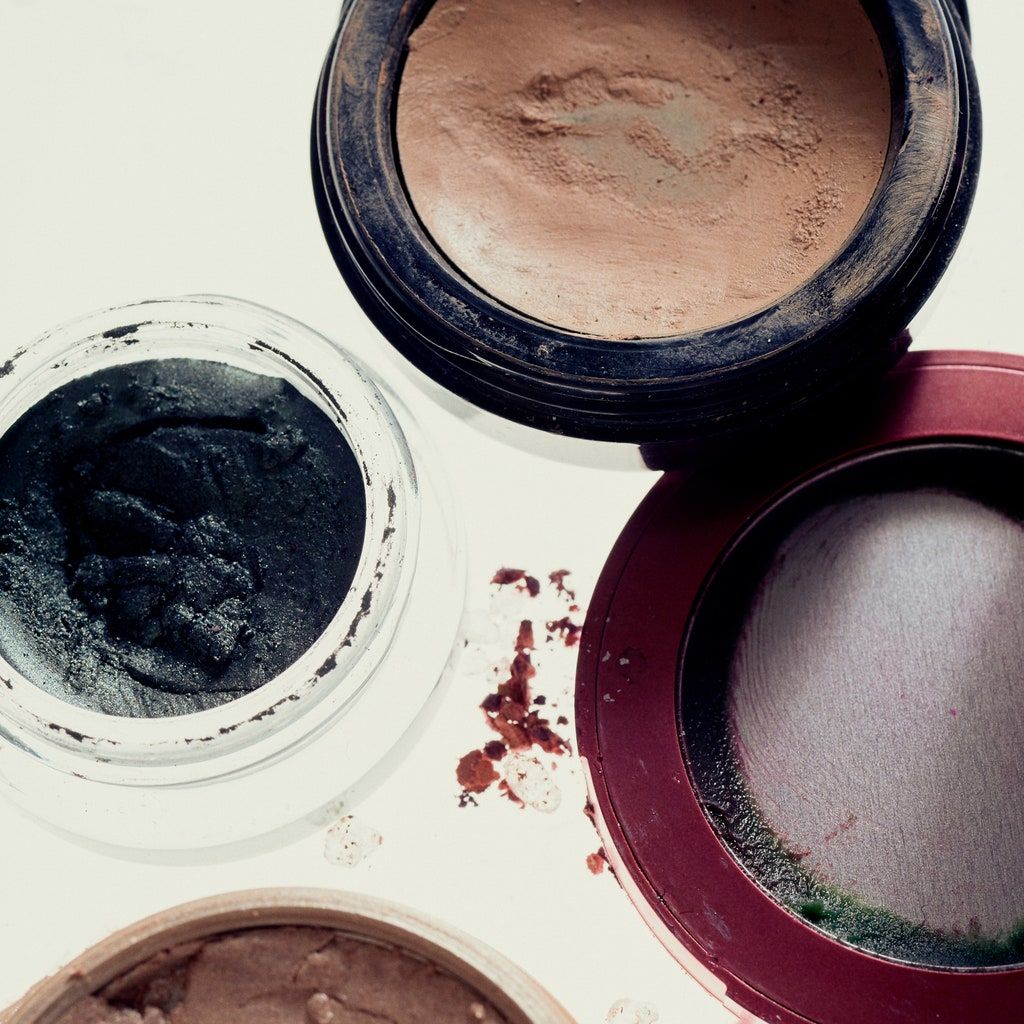
Elease has never felt quite at home in the mainstream makeup community, but she’s made genuine friends in the panning community. She has an Instagram group chat with some, sends and receives birthday gifts from others. “We're not just talking about makeup, we're talking about real people because real people wear makeup,” says Elease. “People not only care about the products, but they care about the people that it impacts.”
Panners have gotten together to call out or boycott brands with toxic workplaces or those that lack inclusivity. And all of this is possible because the panning community is still a relatively small part of the beauty industry at large. (On Reddit, for instance, the subreddit r/panporn has 178,000 members, while the general makeup subreddit, r/makeupaddiction has 2.5 million members.) For Elease, that’s a good thing. “I hope panning never becomes mainstream, because I feel like it would change how we all react to one another.”
The psychology of panning, says Dr. Regan Gurung, social psychologist and director of the General Psychology Program at Oregon State University, isn’t unique to makeup. Finishing something, even a consumer product, provides a sense of a small victory, a relatively easy accomplishment. It’s also, in some ways, counterintuitive.
After all, shopping and buying things make us feel good-especially during a pandemic. Purchasing (or even the anticipation of a purchase) new things releases dopamine in the brain, which is the pleasure chemical. Makeup, in particular, creates thrills in its packaging and branding-a product designed to make you feel and look good. Human beings are wired to react to change, Gurung explains. “So whenever we're doing the same thing, using the same deodorant, using the same makeup for a long period of time, it loses the rewarding qualities that it once had for us.”
So why pan, then? For some panners, Gurung thinks, it could be a way to cope with cognitive dissonance about their purchases. Cognitive dissonance is the idea that our behavior doesn’t match a belief we have about ourselves. For instance, if you don’t like to think of yourself as a wasteful person, you might not like the idea of owning excessive makeup, or when that makeup goes to waste. Makeup, in particular, can trigger anxieties in users because it’s a major part of their identity. After all, it changes your appearance, it’s an elaborate part of your daily ritual, and it’s loaded with stigma and significance.
In a market saturated with hauls and how-tos, makeup panners are also telling a different kind of story about their makeup use. “Basically when you see a pan, you are showing that you can stick to something. And as human beings, we look for indicators of how we can trust somebody. In some ways, if you are somebody who can show your pan, that's a sign of commitment, right? There you are, you are somebody who can commit to a goal,” Gurung explains.
It’s a social endeavor: Youtube, Reddit, Instagram and Facebook help panners find each other. We tend to like people who are like us-these platforms allow panners to reinforce each other, with each “like” creating a kind of positive social pressure, one that helps the community battle the ever looming beauty industry at large.
Panners, by the way, aren’t typically your average casual beauty consumer-over and over again, I spoke to panners who identify as “makeup enthusiasts”-hobbyists who dedicate their time to thinking about or using makeup. They’re constantly aware of new releases, deep diving into research for new purchases, and exposed to brands and products tagged by their favorite beauty influencers. Turns out, the more immersed you are in the beauty world, the more gratifying panning becomes.
And now, I have a confession to make: Over the pandemic, I got into eyeshadow as a lockdown hobby. I obsessively watched beauty Youtube, scoured Instagram for inspiration, and constantly compared swatches on the makeup review blog Temptalia until my obliviousness about the beauty industry turned into a thorough understanding of brands and famous palettes. The more I researched and learned, the more my makeup wishlist grew. I went from never having owned a single eyeshadow to owning over 20 palettes in six months.
I blame it on the enthusiasm of getting into a new hobby, and my late-night, fear-fueled shopping. In any case: I had too much eyeshadow. I knew I had too much. The shopping had been fun until it wasn't-until every new palette that arrived started to fill me with a terrible anxiety. This was around the time when I started browsing the panning subreddits, following panners on Instagram, noticing how palettes actually became more beautiful with use. The panned makeup looked well-loved, no longer a shiny objection to covet, but more like art supplies, the raw materials used to create what matters: the makeup itself. I became enamored with the look of the pans, the dips, the glamour of the usage itself.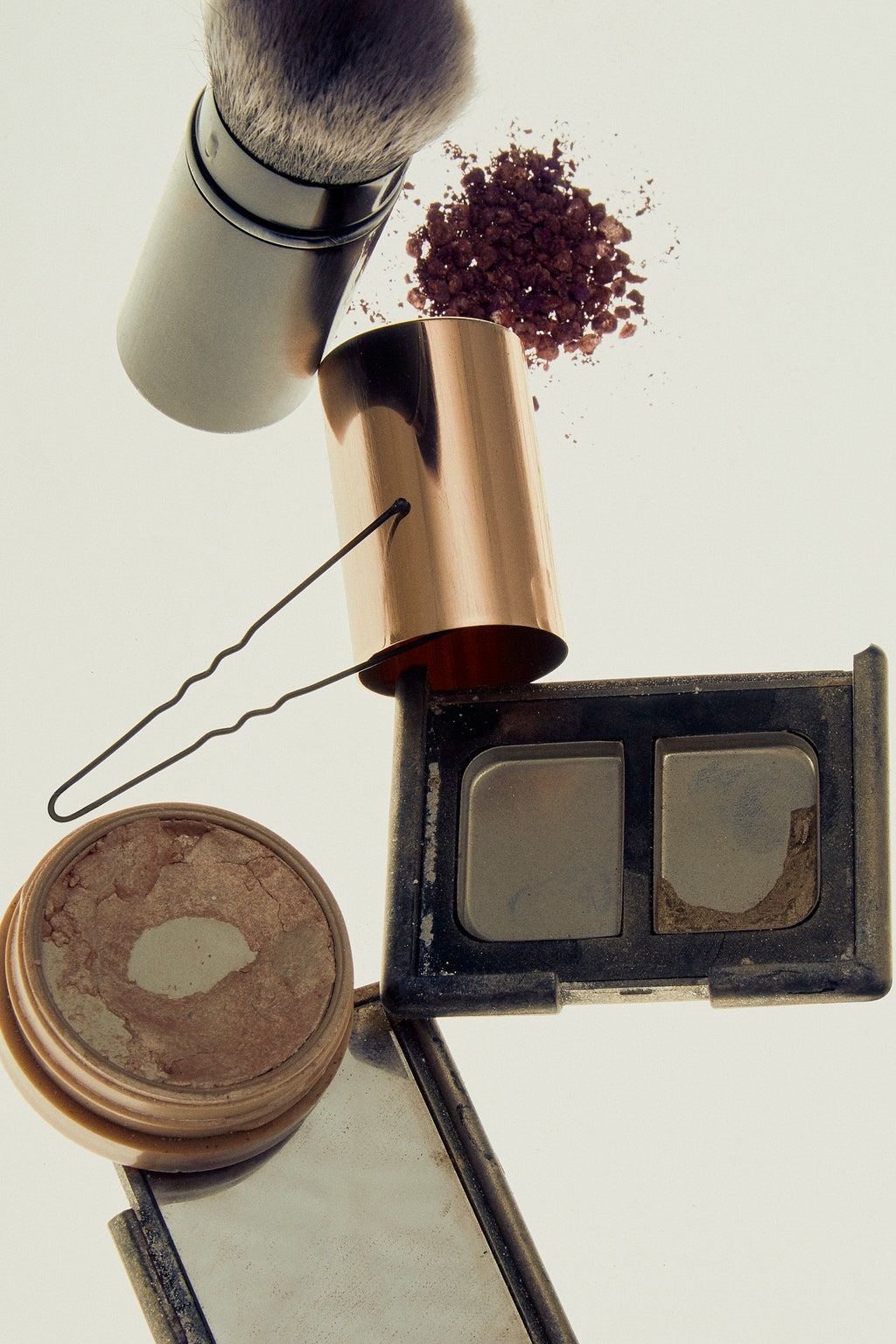
Instead of shopping for new things, I wanted to reign in my curiosity about the better and new, and learn to love what I had. But I was still browsing new releases, wanting more.
Then I unexpectedly hit pan on a Pixi blush I'd gotten from an Ipsy bag, many, many months ago. It was the very first time I saw that tiny gleam of metal at the bottom of the pan, and I was thrilled. I thought about what Gurung spoke of, about the cognitive dissonance and the big gap between who I thought I was (ethically conscious, uncompromising in my values) and how I was shopping for and using makeup. I thought about the community Elease spoke of, how I wanted that shared bond of appreciation for what we already had. Soon, I thought about the allure of new purchases in a different way: they were obstacles to panning the palettes I already owned.
Panning became a way to love makeup and also align my actions with my principles-a way to waste less, to pause and think more deliberately about purchases, to embrace the idea that I might already have enough.
Panning isn't the solution to the beauty industry’s waste problem-to really produce less waste and encourage a thoughtful approach to consumption would mean asking brands to step away from their fast-fashion model of new releases, their frequent sales and aggressive marketing campaigns driven to create want-and panning can admittedly build its own type of obsessiveness. But it’s a form of beauty enthusiasm that encourages dedication over dabbling, conscious use over mindless “add to cart.” It’s a place to start.

