London Daily

Focus on the big picture.
Tuesday, Jul 14, 2026

London to see surge in ultra-rapid charging points for electric cars

London to see surge in ultra-rapid charging points for electric cars

100 new power points planned on capital’s main roads

London’s electric vehicle revolution was given a big boost on Thursday by plans for 100 new ultra-rapid charging points.

Mayor Sadiq Khan said City Hall and Transport for London would release land near the capital’s Red Route main road network to increase the number of “on the go” chargers for taxis and business and emergency vehicles.

He was due to speak on Thursday afternoon at the Evening Standard’s first Plug It In summit, bringing together experts, innovators and policy makers to lead the conversation on driving the capital’s switch to electric vehicles and develop a global “electric city” blueprint.

London leads the UK in its provision of public charging points, with one for every four electric vehicles registered in the capital.

Of the 34,637 charging points in the UK, 11,028 are in London – including 820 rapid or ultra-rapid chargers, which can deliver up to a 200-mile top-up charge in 20-30 minutes.

But while London has the largest number of chargers per head, it is only eighth best of the UK regions or nations when it comes to rapid (or faster) chargers, with a rate of 9.1 per 100,000 people.
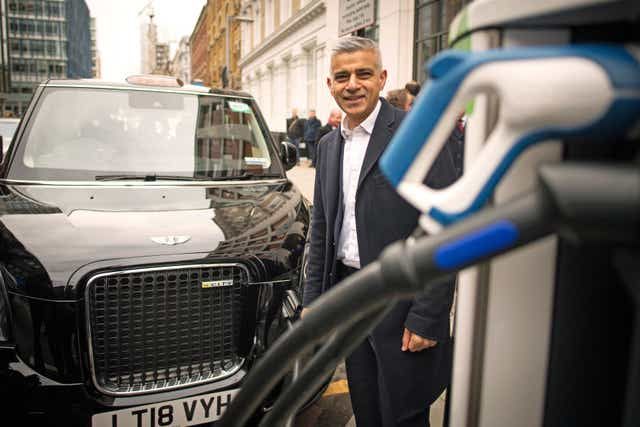

Sadiq Khan at the launch of a London rapid charging network for electric vehicle

Mr Khan, who has pledged to deliver a “net zero” city by 2030, said London was nevertheless ahead of other European cities on rapid chargers – and pledged to deliver more.

Contracts to install the first 25 ultra-rapid charging points will be put out to tender next week, and 75 more will follow by the end of April. The aim is to have all 100 operational by the end of 2023.

Mr Khan was expected to say: “I’m in no doubt that the shift to electric vehicles is imperative to cleaning up our air and bringing down harmful emissions.

“As a city, we’ve travelled an impressive distance in a relatively short period of time in terms of rolling out the necessary infrastructure and encouraging the uptake of electric vehicles. But the gravity of the threats we face from the climate crisis and toxic air pollution demand that we now redouble our efforts and go even further, even faster.

“It’s vital we don’t take our foot off the pedal now and lose momentum. Freeing up public land to deliver more charging points, and charging hubs, will be crucial to hitting and, hopefully, exceeding this target.”

Mr Khan’s strategy is for 40,000 to 60,000 charging points by 2030 – with about one in 10 being rapid chargers. Building the network is expected to create 4,500 jobs.

The number of public chargers in London – typically in lampposts, on street or in car parks - has increased by 40 per cent in a year.

Westminster is the borough with most (1,494) while Bexley and Harrow have least, each with 46.
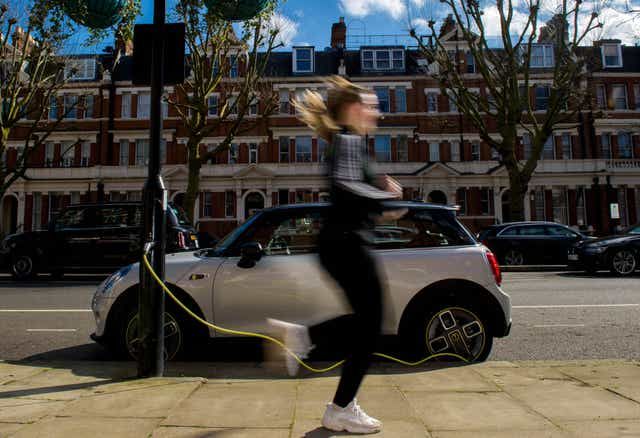
A woman runs past an electric Mini Cooper charging on Sutherland Avenue, London

Other speakers at the Design Museum event included designer Paul Priestman, Andrew Brem, the UK general manager of Uber, Jonathan Goodman, head of Polestar UK, and Christina Calderato, director of transport strategy at TfL.

Mr Khan, who plans to go electric when he next upgrades his car, wants to make it “easier and more convenient for Londoners” to switch.

He sees electric vehicles as a key form of transport for journeys that can’t be walked, cycled or made by public transport – but wants to reduce all car traffic by 28 per cent by the end of the decade.

He said London should be “proud” of how much had been achieved in going electric.


“One of the things that is wonderful about our city is the transformation in the last few years in relation to more electric vehicles and the increase in sales and the increase in the [charging] grid,” he said.

“But we can’t stand still. We need more electric vehicle charging points. We need more rapid charging points.

“Manufacturers having the confidence of knowing there is a market for this will mean the price coming down. That’s why it is really important we lobby the Government to give us more support but London is leading the way.”

Newsletter

Related Articles

0:00
0:00
Close
Beer Industry Warns UK Rules Could Limit Growth of Alcohol-Free Market
Home Office Faces Legal Challenges Over Asylum Seeker Accommodation Closures
UK Heatwaves Linked to More Than Two Thousand Seven Hundred Deaths as Climate Debate Intensifies
Home Secretary Faces Pressure Over Political Security After Ann Widdecombe Murder Investigation
United Kingdom Opens Trade Consultation With Indonesia, Philippines, United Arab Emirates and Uruguay
Robert Jenrick Joins Reform UK After Leaving Conservative Party Leadership Role
Counter-Terrorism Police Take Over Investigation into Murder of Former MP Ann Widdecombe
Andy Burnham Secures Strong Labour Backing in Race to Succeed Keir Starmer
Global Markets Slide as Middle East Conflict Escalation Sends Oil Prices Higher
UK Prime Minister Keir Starmer Offers Condolences Following Death of Qatar’s Father Amir
UK Regional Innovation Policy Focuses on Research Clusters Across Scotland, Wales, and Northern England
UK Corporate Transparency Rules Set to Become More Strict Under Modern Slavery Reform Plans
UK Civil Service Estate Strategy Shifts Government Activity Away From London
UK Strengthens National Security Powers Through New Threat Designations
Greater Manchester Police Conduct Drink and Drug Driving Operations After Football Events
UK Government Advances Darlington Economic Campus With Construction Milestone
UK Authorities Increase Football-Related Security Operations After Tournament Fixtures
UK Invests Fifty-One Million Pounds in National Cryogenics Facility and Regional Innovation Hubs
UK Moves Toward Tougher Modern Slavery Reporting Rules With Corporate Penalties
UK Government Reports Forty-Three Million Pounds in Savings From Office Estate Reform
UK Government Expands Civil Service Regional Strategy With Manchester and Darlington Campus Projects
UK Designates Iran’s Islamic Revolutionary Guard Corps as National Security Threat
United Kingdom Financial Markets Monitor Business Response to Economic Policy Changes
Scottish Renewable Energy Expansion Highlights Need for Faster Grid Development
Wales and Regions Strengthen Focus on Economic Development Through Tourism and Investment
Retail Industry Warns High Street Businesses Remain Under Pressure
Police Chiefs Highlight Growing Challenges Managing Protests and Public Order
Agriculture Leaders Seek Clarity on Post-Brexit Farming Support and Environmental Rules
Transport Unions Warn of Further Industrial Action Over Pay and Working Conditions
Welsh Tourism Sector Reports Strong Growth Driven by Domestic and International Visitors
National Infrastructure Review Gains Support as Leaders Seek Faster Project Delivery
Financial Markets Assess Impact of United Kingdom Corporate Tax Policy Changes
Northern Ireland Assembly Debates Cross-Border Trade and Infrastructure Cooperation Plans
Government Opens Consultations on Housing Reform and Planning System Changes
Scottish Government Faces Pressure to Accelerate Offshore Wind and Grid Expansion
National Energy System Operator Warns Grid Investment Is Needed for Future Electricity Demand Growth
United Kingdom Research Council Invests in Artificial Intelligence and Biotechnology Innovation Hubs
United Kingdom Expands Oversight of Skilled Worker Visa Sponsors Amid Migration Debate
Cross-Party MPs Call for National Infrastructure Strategy Review to Accelerate Economic Growth
Prime Minister Announces One Billion Pound NHS Funding Package Ahead of Winter Pressures
Bank of England Signals Cautious Approach to Interest Rates as Inflation Remains Above Forecasts
World Cup Visitors Turn American Big-Box Stores Into Souvenir Stops
Netflix Weighs Always-On Channels, Bundles and Short-Form Video
Passenger Is Pulled Partly Outside Ryanair Jet After Window Fails Mid-Flight
Innovation-led growth strategy
Public service reform pressure
Defence and industrial security
Labour leadership transition and economic reset
Northern England Pushes for Greater Influence in Britain’s Future Economic Model
UK Technology Strategy Focuses on Life Sciences, Digital Innovation and Research Investment
×