

Local elections 2022: What are political parties in England hoping for?
Politicians have been on the road for some weeks now, pounding pavements and knocking on doors as they try to convince voters that they are the ones to vote for.
It is a political party's job to obsess about its popularity, or the lack of it.
And along comes the real thing in this week's elections: real votes in real ballot boxes electing real politicians.
England's local elections this week will decide who runs the local services millions of us rely on every day and how millions of pounds of our money, paid in taxes, is spent.
And they matter for a bigger picture reason too.
They are the weather makers of the political mood at Westminster and inside our political parties.
Will the Conservatives get a kicking over the row about lockdown parties? Governments tend to take a bit of a bashing, sometimes a lot of a bashing, at local elections and the Tories have been in government for 12 years.
So what are the political parties saying privately and what should we look out for as the results come in?
Very broadly speaking, the local elections happening in England this year are in spots that tilt disproportionately towards Labour, compared with the nation as a whole.
Nearly half are being contested in London, and while Labour's had a rough time in plenty of places, in London, it's done well.
The last time most of the seats up for grabs held contests was in 2018, when Labour had its best night in local elections since 2012, and Labour and the Conservatives were pretty much level pegging in terms of national popularity (though it was 18 months-ish after that, that Labour were crushed in the 2019 general election).
So while general expectation would probably be that Labour should be on course for modest gains in terms of seats, the picture is rather more complicated than that.
Senior figures in the party don't expect a dramatic increase in the number of councils they are in charge of, but instead are focused on their projected national share of the vote. Will it indicate, come the weekend, that Labour is doing enough to win the next general election?
It's a steep challenge. "We've been climbing out of a grave," is how one Labour figure describes Sir Keir Starmer's team's progress in this campaign.
The graphic imagery is striking - the sense that being alive again is an achievement - although critics say Sir Keir's not done enough to set out exactly who he is and what matters to him.
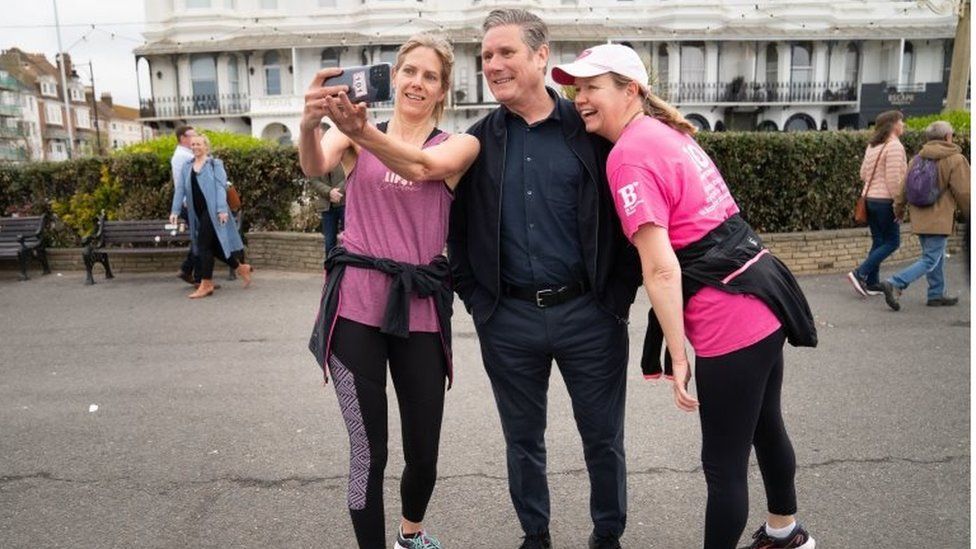 Labour leader Sir Keir Starmer trying to win votes in Worthing
In the days before any election, parties can rarely resist a spot of expectation management, talking down any potential for success, or catastophising about expected doom, so even a thrashing can be presented as a plucky triumph against impossible odds.
Senior Conservatives are privately bandying around all sorts of big numbers about the seats they expect to lose and fret particularly about relatively well-off people who didn't like Brexit, have never much liked Boris Johnson and hate all the stuff about parties in lockdown.
They fear this will tempt these traditional Conservative voters to head to the Liberal Democrats or not bother voting at all.
Lord Hayward, the Conservative peer and long time election watcher, talks of what he describes as a "social divide" between the "Waitrose-shopping, Radio 4-listening, Remain-voting, gravel drive-owning" voters in places such as the Home Counties, Trafford in Greater Manchester and Solihull in the West Midlands, many of whom are tiring of Boris Johnson - and more traditional, blue collar, industrial places where support for him appears to be holding up.
The Tories are fortunate, Lord Hayward tells me, that there aren't elections this time in large parts of Kent, or Essex, Hampshire and Berkshire.
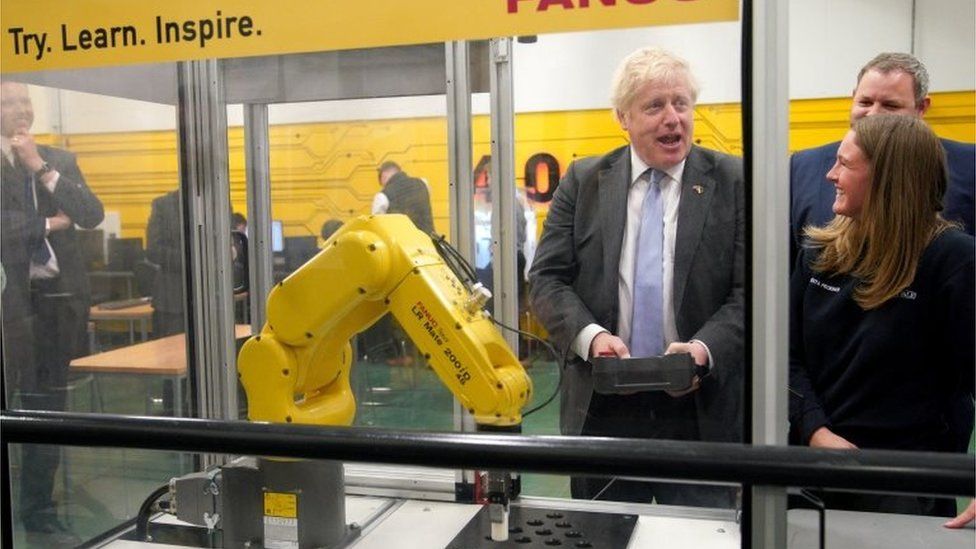 Boris Johnson on a visit to Burnley College Sixth Form Centre
Conservative figures take comfort from what they perceive to be a lack of enthusiasm for Sir Keir Starmer, but believe the Liberal Democrats have detoxified themselves since the years of coalition government when vast swathes of their supporters ran a mile.
Supporters of the prime minister are already preparing to do what they can to reassure those Conservatives who might go all jittery and wobbly after Thursday's results.
Later on this month, they are getting ready to talk up what they call their "80-20 strategy" for the next general election - their project for holding on to the 80 most marginal parliamentary seats, and the 20 they might hope to gain.
And Boris Johnson's allies sigh with relief that there is "no prince over the water" as it was put to me: no main rival to the PM, as the Chancellor Rishi Sunak's difficult recent weeks are greeted with a smile.
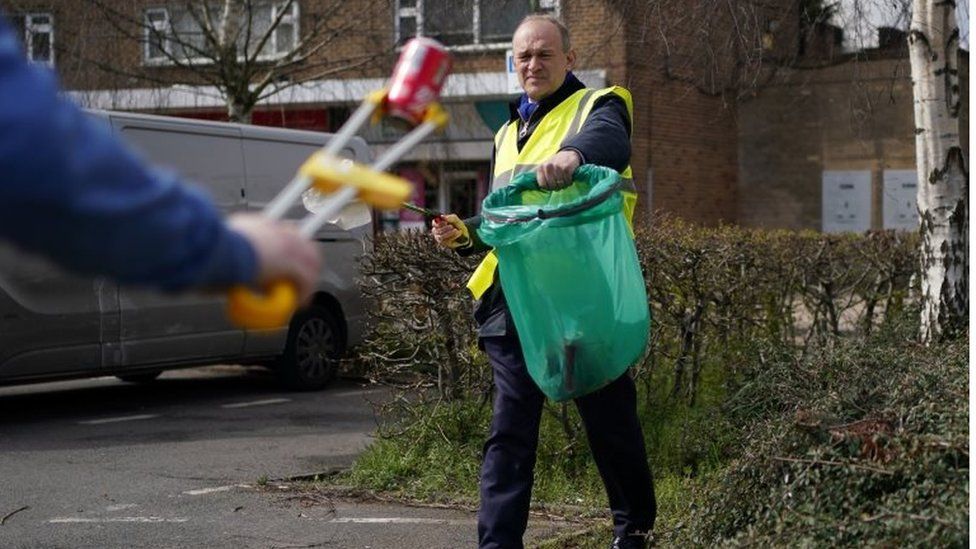 Ed Davey helping pick up litter in the West Midlands
What about the Liberal Democrats? One party source describes these local elections as "not a snapshot, more like looking through a letterbox," given, as Lord Hayward says, big chunks of potentially electorally fertile, traditionally Tory territory isn't there to be harvested this time.
They have their eyes on gains in Sunderland and potentially winning in Hull, against Labour and, elsewhere, luring some of the aforementioned gravel drive crunchers in possession of a polling card.
Lib Dems fret that 2018 was a "peak stop Brexit moment" - a big draw for them at the time - and politics is very different now.
On the other hand, Westminster by-election wins in Chesham and Amersham in Buckinghamshire and also in North Shropshire means, they hope, there is a "believability" again about the idea of the party being able to win.
The extra media attention the party gets during election campaigns often helps them too.
When party leader Sir Ed Davey gets invited onto Loose Women on ITV as he did the other day, you can hazard a guess an election is imminent.
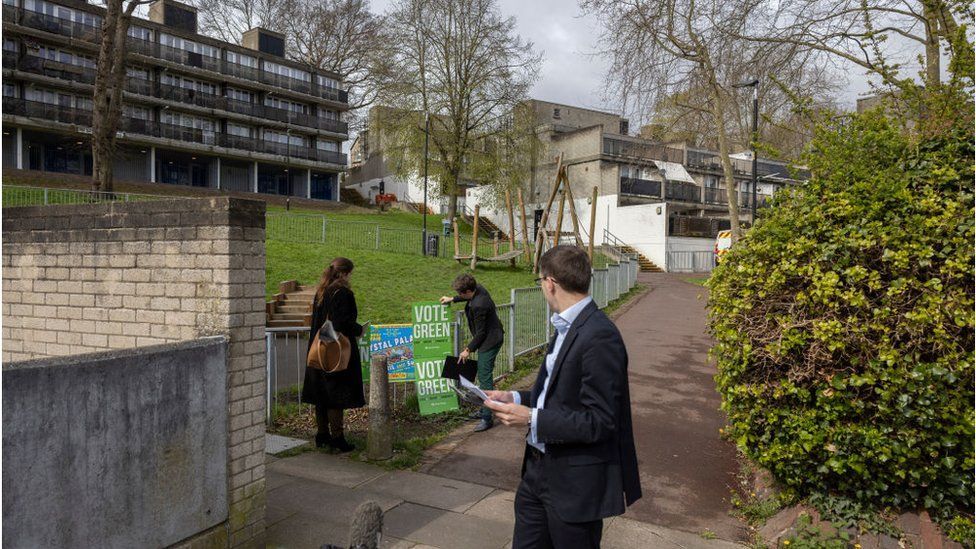 The Green Party launched their campaign in south London
And a quick word about the Green Party. As I wrote this time last year they have been steadily building in recent years, albeit from a small base.
Breaking through to have any presence on a local authority really matters to them, because - as with the Liberal Democrats on a bigger scale - they can then prove that winning is possible.
In London, keep an eye on Hackney and Newham. They hope to become a significant presence in Peterborough, Sheffield and Hastings among others.
Before I go, there's one other thing to remember: turnout.
To state the flipping obvious, elections are popularity contests involving those who can be bothered to vote. And plenty can't in local elections. Turnout is almost always low.
The parties who are successful at getting more of their loyal supporters out to back them could well be those with the biggest smiles come the weekend.

