London Daily

Focus on the big picture.
Thursday, Jun 11, 2026

Is the UK getting hotter, and what causes heatwaves?

Is the UK getting hotter, and what causes heatwaves?

After several days of warm weather, parts of the UK have experienced the hottest day of the year so far.

Temperatures hit 32.7 (91F) in south-east England on Friday, triggering an official heatwave, as hot air spread up from Spain, Portugal and north Africa.

Experts have said it's rare to see temperatures this high at this point in June.


Is the UK getting hotter?


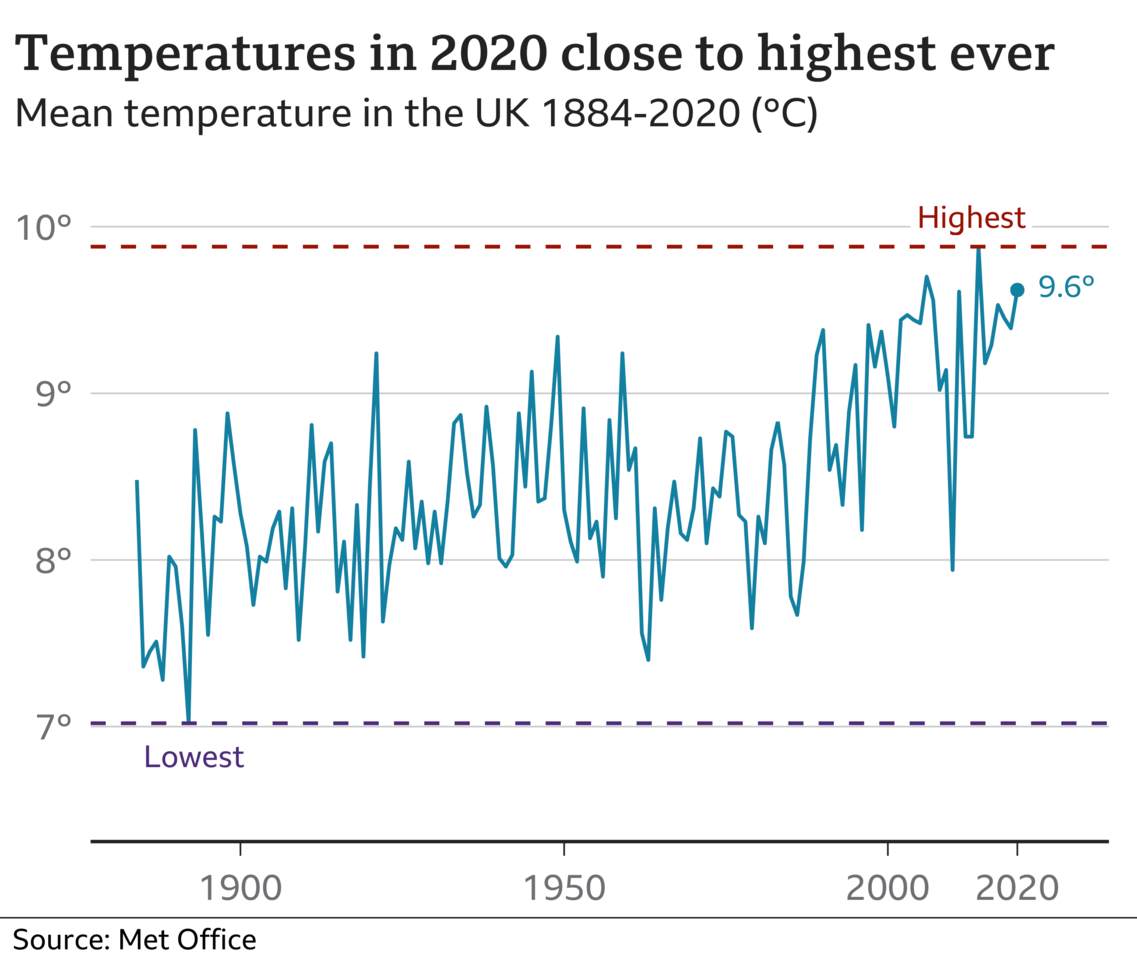
Yes, Britain has been slowly getting warmer since the 19th Century. In the past three decades, the UK has become 0.9C warmer.

The 10 hottest years since 1884 have all happened since 2002. And none of the coldest years has been recorded this century.

In 2019, Cambridge saw the hottest temperature ever captured in the UK: 38.7C.
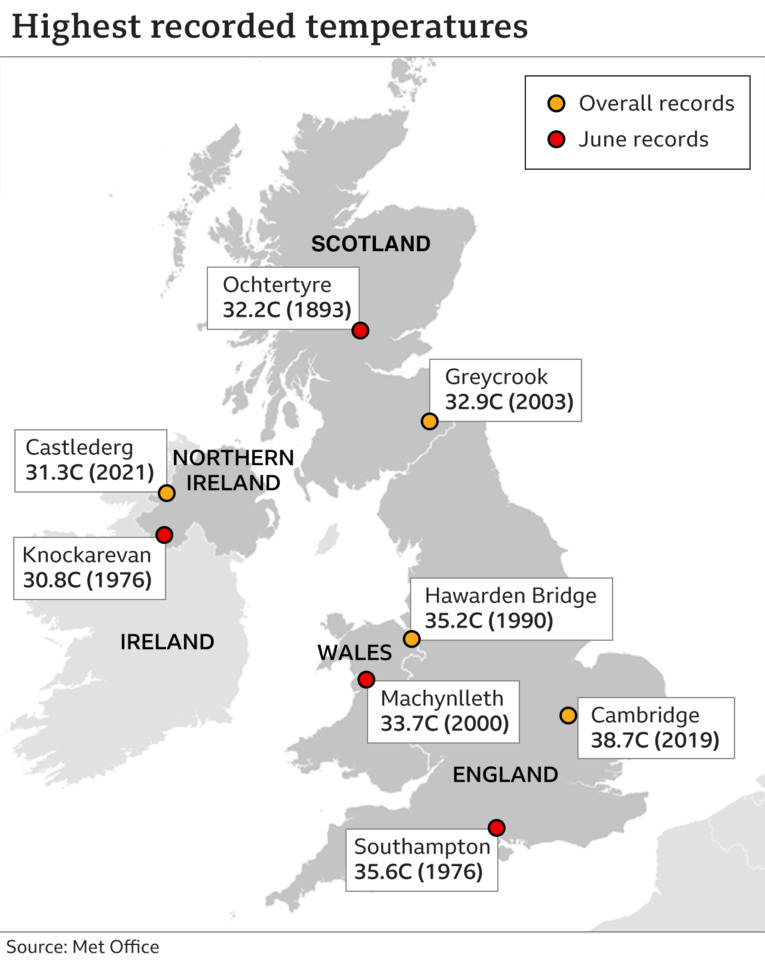

The summer of 2018 was the UK's second-warmest - shared with 1995 - since 1884. The hottest was in 1976.


When does hot weather become a heatwave?


A heatwave is a period of hot weather where temperatures are higher than is expected for the time of year.

In the UK, the Met Office declares a heatwave when it records at least three days in a row with maximum temperatures exceeding a set temperature.

That threshold varies by county.

Heatwaves usually happen in summer when high pressure develops over an area.

They can also bring so-called "tropical nights" - when night-time temperatures fail to drop below 20C.

That can make it hard to sleep at night and the body can suffer, as it fails to sufficiently cool down.

The Met Office says it's not clear whether heatwaves are becoming more frequent because of their sporadic nature.


Why are we seeing these changes?


Climate change is causing global temperatures to rise. Greenhouse gases, like carbon dioxide, released into Earth's atmosphere in large volumes are trapping the sun's heat, causing the planet to warm.

This has brought more extreme weather, including record-breaking high temperatures across the world.

Periods of intense heat do occur within natural weather patterns, but scientists say that globally they are becoming more frequent, more intense and are lasting longer as a result of global warming.

The UK is also seeing more dramatic rainfall as a result of climate change


In the UK, the Met Office has warned that summers like 2018 are 30 times more likely now than before the Industrial Revolution - the point when humans starting producing the emissions that are responsible for climate change.

A report on climate extremes in the UK found that recent years have seen both higher maximum temperatures and longer warm spells.

That trend is predicted to continue. It's possible that by 2100, the UK could see 40C days every 3 to 4 years.


Is hot weather dangerous?


Hot weather can be dangerous particularly for the vulnerable, including elderly people, children and people with underlying health conditions.

Spending too much time in high temperatures or in the sun, can cause health issues such as heat stroke and cardiovascular failure.


There are also indirect effects like poorer mental health and an increase in accidents such as car crashes and drownings.

In August 2003, 20,000 people died following a heatwave in Europe lasting 10 days, according to the Met Office.

The higher death rate starts to kick in once the thermometer passes 25C-26C.


How do you keep cool when it's hot?


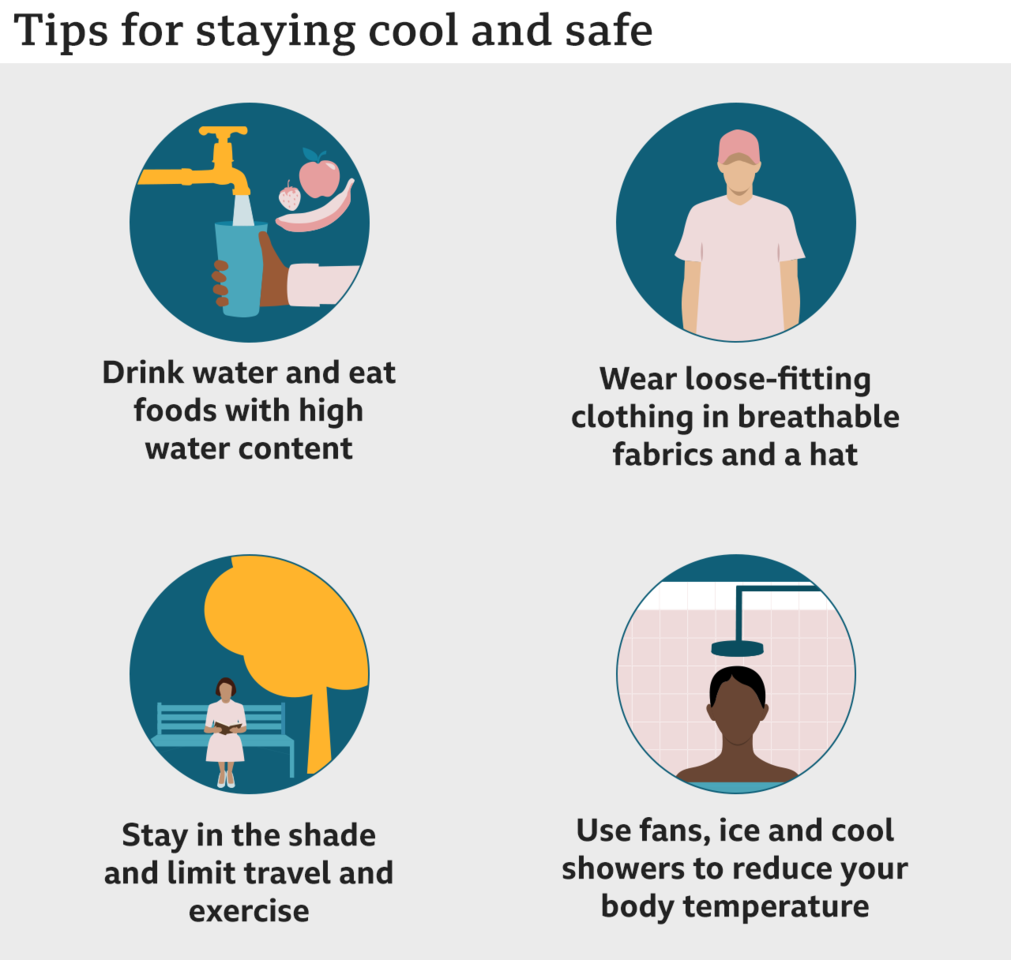
Where possible, you should modify your routine and behaviour to adapt to the heat.

If you can, travel in the morning or evening when temperatures are lower.

Wear a high-factor sunscreen and a hat if you are going to spend time in the sun.

Newsletter

Related Articles

0:00
0:00
Close
Office for National Statistics Adopts Supermarket Checkout Data for Inflation Measurement
Applied Atomics Launches With $500 Million Space Infrastructure Order Book
BYD Plans Nationwide Rollout of Ultra-Fast EV Charging Network
UK House Prices Unexpectedly Fall in May
CBI Warns UK Growth Is Becoming Increasingly Dependent on Public Spending
Makerfield By-Election Fuels Speculation Over Labour’s Future Leadership
Britain Declines to Join EU SAFE Defence Fund
UK Unveils 2040 Emissions Target Despite Strong Political Opposition
Government Orders Full Review of Palantir’s NHS Data Contract
UK Borrowing Costs Climb as Markets Price in Further Bank of England Rate Rises
Resident Doctors Confirm Five-Day NHS Strike Across England
Violent Anti-Immigrant Riots in Belfast Spark Political and Diplomatic Tensions
United Kingdom Sees Recovery in Horizon Europe Research Funding Share to 9.3 Percent
UK Inflation Holds at 2.8 Percent as Office for Budget Responsibility Flags Persistent Price Pressures
United Kingdom Launches National Anti-Fraud Framework to Combat Rising Pension Scam Losses
United Kingdom Expands Sanctions on Israeli Groups While Funding Palestinian Authority Salaries and Gaza Mine Clearance
United Kingdom Issues Three-Month Ultimatum to Major Technology Firms Over Child Online Safety Controls
United Kingdom Government Moves Toward Blanket Social Media Ban for Children Under Sixteen
Widespread Anti-Immigration Rioting Erupts Across Belfast After Knife Attack Linked to Asylum Seeker
Farmers Warn of Crop Losses Following Months of Unseasonal Rainfall
Civil Aviation Authority Launches Review of Regional Airport Operations
Met Office Issues Heat-Health Alert Across Parts of England
National Grid Introduces New Measures to Protect Winter Energy Supply
Northern England Rail Upgrades Receive Additional Government Funding
Wales Advances Green Hydrogen Strategy to Decarbonize Heavy Industry
UK Expands Recruitment Incentives to Address Shortage of STEM Teachers
High Court Opens Door to Climate Liability Claims Against Major Industrial Emitters
Police Service of Northern Ireland Investigates Major Personnel Data Breach
Defense Ministry Overhauls Procurement System to Accelerate AUKUS Submarine Program
Net Migration Remains Above Government Expectations, New Data Shows
UK and Scottish Governments Agree Framework for Expanded North Sea Wind Development
UK Treasury Launches New Tax Incentives to Boost AI and Semiconductor Investment
Bank of England Signals Continued Caution on Interest Rate Cuts
UK Unveils £10 Billion NHS Digital Modernization Plan Centered on AI Integration
Nebius Opens Major Robotics and Physical AI Laboratory in London
Bank of England Data Shows Strong Rise in New Mortgage Approvals
Network Rail Completes Landmark Upgrade of Severn Tunnel Rail Infrastructure
East West Rail Passenger Services Between Oxford and Milton Keynes Set for December Launch
GlaxoSmithKline Reportedly Pursues £7 Billion Acquisition of US Cancer Drug Developer Nuvalent
Bank of England Signals Interest Rates Likely to Remain Unchanged Despite Energy Market Risks
NHS Trusts Launch Job-Cutting Programmes as Financial Pressures Intensify Across England
More Than 130 Labour MPs Urge Ban on Trade With Israeli Settlements
Keir Starmer Orders Technology Firms to Introduce Smartphone Nudity Controls for Under-18s
UK Unveils £400 Million National AI Supercomputer Fund and New Economics Institute
Japanese Technology Firm Fujitsu Launches Advanced Artificial Intelligence Tool for Corporate Disclosures
South Africa Officially Launches Nationwide Campaign for Highly Contested Local Government Elections
United Kingdom Commits Additional Funding for Unexploded Ordnance Clearance in Laos
Singapore Announces Stringent New Greenhouse Gas Regulations for Commercial Cooling Systems
Cambodia and Thailand Hold High-Level Border Security Talks at United Nations Headquarters
Myanmar Military Government and China Sign Major Agreement to Upgrade Media and Cultural Cooperation
×

