London Daily

Focus on the big picture.
Sunday, Jul 19, 2026

Inflation hits highest level in a decade at 4.2% as fuel and energy bills soar

Inflation hits highest level in a decade at 4.2% as fuel and energy bills soar

The ONS reports a sharp rise in the cost of living which the Bank of England predicts will deteriorate this winter as a host of goods and services leap in price.

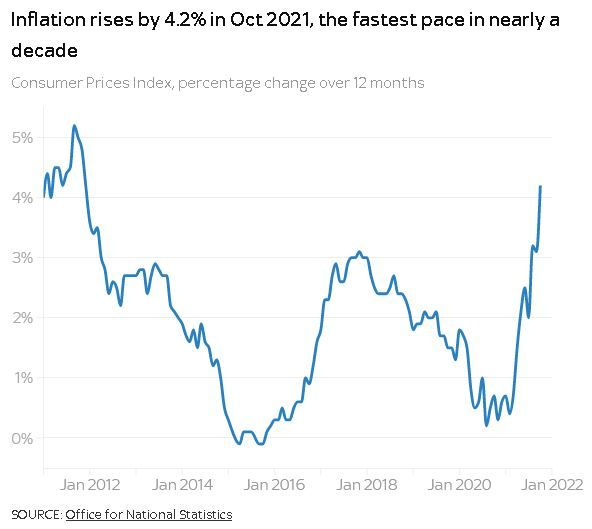
The rate of inflation has hit its highest level for almost a decade as prices rise across the UK economy, with fuel and energy costs leading the way.

The Office for National Statistics (ONS) reported that the consumer prices index (CPI) measure jumped to 4.2% in October from 3.1% the previous month - a bigger leap than economists had predicted and piling pressure on the Bank of England to act.

The figures showed that the 12% increase in the energy price cap on household bills on 1 October was among the factors contributing the most to the spike alongside education, fashion and transport.

Bills for eating out and hotels also rose as crisis-era VAT support for hospitality and attractions was eased.

ONS chief economist Grant Fitzner said of the rise: "This was driven by increased household energy bills due to the price cap hike, a rise in the cost of second-hand cars and fuel as well as higher prices in restaurants and hotels.

Used cars are in high demand as production of new vehicles is hit by a global chip shortage


"Costs of goods produced by factories and the price of raw materials have also risen substantially, and are now at their highest rates for at least 10 years."

The latter comment represents a warning that the pace of price increases shows no sign of letting up as those costs prepare to enter the UK's supply chain crisis which is also being complicated by a shortage of labour.

Chancellor Rishi Sunak responded: "Many countries are experiencing higher inflation as we recover from COVID, and we know people are facing pressures with the cost of living, which is why we are taking action worth more than £4.2bn to help them.

"We're helping people get into work, progress and keep more of what they earn, through our Plan for Jobs and by effectively cutting taxes for workers receiving Universal Credit.

"We are also providing more immediate support, including through the £500m Household Support Fund for the most vulnerable families, fuel and alcohol duty freezes, and the energy price cap."

But the cap is tipped by economists to add even more fuel to the inflation fire in the spring, when the next review takes effect, if it fully reflects rises in wholesale gas costs since last summer.

A report by the RAC motoring group on Wednesday showed a third of motorists were already driving less as petrol and diesel costs hit new record levels daily.

The average cost of unleaded is nearing 150p-per-litre while diesel is already at that level.


The ONS report, which showed inflation at its highest level since November 2011, was the first measure since the Bank of England shocked financial markets earlier this month when it held off on raising interest rates to curb inflation expectations, despite forecasting the CPI measure would hit 5% in the coming months.

The Bank, which said it had wanted to see how the jobs market responded to the end of the furlough scheme, has a 2% inflation target.

It has argued that much of the price growth, as witnessed with the surge in wholesale energy costs this year, will be temporary as it is a consequence of economies reopening after COVID-19 disruption and out of its control.

It will take some comfort from the fact that separate ONS figures have shown household spending power holding up as policymakers fret that fears of inflation are driving unsustainable pay awards.

The underlying pace of growth in wages - taking into account workers going back on full pay after furlough and how job losses during the coronavirus lockdowns fell most heavily on lower-paid workers - stood between 3.4% and 4.9% for regular pay in the three months to September.

Yael Selfin, chief economist at KPMG UK, said: "While not unexpected, confirmation that inflation is moving further away from its 2% target may seal the Bank of England's resolve to raise rates in December, following the strong labour data released this week."

Newsletter

Related Articles

0:00
0:00
Close
Germany’s Economic Malaise Reopens the Sunday Shopping Debate
Singapore Considers Lower Taxes for Fund Managers as Hong Kong Intensifies Talent Contest
US Retaliates Against Iran After Two American Troops Killed in Jordan
Bank of Asia BVI Enters Court-Supervised Liquidation After Regulators Find It Insolvent
Proposed U.S.-Saudi Nuclear Pact Could Permit Limited Uranium Enrichment Under International Safeguards
Netherlands Declares Water Shortage Emergency After Drought Pushes Rivers to Historic Lows
Iran Claims It Destroyed Bahrain’s Main Artificial Intelligence Center in Missile and Drone Strike
Brothers Andrew and Tristan Tate Who Turned "Toxic Masculinity" Into a Brand Arrested in Miami as Britain Seeks Their Extradition
Reported CIA Mission Helped Clear the UAE’s Path to Advanced US AI Chips
Artificial Intelligence Capital Fuels Markets While Governments and Regulators Face Mounting Strategic Tests
China’s Moonshot’s Kimi K3 Narrows the Gap With Anthropic Through Scale, Openness and Lower Cost
Gold and Cash Seizure Puts Indonesia’s Senior Anti-Corruption Prosecutor Under Investigation
The Ledger Will Not Trust on Faith
Bank of England Warns Climate Shocks Could Trigger Sudden Asset Repricing
UK Treasury Places Microsoft, Google, AWS and Oracle Under New Financial Resilience Rules
Scottish Government Faces Pressure Over Delays in Vulnerable Group Background Checks
Crown Prosecution Service Authorises Additional Charges Against Andrew and Tristan Tate
NHS Approves At-Home Cancer Treatments for Rare Blood Disorders
Bank of England Gains Oversight of Major Cloud Providers Supporting UK Financial System
UK Government Plans Major Overhaul of English Local Councils Through New Unitary Authorities
British Steel Nationalisation Dispute Escalates as Chinese Owner Jingye Seeks Compensation
Bank of England Signals Interest Rates Will Stay High as It Warns of Financial Risks From Climate and AI
Trump Administration Pressures Banks to Restrict Financial Access for Undocumented Immigrants
Passenger Bound for Germany Refused to Sit Beside a Woman on a Plane — Then Slapped a Flight Attendant
Ukraine’s Leadership Rift Spills Into the Streets as Protesters Target Army Chief
Ukrainian Drone Barrage Kills Eight and Strikes Russian Logistics Network
Key Trends to Watch
Financial Conduct Authority Warns Cloud and Digital Risks Are Becoming a Financial Priority
Jeffrey Donaldson Appeals Sexual Abuse Conviction as Democratic Unionist Party Opens Review
Welsh Health Authorities Launch Emergency Meningitis Vaccination Programme for Students
Scottish Business Activity Falls for Third Month as Companies Face Rising Costs
Bank of England Regulators Demand Better Access to Digital Banking Services
United Kingdom Cuts Bilateral Aid to Several African Countries by Up to Ninety Per Cent
United Kingdom Introduces Tougher Deportation Rules After Rochdale Exploitation Scandal
NHS England Launches Wearable Technology Plan to Reduce Sepsis Deaths
Amazon Web Services Billing Error Sends Trillion-Dollar Invoices to British Companies
Bank of England Takes Direct Regulatory Role Over Major Global Cloud Providers
Extreme Summer Heat Drives Record Fire Risk and Rising Deaths Across Britain
United Kingdom Nationalisation of British Steel Sparks Diplomatic Dispute With China
United Kingdom Economy Shows Weak Growth Ahead of Major Autumn Budget
Andy Burnham Set to Become United Kingdom Prime Minister After Labour Leadership Victory
The Ten World Cup Finals That Defined Football History
Smartphones Are Getting More Expensive, Sales Are Collapsing, and Even Apple Admits: "Prices Will Rise"
The Monaco Bombing Has Become a Test of Ukraine’s Intelligence Accountability
Leadership Change and Strategic Rivalry Redraw the Political Map
Energy Risk, Uneven Growth and the New Geography of Global Capital
The AI Race Enters Its Infrastructure Era
Security and resilience remain long-term national priorities
Britain balances growth ambitions with public finance pressures
Regional devolution becomes a defining theme of the next Labour era
×