

How to Apply Cologne the Right Way
Fragrance plays an essential role in how others perceive and remember you. As such, it’s an integral part of your personal style and something that you can utilize to your advantage. However, whether you want your cologne to increase your attractiveness or boost your confidence, you’ll need to know how to use it correctly first. Using and applying cologne is an art that you can quickly master. All it takes is the right guidance on how to choose a great fragrance, where and when to use it, how much to use, and how to store it. Thankfully, we have all the answers and have created this handy guide for gents on how to apply cologne.
Where to Apply Cologne
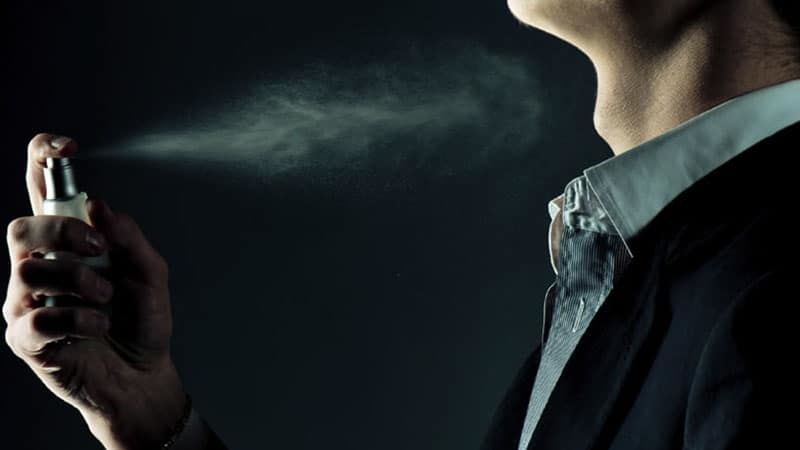
To utilize fragrance correctly, you need to know where to apply cologne. Ideally, men should apply their cologne to the pulse points or warmest areas of their bodies. Thanks to their heat, these areas, which include the neck, chest, shoulders, wrists, and inner elbows can project scent more efficiently, meaning that less fragrance is required. To target these areas, select just one or two on which to focus. In particular, the wrists and neck make an excellent combination. Also note that although the crutch, armpits, and behind the knees are warm areas too, they are not usually ideal for cologne.
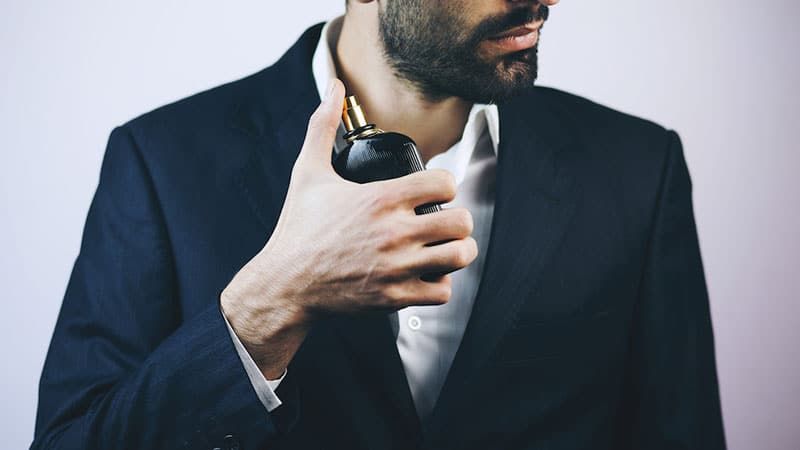
How to Apply Cologne
Apply cologne after you get out of the shower to clean, dry skin.
Don’t spray the cologne into the air and walk through it.
Target pulse points, such as your inner wrists and neck.
Hold the bottle 3-6 inches away from your skin when spraying.
Don’t use too much (2-4 squirts are ideal).
Don’t rub the cologne into your skin after application.
Reapply to your wrists when the fragrance wears off.
What Types of Colognes Are There?
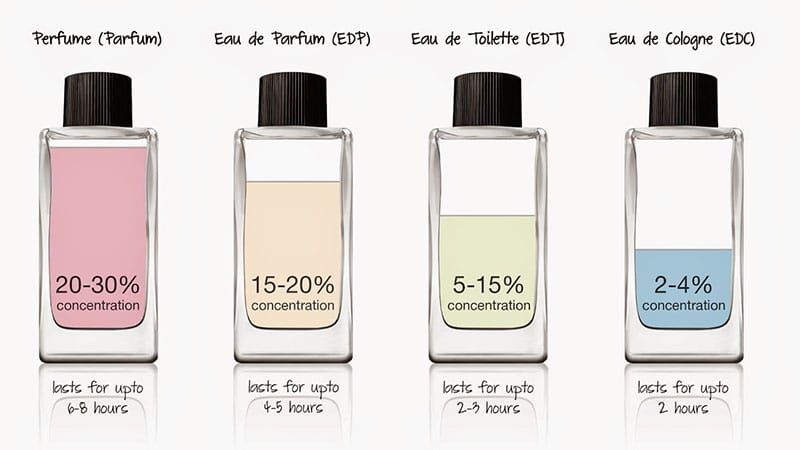
Before you can even choose a cologne, you need to understand the different types of fragrances available. By familiarizing yourself with all your options, you’ll be able to select the cologne that best meets your needs. You’ll also be able to understand why some colognes are cheap while others are incredibly pricey. In general, it all comes down to the percentage of the aromatic essence in the fragrance, which affects how long it lasts on your skin. For example, Eau de Toilette fragrances typically feature around 10% aromatic essence and last but a few hours. Eau de Parfum, on the other hand, features a higher concentrate of perfume essence (15% to 20%) and can last significantly longer. However, because of its higher concentration, this type of fragrance also tends to cost more.
It’s also important to note the difference between designer colognes and niche colognes when looking at fragrance types. Designer colognes are created by designer brands and are extremely common. They are designed for mass consumption, meaning that they usually feature softer and safer scents that more people will like. They also tend to be made from more common materials to save money and allow for a higher volume of production. Niche colognes, on the other hand, provide more selective customers with more unique scents. Such colognes can often be polarizing due to their bold smells and typically cost more than a designer fragrance. As such, they are usually chosen only by scent aficionados.
How to Choose a Good Cologne
When it comes to smelling great, you need to know how to choose a good cologne. To do so, start by spraying colognes from a distance onto sample cards and deciding which scents you initially like best. While doing this, keep in mind that fresh and light fragrances work best for summer while stronger scents with notes of wood or spice are ideal for winter. Then, ensure the fragrance will suit your skin and stay put for a long time by spraying a sample on your wrist and leaving it all day, regularly smelling to see how it interacts with your natural oils and develops. Doing so will help you gain an excellent insight into what it’ll be like to regularly wear the cologne before you purchase it.
At this stage, it’s also important to understand how the fragrance will break down over time. Colognes are made up of top notes, mid-notes, and base notes, each of which dries up at different intervals, causing the fragrance to change. Top notes last approximately 15 to 120 minutes, mid-notes can last anywhere from 30 minutes to five hours, and base notes, which account for how long the fragrance will last, stick around for two to eight or more hours.
To find the best smelling cologne for you, also be sure to always choose the fragrance yourself. Don’t let someone else select it for you and don’t just buy one because you like it on a friend. As colognes smell different on different people, it’s vital that you be the one to try to test the fragrance before making a purchase.
Where to Keep Cologne
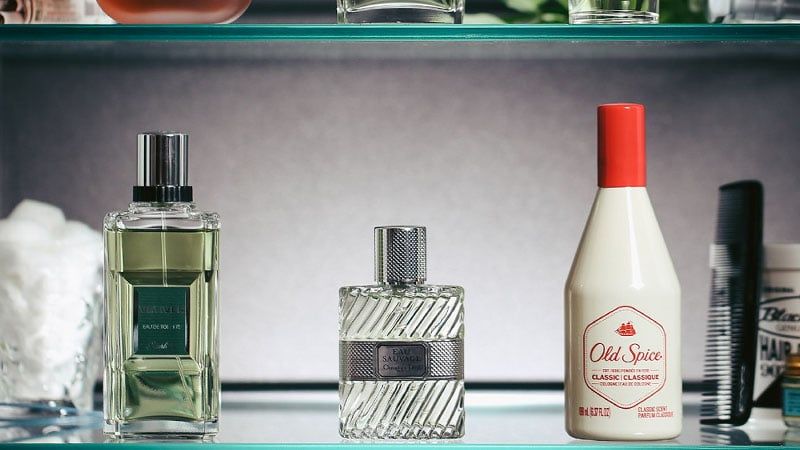
Where you keep your cologne can impact the smell of its scent and how long it lasts. As such, it’s important to be diligent about storing your colognes correctly. Leaving your cologne in an area that is exposed to rapid changes in temperature, such as the top of your drawers in your bathroom, will cause the fragrance to break down faster. Sunlight will also have the same effect, so be sure to avoid any window sills. If you want your scent to last a long time, it’s best to store your cologne in an area that is consistently cool, dark, and dry. In particular, your bedroom closet can make an excellent choice.
How Much Cologne to Use
Once you’ve found your ideal cologne, you need to know how to apply it correctly. While this means knowing where to use it on your body, it also means knowing how much to spray. Too little and no one will be able to smell your expensive cologne. Too much and everyone will be overwhelmed by its scent, and not in a good way. So, you need to apply just the right amount. However, if you’re unsure, know that less is often more with fragrance. As for specifics, how many sprays you need will depend on the fragrance you use. While strong scents may only require two or three squirts, lighter ones, such as spring and summer fragrances, may need four to six sprays to have the same effect.
Also, be sure to apply your cologne every day to get into the habit of using fragrance. Likewise, don’t forget to reapply later in the day, especially if you’re using an Eau de Toilette. Just spritz one or two sprays onto your wrists to give your scent a boost in the afternoon.
FAQs
Should I wear cologne every day?
Wearing cologne every day will get you into the habit of applying it, and you'll smell great no matter where you go and what you're doing. If you're just hanging around home, you may choose not to wear any. However, it can be an act of self-care to make sure you smell good, even if it's just for yourself. It's also nice to splash out for an "everyday" cologne, and a special occasion one for when you really want to impress.
How do I apply cologne so it lasts?
The best way to apply cologne to last is to spritz it on your pulse points, which tend to be warmer and project the scent better. The wrists, neck, chest, and inner elbows are all excellent choices. However, pick one or two spots, so the smell isn't overwhelming. Choosing a fragrance with a higher concentration of essence will also make it last longer. Opt for Eau De Parfum or Parfums over Eau de Toilette and Eau de Cologne.
Do you apply cologne on clothes or skin?
Generally, the skin, in your warm pulse points, is the best place to apply cologne. Doing this also lets it interact with the natural oils and chemicals in your body, which can slightly change the scent. This is the reason the same fragrance can smell different on other people. If you have sensitive skin or allergies to cologne ingredients, spraying on your clothes will be the next best option.
Is wearing cologne bad for you?
Colognes and perfumes are made up of chemicals and oils, including ethanol or isopropyl alcohol, for stabilizing. Industry requirements don't force companies to list every ingredient to protect trade secrets. As such, there is a small risk that cologne can cause harm if used excessively or not as recommended. Cologne can also cause allergic reactions, skin irritations, headaches, and occasionally respiratory issues. If this occurs, you should discontinue use. However, many retailers and department stores have testers so you can try a cologne a few times before you commit to purchase.