London Daily

Focus on the big picture.
Wednesday, May 13, 2026

Hong Kong investors could take financial stake in Northern Metropolis plan

Hong Kong investors could take financial stake in Northern Metropolis plan

Financial Secretary Paul Chan says funding arrangements for transforming city’s border area with mainland China should be creative, tailor-made for each stage of development.

Individual Hong Kong investors may be allowed to take a financial stake in the city’s ambitious new plan to transform its sleepy border area with mainland China into a Silicon Valley-style tech hub, the financial secretary has said.

Paul Chan Mo-po unveiled elements of the Northern Metropolis development’s financing model – along with his assessment of Hong Kong’s future amid ongoing US-China tensions– during an interview for the October 13-14 China Institute Executive Summit 2021.

First proposed by Chief Executive Carrie Lam Cheng Yuet-ngor in her yearly policy address last week, the Northern Metropolis is intended to serve as a strategic growth engine, ease housing shortages and integrate the city into the Greater Bay Area, Beijing’s scheme to turn Hong Kong, Macau and nine Guangdong cities into an economic powerhouse.
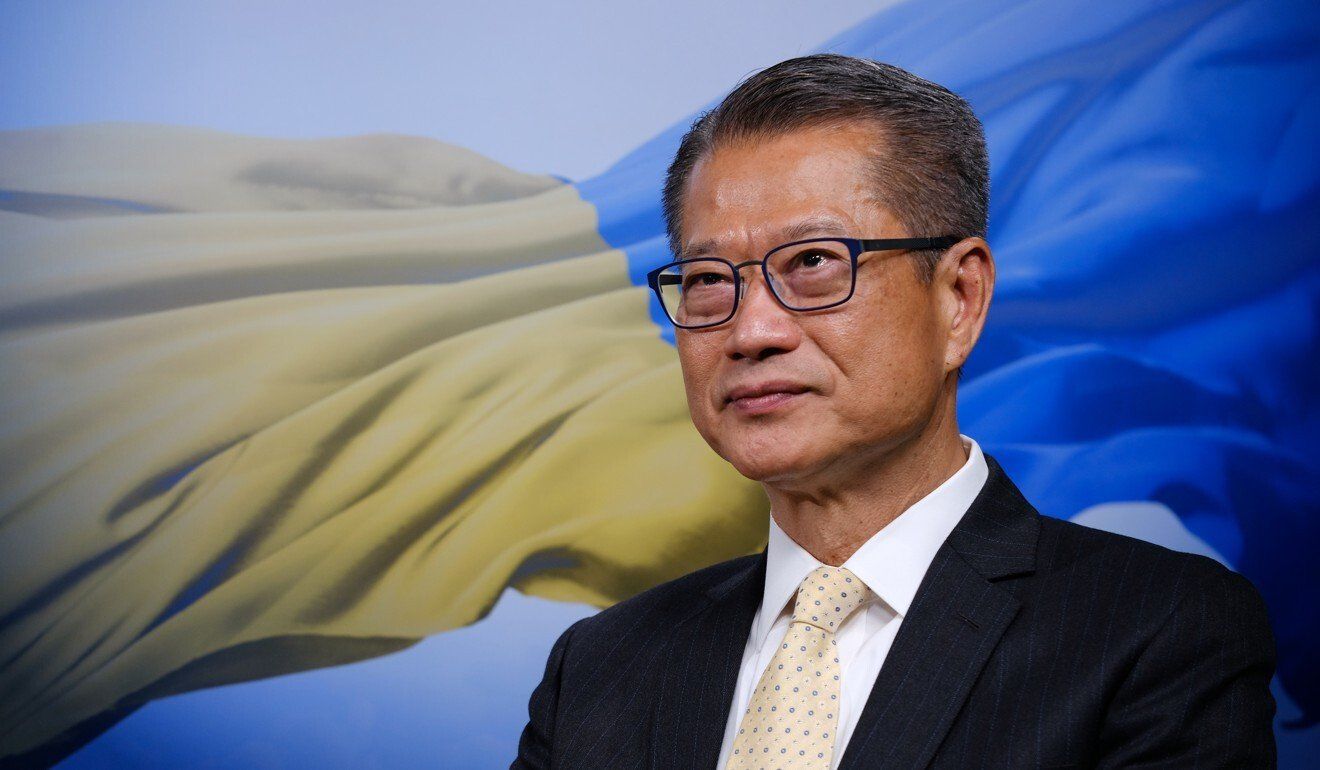
Financial Secretary Paul Chan.


“We need to do it by phases and have to be creative in terms of coming up with a package of financing arrangements,” Chan told the Post, a strategic partner in the event, this year dubbed “The View From China”.

“For certain activities that could involve public-private partnership, whether we should issue green bonds … apart from institutions, perhaps we may involve retail investors so Hong Kong people can own this particular vision and benefit from it.”

Chan predicted that financing packages would be tailor-made for each stage of the project’s development.

To be built up over the next two decades, the planned Northern Metropolis spans an area of 300 sq km, including seven land-based boundary control points, existing towns in Tin Shui Wai, Yuen Long, Fanling and Sheung Shui and their neighbouring rural areas, and six new development areas now in the planning or construction stage.

The development will eventually be home to 2.5 million people, or about a third of Hong Kong’s existing population, and is forecast to generate 650,000 jobs, of which nearly a quarter will be related to innovation and technology.

The government has pledged to conserve about 2,000 hectares (4,942 acres) of ecologically sensitive sites such as wetlands despite the massive changes.

The Northern Metropolis has been heralded as an attempt to create a second centre of power away from Hong Kong Island in the south, with the chief executive calling the new development the city’s “most important area”, as it was intended to facilitate greater integration with plans on the mainland.

“The southern part of Hong Kong is financial services, while the north of Hong Kong will be innovation and technology,” Chan said. “This is not just for industry development; it also releases land to provide housing and other facilities for Hong Kong people.”

He explained that the new development’s placement would allow Hong Kong’s IT industry to tap into the vibrant ecosystem just across the border.

“Working with the mainland in IT development is important, because it has developed clusters of commercial innovation in [Guangdong province’s] Dongguan and a robust consumer market,” he said.

He added that railways would be the transport backbone that wove the two sides together.

Chan separately shed some light on the report he released earlier this month detailing the damage inflicted on the city’s business environment and investment prospects by the anti-government protests of 2019, for which he held the US responsible.

Accusing Washington of using the city as a pawn to suppress China by inciting and supporting the protests, he said he expected Sino-US tensions to last through at least the next decade.

“There may be high times and low times, but the competitive situation will not go away,” he said.

“Hong Kong will face consequences, including more volatility in the financial market. We will have to be very careful in maintaining the market’s financial stability, in devising contingency plans so we are well-prepared for different scenarios.”

Newsletter

Related Articles

0:00
0:00
Close
The Great Western Exit: Why Best Citizens Are Fleeing the Rich World [PODCAST]
The New Robber Barons of Intelligence: Are AI Bosses More Powerful Than Rockefeller?
The End of the Old Order [Podcast]
Britain’s Democracy Is Now a Costume
The AI Gold Rush Is Coming for America’s Last Open Spaces [Podcast]
The Pentagon’s AI Squeeze: Eight Tech Giants Get In, Anthropic Gets Shut Out [Podcast]
The War Map: Professor Jiang’s Dark Theory of Iran, Trump, China, Russia, Israel, and the Coming Global Shock [Podcast]
Labour Is No Longer a National Party [Podcast]
AI Isn’t Stealing Your Job. It’s Dismantling It Piece by Piece.
Lawyers vs Engineers: Why China Builds While America Litigates [Podcast]
Churchill’s Glass: The Drunk, the Doctor, and the Myth Britain Refuses to Sober Up From
Apple issues an unusual warning: this is how your iPhone can be hacked without you doing anything
Kennedy’s Quiet War on Antidepressants Sparks Alarm Across America’s Medical Establishment
The Met Gala Meets the Age of Billionaire Backlash
Russian Oligarch’s Superyacht Crosses Hormuz via Iran-Controlled Route
Gunfire Disrupts White House Correspondents’ Dinner as Trump Is Evacuated
A Leak, a King, and a Fracturing Alliance
Inside the Gates Foundation Turmoil: Layoffs, Scrutiny, and the Cost of Reputational Risk
UK Biobank Breach Exposes Health Data of 500,000, Listed for Sale on Chinese Platform
KPMG Cuts Around 10% of US Audit Partners After Failed Exit Push
French Police Probe Suspected Weather-Data Tampering After Unusual Polymarket Bets on Paris Temperatures
CATL Unveils Revolutionary EV Battery Tech: 1000 km Range and 7-Minute Charging Ahead of Beijing Auto Show
Crypto Scammers Capitalize on Maritime Chaos Near the Strait of Hormuz: A Rising Threat to Shipping Companies
Changi Airport: How Singapore Engineered the World’s Most Efficient Travel Experience
Power Dynamics: Apple’s Leadership Shakeup, Geopolitical Risks in the Strait of Hormuz, and Europe's Energy Strategy Amidst Global Challenges
Apple's Leadership Transition: Can New CEO John Ternus Navigate AI Challenges and Geopolitical Pressures?
Italy’s €100K Tax Gambit: Europe’s Soft Power Tax Haven
News Roundup
Microsoft lost 2.5 millions users (French government) to Linux
Privacy Problems in Microsoft Windows OS
News roundup
Péter András Magyar and the Strategic Reset of Hungary
Hungary After the Landslide — A Strategic Reset in Europe
Meghan Markle Plans Exclusive Women-Focused Retreat During Australia Visit
Starmer and Trump Hold Strategic Talks on Securing Strait of Hormuz Amid Rising Tensions
Unofficial Australia Visit by Prince Harry and Meghan Expected to Stir Tensions with Royal Circles
Pipeline Attack Cuts Significant Share of Saudi Arabia’s Oil Export Capacity
UK Stocks Rise on Ceasefire Momentum and Renewed Focus on Diplomacy
UK to Hold Further Strategic Talks on Strait of Hormuz Security
Starmer Voices Frustration as Global Tensions Drive Up UK Energy Costs
UK Students Voice Concern Over Proposal for Automatic Military Draft Registration
Rising Volatility Drives Uncertainty in UK Fuel and Petrol Prices
UK Moves to Deploy ‘Skyhammer’ Anti-Drone System to Strengthen Airspace Defense
New Analysis Explores UK Budget Mechanics in ‘Behind the Blue’ Feature
Man Arrested After Four Die in Channel Crossing Tragedy
UK Tightens Immigration Framework with New Sponsor Rules and Fee Increases
UK Foreign Secretary Highlights Impact of Intensified Strikes in Lebanon
UK Urges Inclusion of Lebanon in US-Iran Ceasefire Framework
UK Stocks Ease as Ceasefire Doubts in Middle East Weigh on Investor Confidence
UK Reassesses Cloud Strategy Amid Criticism Over Limited Support Measures
×