Harry and Meghan’s Australia Visit Divides Public Opinion Amid Blend of Charity and Commercial Engagements
A four-day privately funded tour combining philanthropy, business ventures, and public appearances has drawn both praise and criticism across Australia
Prince Harry and Meghan Markle’s recent four-day visit to Australia has generated sharply divided reactions, as the couple combined charitable outreach with high-profile commercial engagements in a tour that echoed elements of their former royal roles.
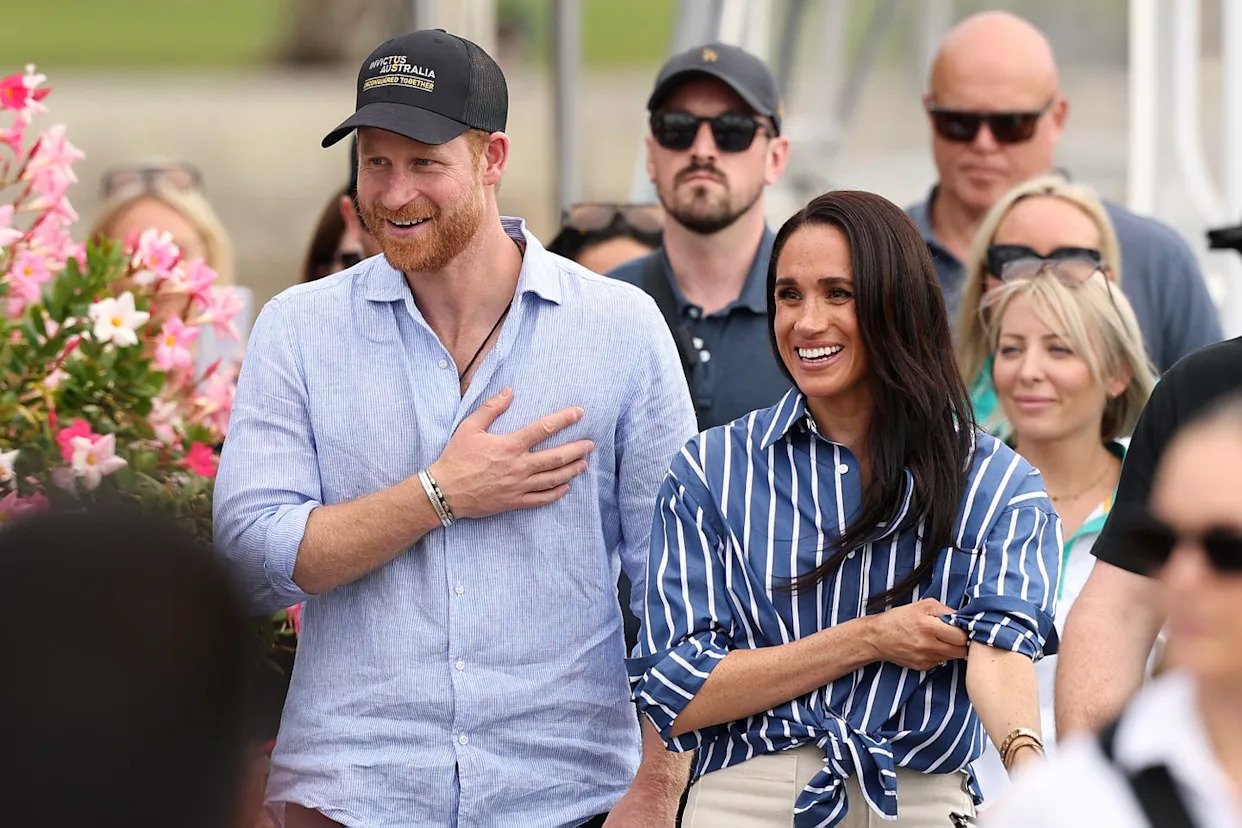
Arriving in Melbourne for their first visit to the country since 2018, the Duke and Duchess of Sussex embarked on a series of engagements spanning hospitals, veterans’ initiatives, mental health advocacy, and community organizations.
Their appearances included visits to a children’s hospital, meetings with first responders and survivors of a recent attack, and participation in events supporting the Invictus Games community.
In several moments that resonated with supporters, the couple engaged warmly with the public, including a widely shared interaction in which Prince Harry danced with a young child during a community event.
The tour, however, was not conducted in any official royal capacity and was privately funded, marking a significant departure from traditional state-backed visits.
Despite this, its structure—public walkabouts, charity visits, and media appearances—closely resembled a royal tour format, prompting debate about the evolving nature of the couple’s public role.
Supporters praised the visit for highlighting important causes, particularly mental health and support for veterans.
Prince Harry’s advocacy on emotional wellbeing, including discussions around postnatal mental health for fathers, was seen as a continuation of his longstanding commitment to these issues.
Meghan Markle’s engagements, including outreach to women’s organizations and hospital patients, were similarly welcomed by those who viewed the couple’s approach as modern and impactful.
At the same time, criticism emerged from various quarters.
Questions were raised about the blending of philanthropy with commercial activity, including Meghan’s participation in a high-priced wellness retreat and the announcement of a new business venture linked to fashion technology.
Some observers argued that these elements risked blurring the line between public service and personal brand-building.
Public debate was further intensified by concerns over costs associated with the visit.
Although the couple covered their own security arrangements, additional policing by local authorities led to scrutiny and sparked a petition opposing the use of public resources.
Media tensions also surfaced after details of the couple’s itinerary were leaked, leading their team to limit information sharing with certain outlets.
Crowd turnout and public enthusiasm appeared more subdued compared to their widely celebrated 2018 royal tour, reflecting a shift in public sentiment since their departure from official royal duties in 2020. While some Australians expressed admiration and curiosity, others voiced skepticism about the purpose and tone of the visit.
The mixed reception underscores the complex position Harry and Meghan now occupy on the global stage—no longer working royals, yet still commanding significant attention and influence.
Their Australia visit has highlighted both the enduring appeal of their public presence and the ongoing debate over how that presence is defined in a post-royal context.
Arriving in Melbourne for their first visit to the country since 2018, the Duke and Duchess of Sussex embarked on a series of engagements spanning hospitals, veterans’ initiatives, mental health advocacy, and community organizations.
Their appearances included visits to a children’s hospital, meetings with first responders and survivors of a recent attack, and participation in events supporting the Invictus Games community.
In several moments that resonated with supporters, the couple engaged warmly with the public, including a widely shared interaction in which Prince Harry danced with a young child during a community event.
The tour, however, was not conducted in any official royal capacity and was privately funded, marking a significant departure from traditional state-backed visits.
Despite this, its structure—public walkabouts, charity visits, and media appearances—closely resembled a royal tour format, prompting debate about the evolving nature of the couple’s public role.
Supporters praised the visit for highlighting important causes, particularly mental health and support for veterans.
Prince Harry’s advocacy on emotional wellbeing, including discussions around postnatal mental health for fathers, was seen as a continuation of his longstanding commitment to these issues.
Meghan Markle’s engagements, including outreach to women’s organizations and hospital patients, were similarly welcomed by those who viewed the couple’s approach as modern and impactful.
At the same time, criticism emerged from various quarters.
Questions were raised about the blending of philanthropy with commercial activity, including Meghan’s participation in a high-priced wellness retreat and the announcement of a new business venture linked to fashion technology.
Some observers argued that these elements risked blurring the line between public service and personal brand-building.
Public debate was further intensified by concerns over costs associated with the visit.
Although the couple covered their own security arrangements, additional policing by local authorities led to scrutiny and sparked a petition opposing the use of public resources.
Media tensions also surfaced after details of the couple’s itinerary were leaked, leading their team to limit information sharing with certain outlets.
Crowd turnout and public enthusiasm appeared more subdued compared to their widely celebrated 2018 royal tour, reflecting a shift in public sentiment since their departure from official royal duties in 2020. While some Australians expressed admiration and curiosity, others voiced skepticism about the purpose and tone of the visit.
The mixed reception underscores the complex position Harry and Meghan now occupy on the global stage—no longer working royals, yet still commanding significant attention and influence.
Their Australia visit has highlighted both the enduring appeal of their public presence and the ongoing debate over how that presence is defined in a post-royal context.