London Daily

Focus on the big picture.
Sunday, Jul 19, 2026

Half of UK population has now had first dose of Covid vaccine

Half of UK population has now had first dose of Covid vaccine

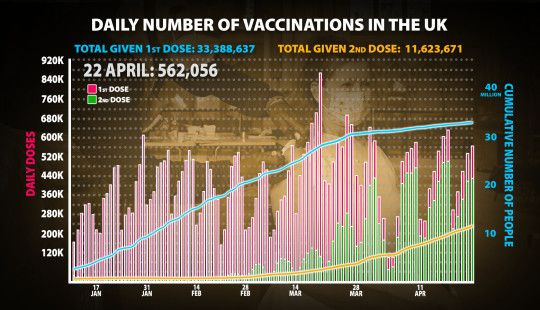
Just over half of the UK’s population have now had their first dose of the coronavirus vaccine.

Out of the country’s 66,650,000 people, 33,388,637 have received the jab, according to Department of Health figures released today,

A total of 11,623,671 have received their second shot, equating to 17.4% of the entire population.

The total number of vaccinations given in the UK now stands at 45,012,308.

Only people aged 16 and over are currently able to get the jab, meaning the proportion of the eligible population to be immunised is even higher.

Today’s update from the Government revealed another 40 people have died within 28 days of testing positive for the virus, falling by more than a third in a fortnight.

Data from the Office for National Statistics shows weekly infections in England dropped by a fifth last week to 90,000, despite the reopening of pubs and restaurants.
Cases and deaths continue to drop as more and more people are vaccinated
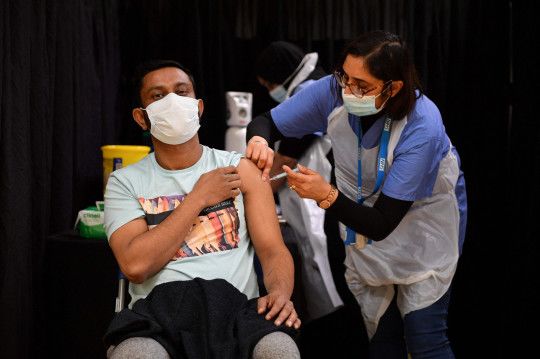
Uptake has been so high that Brits should be able to enjoy a relatively normal summer, scientists have claimed


The next round of lockdown easing is set for May 17, clearing the way for indoor hospitality, overnight stays at friends’ homes, and a number of other measures.

Step four of the Government’s road map for England currently states that all legal limits on social contact will be removed by June 21 at the earliest, when restrictions on large events such as festivals are also expected to ease.

Scientists advising the Government say there is nothing currently in the data to suggest that people will not be able to enjoy a relatively normal summer, though coronavirus cases may well rise as the autumn approaches.

When asked about mask-wearing in the coming months, one source said that vaccines are working so well, and there is such good uptake among the public, that things will return to much more like normal life over the summer months, with cases dropping very low in May.

However, masks and possibly other measures may be needed next autumn and winter if cases surge, they said.


Newsletter

Related Articles

0:00
0:00
Close
Bank of Asia BVI Enters Court-Supervised Liquidation After Regulators Find It Insolvent
Proposed U.S.-Saudi Nuclear Pact Could Permit Limited Uranium Enrichment Under International Safeguards
Netherlands Declares Water Shortage Emergency After Drought Pushes Rivers to Historic Lows
Iran Claims It Destroyed Bahrain’s Main Artificial Intelligence Center in Missile and Drone Strike
Brothers Andrew and Tristan Tate Who Turned "Toxic Masculinity" Into a Brand Arrested in Miami as Britain Seeks Their Extradition
Germany’s Economic Malaise Reopens the Sunday Shopping Debate
Reported CIA Mission Helped Clear the UAE’s Path to Advanced US AI Chips
Artificial Intelligence Capital Fuels Markets While Governments and Regulators Face Mounting Strategic Tests
China’s Moonshot’s Kimi K3 Narrows the Gap With Anthropic Through Scale, Openness and Lower Cost
Gold and Cash Seizure Puts Indonesia’s Senior Anti-Corruption Prosecutor Under Investigation
The Ledger Will Not Trust on Faith
Singapore Considers Lower Taxes for Fund Managers as Hong Kong Intensifies Talent Contest
US Retaliates Against Iran After Two American Troops Killed in Jordan
Bank of England Warns Climate Shocks Could Trigger Sudden Asset Repricing
UK Treasury Places Microsoft, Google, AWS and Oracle Under New Financial Resilience Rules
Scottish Government Faces Pressure Over Delays in Vulnerable Group Background Checks
Crown Prosecution Service Authorises Additional Charges Against Andrew and Tristan Tate
NHS Approves At-Home Cancer Treatments for Rare Blood Disorders
Bank of England Gains Oversight of Major Cloud Providers Supporting UK Financial System
UK Government Plans Major Overhaul of English Local Councils Through New Unitary Authorities
British Steel Nationalisation Dispute Escalates as Chinese Owner Jingye Seeks Compensation
Bank of England Signals Interest Rates Will Stay High as It Warns of Financial Risks From Climate and AI
Trump Administration Pressures Banks to Restrict Financial Access for Undocumented Immigrants
Passenger Bound for Germany Refused to Sit Beside a Woman on a Plane — Then Slapped a Flight Attendant
Ukraine’s Leadership Rift Spills Into the Streets as Protesters Target Army Chief
Ukrainian Drone Barrage Kills Eight and Strikes Russian Logistics Network
Key Trends to Watch
Financial Conduct Authority Warns Cloud and Digital Risks Are Becoming a Financial Priority
Jeffrey Donaldson Appeals Sexual Abuse Conviction as Democratic Unionist Party Opens Review
Welsh Health Authorities Launch Emergency Meningitis Vaccination Programme for Students
Scottish Business Activity Falls for Third Month as Companies Face Rising Costs
Bank of England Regulators Demand Better Access to Digital Banking Services
United Kingdom Cuts Bilateral Aid to Several African Countries by Up to Ninety Per Cent
United Kingdom Introduces Tougher Deportation Rules After Rochdale Exploitation Scandal
NHS England Launches Wearable Technology Plan to Reduce Sepsis Deaths
Amazon Web Services Billing Error Sends Trillion-Dollar Invoices to British Companies
Bank of England Takes Direct Regulatory Role Over Major Global Cloud Providers
Extreme Summer Heat Drives Record Fire Risk and Rising Deaths Across Britain
United Kingdom Nationalisation of British Steel Sparks Diplomatic Dispute With China
United Kingdom Economy Shows Weak Growth Ahead of Major Autumn Budget
Andy Burnham Set to Become United Kingdom Prime Minister After Labour Leadership Victory
The Ten World Cup Finals That Defined Football History
Smartphones Are Getting More Expensive, Sales Are Collapsing, and Even Apple Admits: "Prices Will Rise"
The Monaco Bombing Has Become a Test of Ukraine’s Intelligence Accountability
Leadership Change and Strategic Rivalry Redraw the Political Map
Energy Risk, Uneven Growth and the New Geography of Global Capital
The AI Race Enters Its Infrastructure Era
Security and resilience remain long-term national priorities
Britain balances growth ambitions with public finance pressures
Regional devolution becomes a defining theme of the next Labour era
×