London Daily

Focus on the big picture.
Friday, Apr 24, 2026

Germany backtracks on defense spending promises made after Ukraine invasion

Germany backtracks on defense spending promises made after Ukraine invasion

Days after Russia invaded Ukraine, Chancellor Olaf Scholz pledged to meet long ignored military spending targets of 2 percent of GDP.

Germany on Monday walked back its promise to swiftly raise defense spending to at least 2 percent of its economic output — breaching the key commitment made days after Russia’s invasion of Ukraine to become a more serious military force.

Berlin also sought to play down internal warnings about delays to a flagship procurement of new fighter jets.

During a government press conference, Chief Spokesperson Steffen Hebestreit scaled down expectations for Germany’s defense spending, telling journalists that the 2 percent target would be missed not only this year, but also likely next year: “It’s still open whether that [goal] will be achieved” in 2023, Hebestreit said, adding that his “cautious expectation” was that Germany would still meet the target within this legislative period, which ends in 2025.

The spokesperson’s remarks come amid growing criticism regarding the state of Germany’s military capabilities nine months after Chancellor Olaf Scholz announced a Zeitenwende, or sea change, in German defense and security policy. Last week, Defense Minister Christine Lambrecht came under heavy fire from within her own government coalition after it emerged that she did not order sufficient spare ammunition supplies despite long-known shortages.

Possible delays to the flagship procurement of 35 American F-35 fighter jets for Germany’s air force are causing further friction. Last week, Lambrecht’s ministry admitted in a confidential letter to lawmakers, which has been seen by POLITICO, that the purchase of the high-tech stealth jets — of which the first eight are supposed to be delivered in 2026 — risks being hampered by “delays and additional costs.”

The defense ministry letter said that the aim to have the first F-35 operational by 2026 was “highly ambitious,” citing necessary construction works at an air force base as well as delays in implementing required bureaucratic procedures such as flying permits.

A spokesperson for the defense ministry sought to play down these warnings, telling reporters at the press conference that “the project is clearly on the right track.”

For the German government, delays to defense spending risk becoming an increasing problem for its image and credibility at a time when Berlin seeks to take up a bigger role in ensuring defense and security on the European and international stage.

The 2 percent pledge had been a key promise of Scholz’s Zeitenwende speech to the German Parliament in February, just days after Russia’s invasion of Ukraine, in which the chancellor said: “We will from now, year after year, invest more than 2 percent of gross domestic product invest in our defense.”

This commitment, which is in line with what all members of the NATO military alliance agreed to in 2014, was reiterated by Scholz in an op-ed in Foreign Affairs on Monday — although he no longer said the commitment would be upheld “from now on.”

Last month, it had already emerged that Germany will likely miss its 2 percent target in 2023 as the regular defense budget of about €50 billion will slightly shrink by about €300 million. Only a comparably small first tranche of a massive €100 billion special military upgrading fund is expected to be paid out.
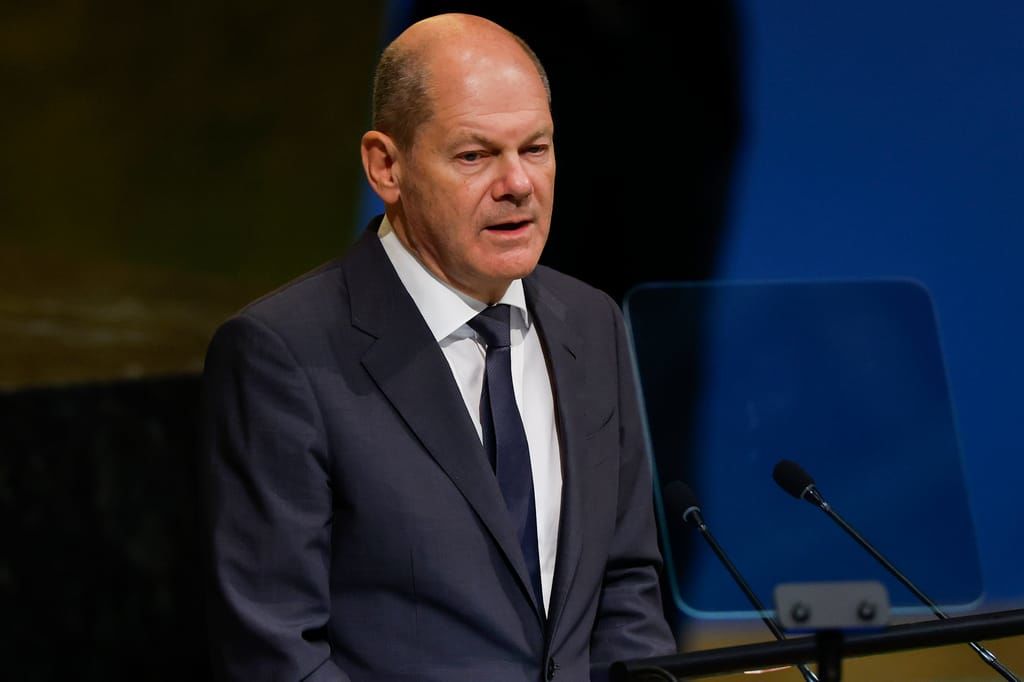

German Chancellor Olaf Scholz

However, Hebestreit’s suggestion that the achievement of the 2 percent target could be pushed back as far as 2025 mark a further backpedaling by the government on Scholz’s initial announcement. The spokesperson argued that lengthy procurement processes as well as delivery shortages by the defense industry were causing the delays.

“The chancellor and this government are determined to get as close as possible to the 2 percent target with the possibilities we have,” Hebestreit said, adding that “we’re making a massive effort.”

He also said that Scholz was still satisfied with the work of his defense minister despite the procurement delays.


Newsletter

Related Articles

0:00
0:00
Close
French Police Probe Suspected Weather-Data Tampering After Unusual Polymarket Bets on Paris Temperatures
CATL Unveils Revolutionary EV Battery Tech: 1000 km Range and 7-Minute Charging Ahead of Beijing Auto Show
Crypto Scammers Capitalize on Maritime Chaos Near the Strait of Hormuz: A Rising Threat to Shipping Companies
Changi Airport: How Singapore Engineered the World’s Most Efficient Travel Experience
Power Dynamics: Apple’s Leadership Shakeup, Geopolitical Risks in the Strait of Hormuz, and Europe's Energy Strategy Amidst Global Challenges
Apple's Leadership Transition: Can New CEO John Ternus Navigate AI Challenges and Geopolitical Pressures?
Italy’s €100K Tax Gambit: Europe’s Soft Power Tax Haven
News Roundup
Microsoft lost 2.5 millions users (French government) to Linux
Privacy Problems in Microsoft Windows OS
News roundup
Péter András Magyar and the Strategic Reset of Hungary
Hungary After the Landslide — A Strategic Reset in Europe
Meghan Markle Plans Exclusive Women-Focused Retreat During Australia Visit
Starmer and Trump Hold Strategic Talks on Securing Strait of Hormuz Amid Rising Tensions
Unofficial Australia Visit by Prince Harry and Meghan Expected to Stir Tensions with Royal Circles
Pipeline Attack Cuts Significant Share of Saudi Arabia’s Oil Export Capacity
UK Stocks Rise on Ceasefire Momentum and Renewed Focus on Diplomacy
UK to Hold Further Strategic Talks on Strait of Hormuz Security
Starmer Voices Frustration as Global Tensions Drive Up UK Energy Costs
UK Students Voice Concern Over Proposal for Automatic Military Draft Registration
Rising Volatility Drives Uncertainty in UK Fuel and Petrol Prices
UK Moves to Deploy ‘Skyhammer’ Anti-Drone System to Strengthen Airspace Defense
New Analysis Explores UK Budget Mechanics in ‘Behind the Blue’ Feature
Man Arrested After Four Die in Channel Crossing Tragedy
UK Tightens Immigration Framework with New Sponsor Rules and Fee Increases
UK Foreign Secretary Highlights Impact of Intensified Strikes in Lebanon
UK Urges Inclusion of Lebanon in US-Iran Ceasefire Framework
UK Stocks Ease as Ceasefire Doubts in Middle East Weigh on Investor Confidence
UK Reassesses Cloud Strategy Amid Criticism Over Limited Support Measures
UK Calls for Full and Toll-Free Access Through Strait of Hormuz Amid Rising Tensions
Starmer Signals Strategic Shift for Britain Amid Escalating Iran-Linked Tensions
UK Issues Firm Warning to Russia Over Covert Underwater Military Activity
OpenAI Halts Stargate UK Project, Casting Uncertainty Over Britain’s AI Expansion Plans
Starmer Voices Frustration Over Global Pressures Driving UK Energy Costs Higher
UK Deploys Military Assets to Protect Undersea Cables From Suspected Russian Threat
Canada Aligns With US, UK and Australia as Europe Prepares Major Digital Border Overhaul
Meghan Markle’s Planned Australia Appearance Sparks Fresh Speculation
Starmer Warns Sustained Effort Needed to Ensure US–Iran Ceasefire Holds
UK to Partner with Shipping Industry to Rebuild Confidence in Strait of Hormuz, Cooper Says
UK Interest Rate Expectations Ease Following US–Iran Ceasefire Agreement
Starmer Signals Major Effort Needed to Fully Reopen Strait of Hormuz During Gulf Visit
UK Fuel Prices Face Ongoing Volatility Amid Global Pressures and Domestic Factors
Kanye West’s Planned Italy Festival Appearance Draws Debate After UK Entry Ban
Smuggling Routes Shift Toward Belgium as Migrant Crossings to UK Evolve
Ceasefire Offers Potential Relief for UK Fuel and Food Prices Amid Ongoing Uncertainty
Iran Conflict Raises Questions Over UK’s Global Influence and Military Preparedness
Senator McConnell Visits Kentucky to Highlight Federal Investment in Local Projects
Kanye West Barred from Entering UK as Legal Grounds Come into Focus
UK Denies Visa to Kanye West After Sponsors Withdraw from Wireless Festival
×