London Daily

Focus on the big picture.
Saturday, May 30, 2026

Germany and France announce new national lockdowns, saying they have lost control of the coronavirus

Germany and France announce new national lockdowns, saying they have lost control of the coronavirus

German Chancellor Angela Merkel and French President Emmanuel Macron each announced month-long national lockdowns Wednesday, saying health authorities have lost control of skyrocketing new infections while hospitals fill rapidly.

The announcements came as governments across Europe struggle to contain a second wave of the virus in colder weather, even after the relative success of strict lockdown restrictions in the spring.

“We in Europe are all surprised by the propagation of the virus,” Macron said in a televised address to the nation.

“The virus is circulating in France at a speed that even the most pessimistic forecasts had not anticipated,” he said, adding that the number of infections had doubled in less than two weeks.

Germany has similarly witnessed a rapid deterioration of its virus response, after being praised in the first wave of the pandemic. The country’s contact-tracing program, paired with mandatory quarantines, had been held up as a model of how to contain outbreaks. Now German health authorities are unable to identify where 75 percent of new infections come from.

“We no longer have control of the spread of the virus,” Merkel said at a Berlin news conference, noting that the number of patients in the country’s intensive care units had doubled in the past 10 days.

“If the tempo of infections stays the same, we will reach the capacity of our health-care system within weeks,” she said. “That’s why it’s completely clear that we need to act and act now.”
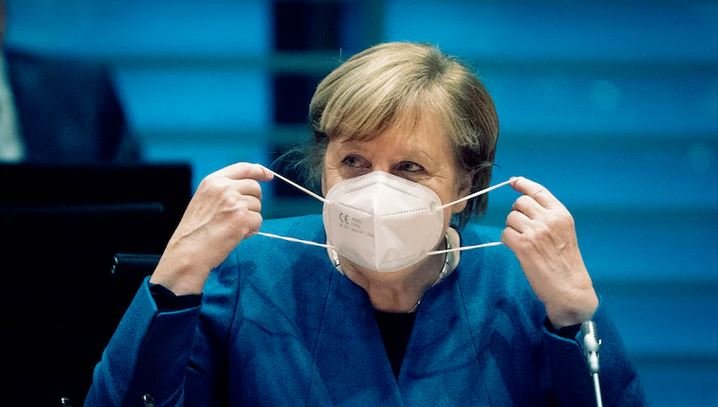

German Chancellor Angela Merkel arrives for a cabinet meeting at the Chancellery in Berlin on Oct. 28.


Starting Friday in France and Monday in Germany, restaurants, cafes and bars will close. In France, Macron said, residents will be permitted to leave their homes only for essential work or medical reasons and will be required to present “attestation forms” when they do. Leaders of Germany’s 16 federal states also agreed to new restrictions on social contacts, limiting public gatherings to a maximum of two households, with a limit of 10 people.

Both Germany and France plan to keep schools open — a priority for many European countries in this second wave — and, unlike in the spring, nursing home visits will be allowed.

Countries across the continent have desperately sought to avoid the return of national lockdowns. Switzerland on Wednesday ordered clubs closed and added new mask requirements, hoping to head off the need for more comprehensive, economy-crippling measures.

But governments are finding that more targeted, piecemeal measures may not be sufficient. Appeals by both French and German leaders to reduce contacts in recent weeks failed to slow the growth of new cases.


A man walks through the streets of Lyon, France, on Wednesday.


France’s new lockdown was a necessary last resort in the face of troubling figures, Macron said. “I have decided that we must return to confinement,” he said. “The whole territory is concerned.”

France on Sunday reported a record 52,010 new confirmed coronavirus infections from the previous 24 hours. It has also seen a steep rise in hospitalizations. On Monday, for instance, French hospitals tracked more than 1,300 new covid-19 patients, the highest one-day total since early April, in the peak of the first wave.

Macron talked his nation through all the options — including “herd immunity,” which he said would result in at least 400,000 deaths, in a country with a population of roughly 67 million people, and which was therefore not acceptable.

“I do not believe in the opposition between health and the economy,” Macron said, defending his decision to impose a second lockdown. “For us, nothing is more important than human life.”

While Germany has greater ICU capacity than most countries in Europe and fewer daily cases than France, Spain and Britain, infections have been growing exponentially. Germany recorded 14,964 new cases Wednesday, doubling from just a week earlier.

Parties and gatherings in public and private spaces were “unacceptable,” Merkel said. Social sacrifices must be made to ensure that schools can remain open, she said.

German industry groups said a new lockdown would be a “death blow.” As Merkel and state leaders hashed out new measures over a video call, thousands of restaurant and bar owners marched to the Chancellery. A van pulled a coffin on a trailer with the words “Entertainment Sector” on the side.
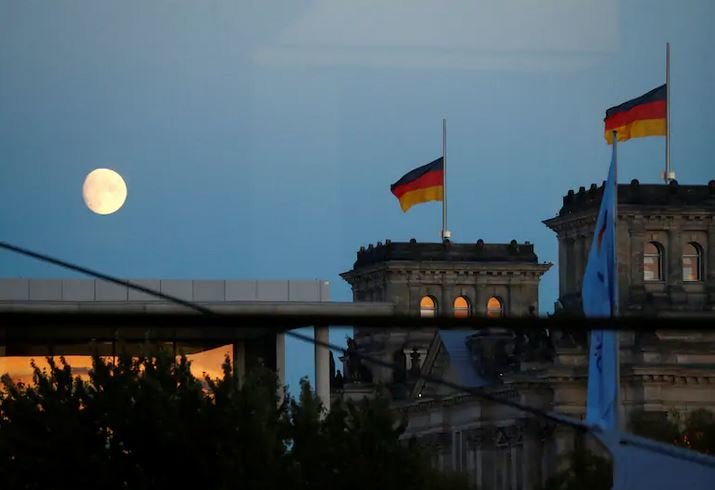

The moon is seen beside the Reichstag building, the seat of the lower house of parliament, the Bundestag, before a news conference at the Chancellery in Berlin on Oct. 28.


Germany said it will make an additional $12 billion available to compensate businesses affected by the closures.

The closures were a “very hard decision,” Health Minister Jens Spahn, who himself contracted the novel coronavirus last week, told German radio. But it was necessary, he said.

“If we wait until the intensive care units are full, it will be too late,” he said.

“We had predicted there would be this second wave, but we ourselves are surprised by the brutality of what’s been happening over the past 10 days,” Jean-François Delfraissy, an immunologist and the chair of the French government’s scientific advisory covid-19 response board, told France’s RTL radio on Monday.

Newsletter

Related Articles

0:00
0:00
Close
Japanese Technology Firm Fujitsu Launches Advanced Artificial Intelligence Tool for Corporate Disclosures
South Africa Officially Launches Nationwide Campaign for Highly Contested Local Government Elections
United Kingdom Commits Additional Funding for Unexploded Ordnance Clearance in Laos
Singapore Announces Stringent New Greenhouse Gas Regulations for Commercial Cooling Systems
Cambodia and Thailand Hold High-Level Border Security Talks at United Nations Headquarters
Myanmar Military Government and China Sign Major Agreement to Upgrade Media and Cultural Cooperation
Knife Attack at Swiss Train Station Leaves Three Injured in Suspected Act of Domestic Terrorism
Transnational Extortion Gang Threatens Canadian Police With Army of One Thousand Armed Operatives
Australia Imposes Forty-Two-Day Quarantine on Cruise Ship Passengers Following Deadly Hantavirus Outbreak
International Monetary Fund Unlocks Seven Hundred Million United States Dollars for Sri Lanka Following Economic Reforms
Australia Launches Record One Point Four Billion Dollar Lawsuit Against Chemical Giant 3M Over Contamination
China and Canada Foreign Ministers Meet in Ottawa in Effort to Stabilize Strained Diplomatic Ties
Indonesia Demands Urgent United Nations Security Council Reform Amid Escalating Global Conflicts
Extreme Weather Patterns Trigger Severe Drought in Madagascar and Destructive Flooding in East Africa
Indian State of Karnataka Faces Political Upheaval as Chief Minister Siddaramaiah Abruptly Resigns
Philippines and Japan Reaffirm Defense Ties as Crucial for Indo-Pacific Regional Stability
Norway Joins French Nuclear Deterrence Initiative in Major Shift for European Security Architecture
Global Critical Mineral Alliances Expand as Western Nations Move to Counter Chinese Supply Dominance
United States Imposes Fifty Percent Tariffs on Mexican Steel and Aluminum Ahead of Trade Pact Review
European Union and China Head Toward Major Trade Conflict Over Clean Technology Exports
United States Economic Growth Severely Downgraded to One Point Six Percent as Stagflation Fears Mount
World Health Organization Warns Central African Ebola Epidemic is Outpacing Containment Efforts
United States Treasury Department Conditions Sanctions Relief on Reopening of the Strait of Hormuz
Iranian Air Defenses Intercept and Destroy United States Military Drone Over Bushehr Province
Iranian Armed Forces Launch Ballistic Missiles Toward Unspecified Targets Prompting Regional Condemnation
United Nations Secretary-General Warns Global Order Facing Highest Level of Conflict Since 1945
Israel Issues Sweeping Evacuation Orders in Southern Lebanon Amid Intensified Hezbollah Conflict
Russia Announces Systemic Military Strikes Targeting Ukrainian Defense and Energy Infrastructure
United States and Iranian Negotiators Reach Draft Agreement to Extend Ceasefire and Resume Nuclear Talks
United Nations Security Council Deeply Divided Over United States Capture of Venezuelan President
US and Iran Exchange Direct Military Strikes Amid Fragile Gulf Ceasefire
World Health Organization Warns of Catastrophic Ebola Outbreak in DR Congo
Russia Threatens New Wave of Strikes on Ukrainian Infrastructure and Embassies
Scientists Warn Atlantic Ocean Currents Could Collapse Faster Than Projected
Anthropic Reaches $900 Billion Valuation in Historic AI Funding Round
Washington Imposes Crippling Sanctions on Iranian Maritime Authority
Japan and the Philippines Initiate Strategic Intelligence-Sharing Pact
Microsoft Deploys Autonomous Computer-Using AI Agents to Global Markets
Anthropic Secures $45 Billion Compute Infrastructure Agreement With SpaceX
U.S. Director of National Intelligence Resigns Amid Administration Shakeup
Micron Technology Crosses Trillion-Dollar Valuation Amid Unprecedented Hardware Demand
Canada and Germany Finalize Historic Long-Term LNG Export Agreement
China Expands International Travel Restrictions on Domestic AI Researchers
Japan Approves Sweeping Overhaul of National Intelligence Apparatus
Global Airlines Scramble Logistics as Middle East Airspace Remains Fractured
Japan's Naphtha Imports Plunge 47 Percent Amid Strait of Hormuz Closure
Global Crude Prices Retreat Below $96 as Gulf Tensions Momentarily Ease
Generative AI Outperforms Human Baselines in Landmark Global Creativity Study
NASA Partners With Private Aerospace to Unveil Permanent Lunar Base Architecture
South Korean Equity Markets Surge on Next-Generation Memory Chip Frenzy
×