London Daily

Focus on the big picture.
Thursday, Jul 23, 2026

General practice is like calling an Uber, MPs say

General practice is like calling an Uber, MPs say

Patients in England are being put at risk because of the unacceptably poor service they receive from GPs, MPs say.

The House of Commons' Health Committee blamed the government's failure to tackle doctor shortages, which had led to a decline in the traditional GP-patient relationship.

Seeing a GP should not be like booking an Uber driver, the MPs said.

The warning comes just weeks after ministers launched a drive to improve access to GP services.

Last month, Health Secretary Thérèse Coffey promised same-day appointments for those that need them, alongside a guarantee no-one would wait longer than two weeks.

Rules were relaxed so extra funding could be used to recruit non-GP staff, such as senior nurses - as well as asking pharmacists to take on more work to free up appointments - as the government is struggling to achieve its goal of recruiting an extra 6,000 GPs in this Parliament.
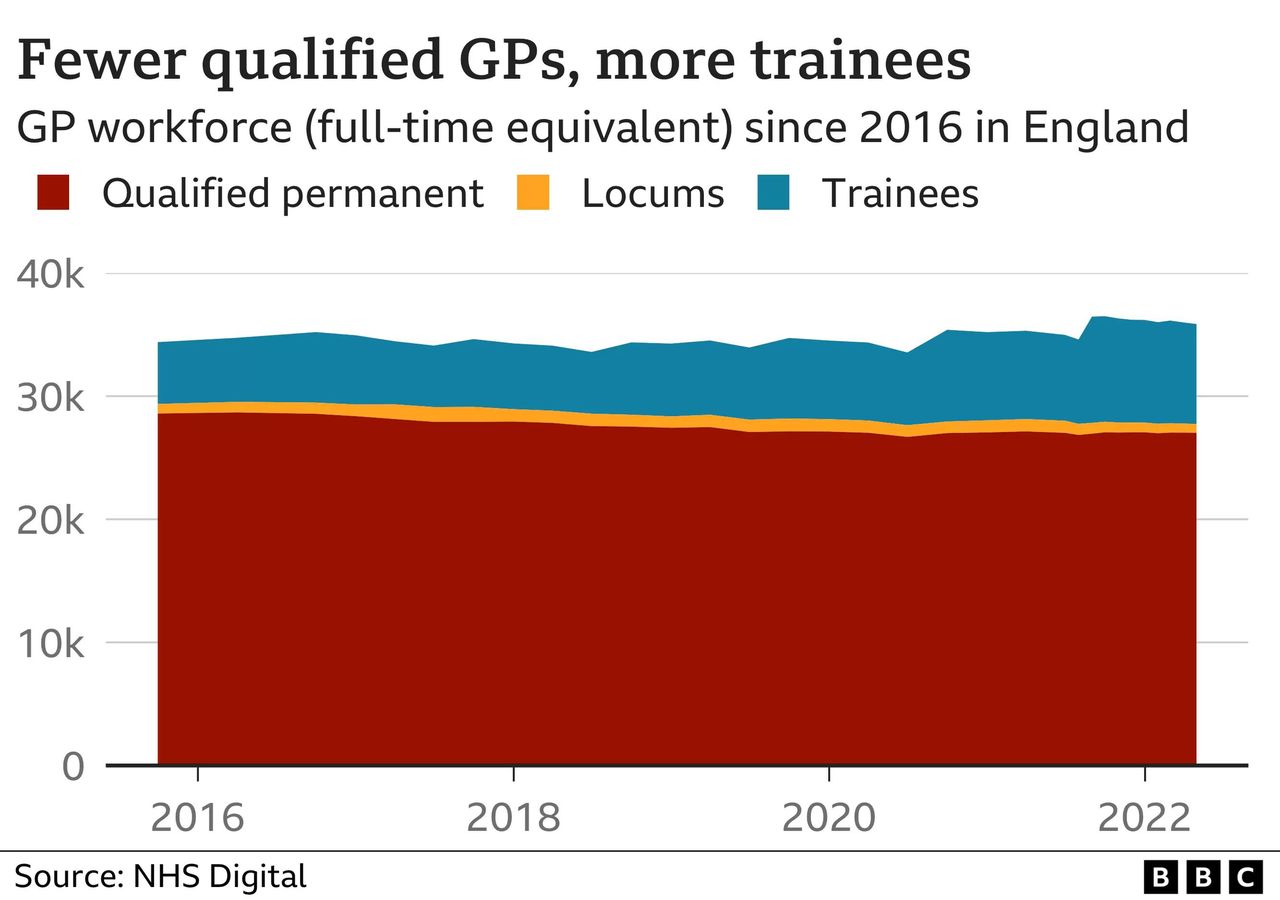

But the cross-party group of MPs said more needed to be done.

And continuity of care - seeing the same GP - was essential to spotting the signs of illnesses early and keeping people healthy and out of hospital.

Committee member Rachael Maskell said: "The important relationship between a GP and their patients is in decline.

"Seeing your GP should not be as random as booking an Uber with a driver you're unlikely to see again.

"General practice is in crisis with doctors demoralised and overworked."


Appalling and impersonal - the experience of patients


Surveys show a sharp decline in the experience of people trying to see a GP.

Alex Boys took his grandmother to an urgent care centre last month after being told it would take three weeks to see her GP.

"My gran had a very simple medical complaint to do with her toes," Alex says.

"It seemed like a minor issue - but because my gran is 93, with any medical complaint the anxiety she feels is very real for her."
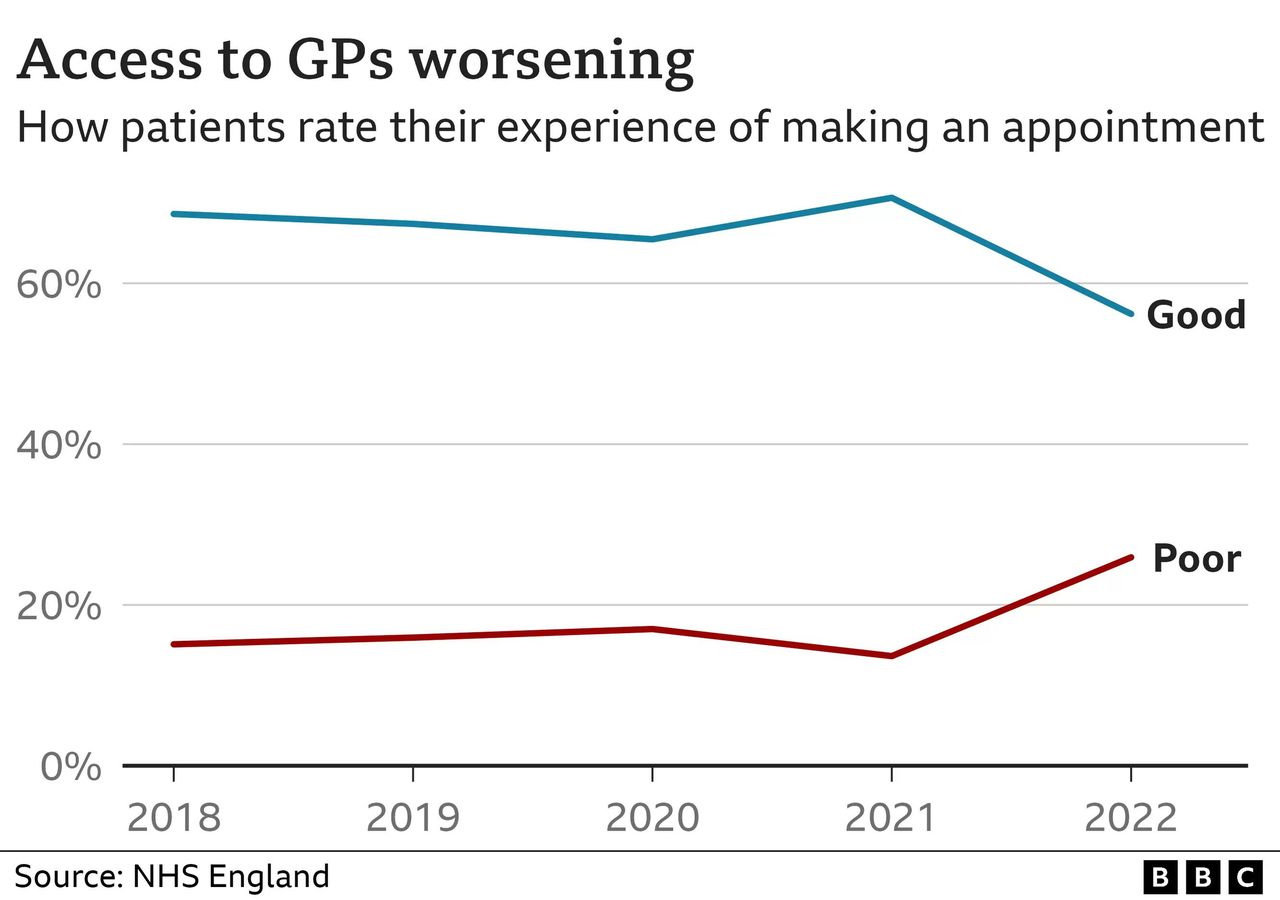

Amina Harun, who lives in London with her husband and two children, says her experience of using a GP practice has been "appalling".

Her practice has had to rely on locums, she says, and the service is "impersonal".

"I've had terrible experience with my GP and still continue to have bad experiences," Amina says.

"You can't call to book appointments and have to do everything via an online app.

"This is not good for anyone that is vulnerable and unable to book via phone.

"The phone lines are always busy or there's usually a long wait."

The committee called for a return of personal lists, so each patient is assigned an individual GP, alongside an expansion of GP training places.

By 2027, 80% of GP practices should be using personal lists, it said, and 100% by 2030.

An analysis by the Nuffield Trust think tank earlier this year for BBC News found a two-fold variation in the number of patients per GP across different areas of England.

And the committee said the poorest areas, which tended to have the fewest doctors and highest levels of ill-health, needed more funding.

Prof Martin Marshall, who chairs the Royal College of GPs, said: "The report recognises what the college has been saying for many years - that GPs and our teams are working under unsustainable workforce and workload pressures and this is impacting on the care we are able to deliver to patients.

"We need to see urgent action taken."

Newsletter

Related Articles

0:00
0:00
Close
UK Government Reviews Long-Term Balance Between Cost Relief, Industry Support, and Public Investment Priorities
BBC Could Receive Permanent Royal Charter Under Government Proposal
Northern Ireland Proposes End to Severe Weather Exemptions for Electricity Compensation Rules
Andy Burnham Holds Talks With UK Devolved Leaders on Regional Cooperation and Devolution
House of Lords Launches Inquiry Into Risks Facing UK Democratic Institutions
ScottishPower Renewables Plans Major Rebuild of Whitelee Wind Farm With Fewer Larger Turbines
UK and Italy Leaders Discuss Global Combat Air Programme and Future European Cooperation
UK Government Announces Six Hundred Million Pound Aerospace Investment Package at Farnborough Airshow
European Union Approves UK Participation in Ninety Billion Euro Ukraine Support Loan Framework
Rolls-Royce Warns UK Government Over Jet Engine Funding Decision and Future Manufacturing Plans
UK Inflation Falls to Two Point Six Percent in June as Fuel and Food Prices Ease
Andy Burnham Begins Premiership With Two Pound England Bus Fare Cap and Electricity Tax Cut Plan
YouGov Poll Shows Tight Competition Among UK Political Parties
Space Technology Investment Expands Through UK-US Cooperation at Farnborough Airshow
UK Opens Final India Young Professionals Scheme Ballot for Three Thousand Applicants
United Kingdom Approved for Ukraine Financial Support Initiative With EU Partners
UK and Ireland Leaders Discuss Security, Energy and Regional Cooperation
British Heart Foundation Identifies Ten UK Areas With Severe Shortages of Defibrillators
Former Southern Water Executives Charged Over Alleged Water Test Manipulation Scheme
IMF Warns UK Economic Growth Will Slow to One Percent in 2026
UK Inflation Falls to Two Point Six Percent in June as Food and Energy Costs Ease
United Kingdom Joins European Union Loan Mechanism to Support Ukraine’s Defense Needs
Prime Minister Andy Burnham Introduces Two-Pound Bus Fare Cap and Energy Tax Relief Measures Across England
Northern Ireland Secures Additional Infrastructure Funding From UK Treasury
Wales Approves Port Investment Plans to Support Green Energy Supply Chains
UK Financial Regulator Simplifies Stock Market Rules to Attract More Listings
UK Reports Decline in Small Boat Crossings Across the English Channel
UK Government Creates Emergency Support Fund for Financially Pressured Universities
Scottish Government Launches Economic Strategy Focused on Innovation and Renewable Industries
UK Expands Sustainable Farming Incentives to Support Environmental Measures
UK Government Introduces New Neighbourhood Policing Standards Across England and Wales
UK Competition Regulator Opens Review of Artificial Intelligence Foundation Models
UK Deepens Indo-Pacific Security Cooperation After Talks With Singapore and Japan
UK Announces Rail Modernisation Plan for Northern England With New Infrastructure Funding
UK Government Updates Housing Planning Rules to Accelerate Residential Construction
UK Approves Major North Sea Offshore Wind Project to Support Clean Power Goals
UK Health Service Begins Major Digital Upgrade to Cut Hospital Waiting Times
Bank of England Holds Interest Rates Steady as UK Inflation Pressures Remain Persistent
UK Universities and Industry Expand Space and Defense Research Partnerships
House of Lords Approves Social Housing Bill Amendments on Shared Ownership Rights
House of Lords Advances Civil Aviation Bill With New Passenger Protection Measures
UK Government Suspends Tariffs on Fertilizer and Food Imports to Reduce Costs
Russell Group Universities Support New UK Business Department Focused on Innovation
UK Parliament Opens Inquiry Into Transport Barriers Facing Young Jobseekers
Home Builders Federation Calls for Lower Costs as New UK Government Sets Housing Priorities
Andy Burnham Meets UK Devolved Leaders to Strengthen Regional Cooperation
Andy Burnham Holds First International Calls With Trump, Macron, and Zelenskyy
Andy Burnham Reshuffles Cabinet With John Healey Appointed Chancellor of the Exchequer
Andy Burnham Government Removes VAT From Electricity Bills to Cut Household Costs
Andy Burnham Becomes United Kingdom Prime Minister After Sir Keir Starmer Resigns
×