EU Signals Faster Path Back for UK if Brexit Reversal Ever Occurs
Brussels officials indicate Britain could be readmitted more quickly than standard accession timelines, but only if a formal political decision to rejoin the EU is made.
European Union institutions have signaled that the United Kingdom could face a significantly accelerated accession process if it ever formally decides to reverse Brexit, reshaping long-standing assumptions about how difficult and time-consuming re-entry would be.
The European Union’s enlargement framework normally requires candidate countries to undergo a lengthy, multi-stage process involving legal alignment, institutional reforms, and unanimous approval from all member states.
In most cases, accession negotiations can take many years and often span more than a decade.
However, in the UK’s case, officials within EU institutions have indicated that a return could be handled differently because Britain already spent nearly half a century integrated into EU legal, economic, and regulatory systems before leaving in 2020.
The key structural factor is regulatory convergence.
Unlike current candidate states, the UK retains much of the underlying legal architecture that previously aligned it with EU rules, even though divergence has increased since Brexit.
This shared baseline is seen in Brussels as a potential shortcut, reducing the need for extensive chapters of negotiation that typically slow down enlargement.
Despite this procedural flexibility, what is confirmed is that any re-entry would still require unanimous approval from all EU member states and full compliance with accession criteria, including commitments on trade rules, judicial standards, and budget contributions.
There is no automatic mechanism for the UK to rejoin, and no formal accession process has been initiated.
The political dimension remains far more complex than the administrative one.
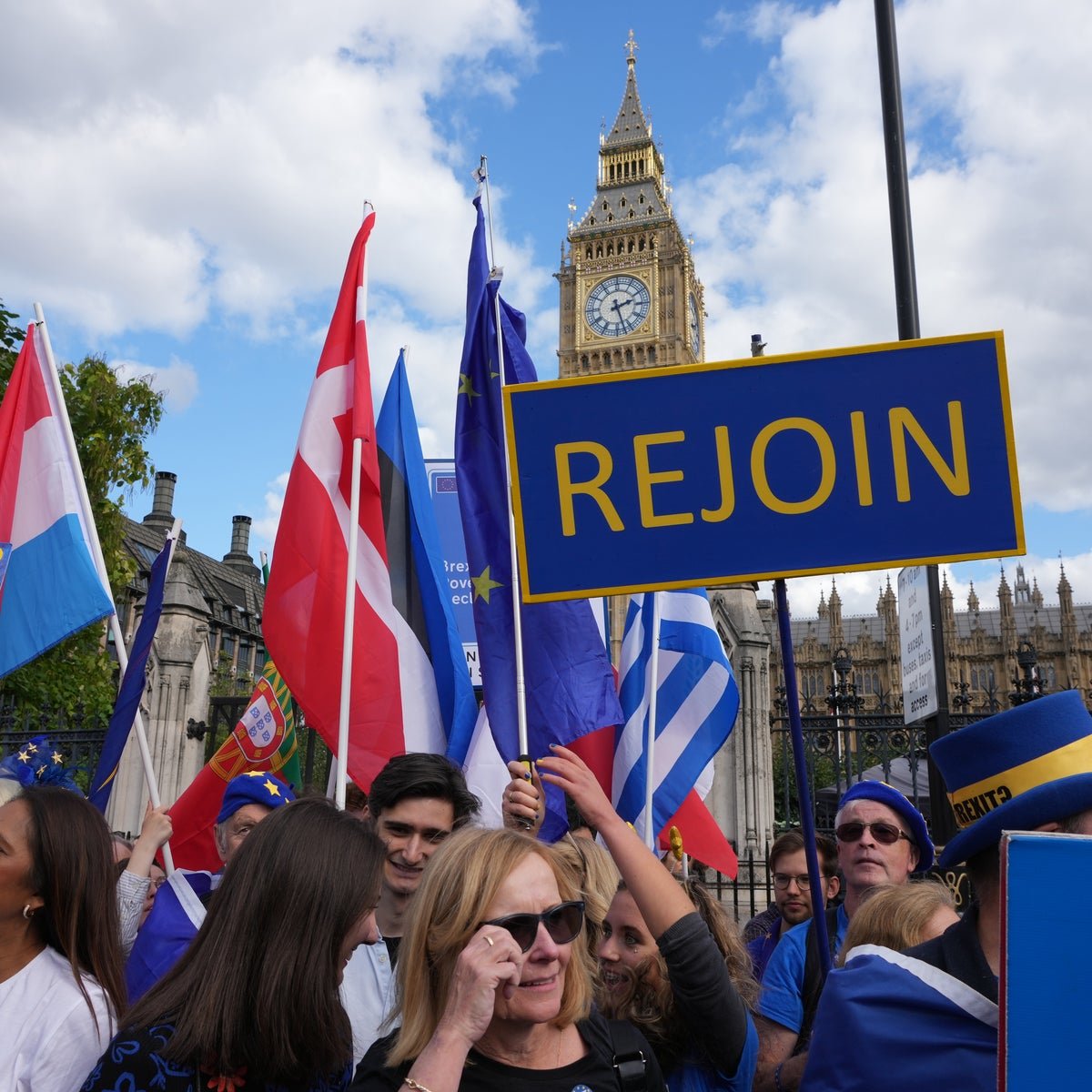
EU leaders have repeatedly emphasized that rejoining would require a clear and sustained mandate from the British electorate and government.
Without such a mandate, discussions remain theoretical rather than operational.
Within the UK, major political parties remain divided on the question, and public opinion is still split, with no consensus emerging on reversing Brexit.
The economic implications are significant on both sides.
Re-entry into the single market and customs union would imply restoring free movement of goods, services, capital, and potentially people, reversing key elements of the current post-Brexit trade relationship.
For the EU, this would mean reintegrating one of its largest former member economies; for the UK, it would require accepting regulatory oversight from EU institutions it previously left.
Even with a potentially faster accession pathway, any return would still involve negotiations over sensitive issues such as financial contributions to the EU budget, jurisdiction of the European Court of Justice, and alignment on trade and regulatory standards.
These remain core political hurdles rather than procedural ones.
The current signals from Brussels therefore do not represent an active invitation or policy shift, but rather a clarification of institutional flexibility: if Britain ever chooses to reverse Brexit, the EU would not necessarily treat it as a standard new applicant starting from zero.
Instead, it would likely be viewed as a special case shaped by prior membership history.
In practical terms, the prospect of a faster accession process changes the technical pathway but not the political threshold.
Any movement toward rejoining the European Union still depends entirely on a domestic UK decision, followed by unanimous approval across all EU member states, locking the outcome firmly into political consensus rather than procedural design.
The European Union’s enlargement framework normally requires candidate countries to undergo a lengthy, multi-stage process involving legal alignment, institutional reforms, and unanimous approval from all member states.
In most cases, accession negotiations can take many years and often span more than a decade.
However, in the UK’s case, officials within EU institutions have indicated that a return could be handled differently because Britain already spent nearly half a century integrated into EU legal, economic, and regulatory systems before leaving in 2020.
The key structural factor is regulatory convergence.
Unlike current candidate states, the UK retains much of the underlying legal architecture that previously aligned it with EU rules, even though divergence has increased since Brexit.
This shared baseline is seen in Brussels as a potential shortcut, reducing the need for extensive chapters of negotiation that typically slow down enlargement.
Despite this procedural flexibility, what is confirmed is that any re-entry would still require unanimous approval from all EU member states and full compliance with accession criteria, including commitments on trade rules, judicial standards, and budget contributions.
There is no automatic mechanism for the UK to rejoin, and no formal accession process has been initiated.
The political dimension remains far more complex than the administrative one.
EU leaders have repeatedly emphasized that rejoining would require a clear and sustained mandate from the British electorate and government.
Without such a mandate, discussions remain theoretical rather than operational.
Within the UK, major political parties remain divided on the question, and public opinion is still split, with no consensus emerging on reversing Brexit.
The economic implications are significant on both sides.
Re-entry into the single market and customs union would imply restoring free movement of goods, services, capital, and potentially people, reversing key elements of the current post-Brexit trade relationship.
For the EU, this would mean reintegrating one of its largest former member economies; for the UK, it would require accepting regulatory oversight from EU institutions it previously left.
Even with a potentially faster accession pathway, any return would still involve negotiations over sensitive issues such as financial contributions to the EU budget, jurisdiction of the European Court of Justice, and alignment on trade and regulatory standards.
These remain core political hurdles rather than procedural ones.
The current signals from Brussels therefore do not represent an active invitation or policy shift, but rather a clarification of institutional flexibility: if Britain ever chooses to reverse Brexit, the EU would not necessarily treat it as a standard new applicant starting from zero.
Instead, it would likely be viewed as a special case shaped by prior membership history.
In practical terms, the prospect of a faster accession process changes the technical pathway but not the political threshold.
Any movement toward rejoining the European Union still depends entirely on a domestic UK decision, followed by unanimous approval across all EU member states, locking the outcome firmly into political consensus rather than procedural design.