UK Secures Landmark Trade Framework with Gulf States in G7-First Deal
Agreement signals deeper economic alignment with Gulf Cooperation Council economies, aiming to expand trade, investment flows, and services access across multiple sectors
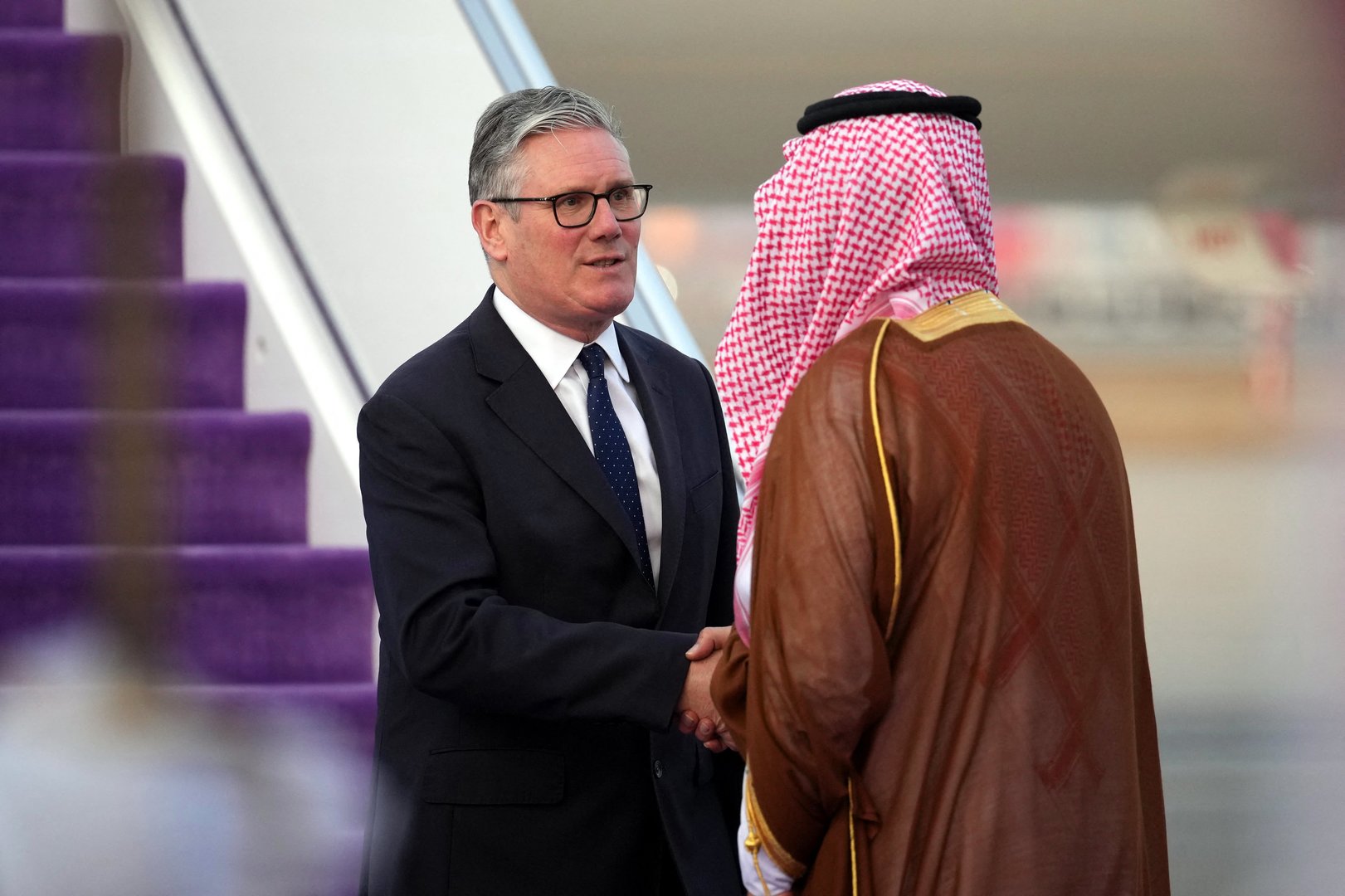
The United Kingdom has announced what it describes as a “historic” trade agreement framework with Gulf Cooperation Council states, marking a significant step in its post-Brexit trade strategy and representing the first such deal of its kind involving a G7 economy and the Gulf bloc as a collective partner.
The agreement is structured as a wide-ranging economic partnership intended to reduce trade barriers, expand market access, and strengthen investment ties between the UK and Gulf economies including Saudi Arabia, the United Arab Emirates, Qatar, Kuwait, Oman, and Bahrain.
It focuses on goods, services, digital trade, and financial cooperation, reflecting the increasingly diversified economic strategies of both sides.
What is confirmed is that the deal is not a single-sector arrangement but a broad framework covering multiple areas of economic activity.
It is designed to lower tariffs on selected goods, improve customs cooperation, and open additional pathways for British firms in sectors such as financial services, legal services, education, and advanced manufacturing.
In return, Gulf exporters are expected to gain improved access to UK markets for energy products, petrochemicals, and sovereign-backed investment projects.
The UK government has framed the agreement as part of its broader effort to deepen trade relationships beyond Europe following Brexit, emphasizing faster-growing markets in the Middle East and Asia.
Officials argue that the Gulf region offers significant opportunities for British exporters, particularly in high-value services and infrastructure development, while also providing access to substantial sovereign wealth funds that could support UK investment and infrastructure financing.
For Gulf states, the agreement aligns with long-term diversification strategies aimed at reducing dependence on hydrocarbons.
Countries such as Saudi Arabia and the United Arab Emirates have been actively expanding into tourism, logistics, technology, and financial services, and the UK partnership is expected to support those ambitions by facilitating knowledge transfer, capital flows, and regulatory cooperation.
The economic implications are substantial but gradual.
Trade between the UK and the Gulf Cooperation Council already exceeds tens of billions of pounds annually, but the structure of the relationship has historically been concentrated in energy imports and investment flows rather than diversified services trade.
The new framework seeks to rebalance that structure, particularly by increasing UK services exports and attracting Gulf capital into British infrastructure and technology sectors.
The agreement also carries geopolitical significance.
It reflects a broader trend of Gulf states strengthening trade ties with multiple global partners, including China, India, and the European Union, while maintaining strategic relationships with Western economies.
For the UK, it reinforces an independent trade policy approach focused on bilateral and regional deals rather than bloc-based negotiations.
The deal remains a framework rather than a fully finalized treaty, meaning detailed implementation will depend on sector-specific negotiations and legislative steps in each participating country.
Regulatory alignment, investment protections, and dispute resolution mechanisms will be developed further as part of the next phase of talks.
The broader implication is a continued shift in global trade architecture toward flexible, multi-regional partnerships, with the UK positioning itself as a services-driven economy seeking deeper integration with high-growth markets in the Gulf region.
The agreement is structured as a wide-ranging economic partnership intended to reduce trade barriers, expand market access, and strengthen investment ties between the UK and Gulf economies including Saudi Arabia, the United Arab Emirates, Qatar, Kuwait, Oman, and Bahrain.
It focuses on goods, services, digital trade, and financial cooperation, reflecting the increasingly diversified economic strategies of both sides.
What is confirmed is that the deal is not a single-sector arrangement but a broad framework covering multiple areas of economic activity.
It is designed to lower tariffs on selected goods, improve customs cooperation, and open additional pathways for British firms in sectors such as financial services, legal services, education, and advanced manufacturing.
In return, Gulf exporters are expected to gain improved access to UK markets for energy products, petrochemicals, and sovereign-backed investment projects.
The UK government has framed the agreement as part of its broader effort to deepen trade relationships beyond Europe following Brexit, emphasizing faster-growing markets in the Middle East and Asia.
Officials argue that the Gulf region offers significant opportunities for British exporters, particularly in high-value services and infrastructure development, while also providing access to substantial sovereign wealth funds that could support UK investment and infrastructure financing.
For Gulf states, the agreement aligns with long-term diversification strategies aimed at reducing dependence on hydrocarbons.
Countries such as Saudi Arabia and the United Arab Emirates have been actively expanding into tourism, logistics, technology, and financial services, and the UK partnership is expected to support those ambitions by facilitating knowledge transfer, capital flows, and regulatory cooperation.
The economic implications are substantial but gradual.
Trade between the UK and the Gulf Cooperation Council already exceeds tens of billions of pounds annually, but the structure of the relationship has historically been concentrated in energy imports and investment flows rather than diversified services trade.
The new framework seeks to rebalance that structure, particularly by increasing UK services exports and attracting Gulf capital into British infrastructure and technology sectors.
The agreement also carries geopolitical significance.
It reflects a broader trend of Gulf states strengthening trade ties with multiple global partners, including China, India, and the European Union, while maintaining strategic relationships with Western economies.
For the UK, it reinforces an independent trade policy approach focused on bilateral and regional deals rather than bloc-based negotiations.
The deal remains a framework rather than a fully finalized treaty, meaning detailed implementation will depend on sector-specific negotiations and legislative steps in each participating country.
Regulatory alignment, investment protections, and dispute resolution mechanisms will be developed further as part of the next phase of talks.
The broader implication is a continued shift in global trade architecture toward flexible, multi-regional partnerships, with the UK positioning itself as a services-driven economy seeking deeper integration with high-growth markets in the Gulf region.