London Daily

Focus on the big picture.
Wednesday, Jun 24, 2026

Covid in Scotland: Masks could stay until Christmas says Swinney

Covid in Scotland: Masks could stay until Christmas says Swinney

Rules on wearing face coverings in Scotland could remain in place until Christmas, the deputy first minister has said.

John Swinney told BBC Scotland it was "perfectly conceivable" that masks could still be mandatory in December.

On Tuesday, the first minister confirmed mask-wearing would remain for "some time" as she announced the move to level zero of Covid restrictions.

Nicola Sturgeon modified planned easing due to the spread of the Delta variant.

Scotland will move to level zero on 19 July which means more people will be allowed to meet indoors and attend weddings and funerals.

However, limits on outdoor meetings are to be maintained and the return of workers to offices will also be delayed.

In an interview on BBC Radio Scotland's Drivetime, Mr Swinney was asked if he could envisaged face coverings being mandatory until Christmas.
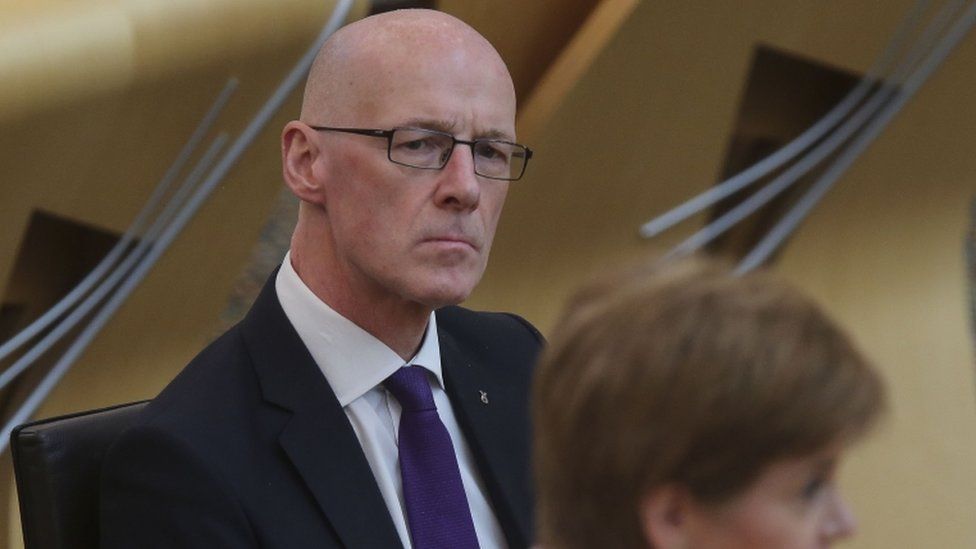
John Swinney says that face coverings are especially important to protect people who are clinically vulnerable


He said: "I think that's perfectly conceivable. I think that we should recognise that we have got to take a careful and cautious approach to the suppression of Covid.

"We know the virus is going to be with us for a long time so the more that we can do, a gradual elementary level to provide obstacles and barriers to the circulation of this virus, the more we should do that."

Mr Swinney also revealed Scottish government modelling predicts that Scotland could record between 2,500 and 10,500 new Covid cases on the day restrictions moves to level zero.

He added: "I think it is likely to be much closer to that lower end of the spectrum than the higher end."

He said the impact of the virus was "moving in the right direction - which means that we can afford some of the relaxation".
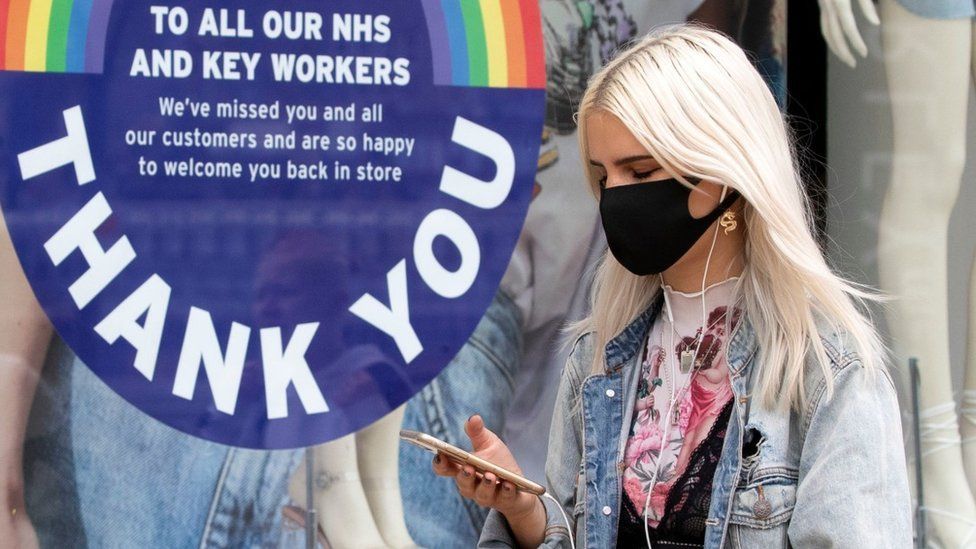
The wearing face masks in shops and on public transport is to continue for the foreseeable future


It is still hoped that Scotland will move beyond level zero from 9 August - the point at which the government aimed to scrap most legal restrictions. A decision on this will be taken next month.

Among other announcements in Ms Sturgeon's statement to Holyrood were plans to remove the blanket requirement for close contacts of those who test positive to self-isolate, as long as they have had two doses of vaccine.

In addition, fully-vaccinated people returning from amber list countries will not need to quarantine as long as they take a test after arrival.

'Like Groundhog Day'


Business groups have broadly welcomed the changes, but some were critical of ministers "moving the goalposts" at the last minute by altering plans, such as hospitality venues now being required to close at midnight.

Stephen Montgomery, spokesman for the Scottish Hospitality Group, said: "The midnight curfew is just a made-up time with no evidence to justify it.

"It's like Groundhog Day with our warnings about driving people into house parties and other uncontrolled spaces that lack all the precautions you find in responsible pubs, restaurants and hotels."
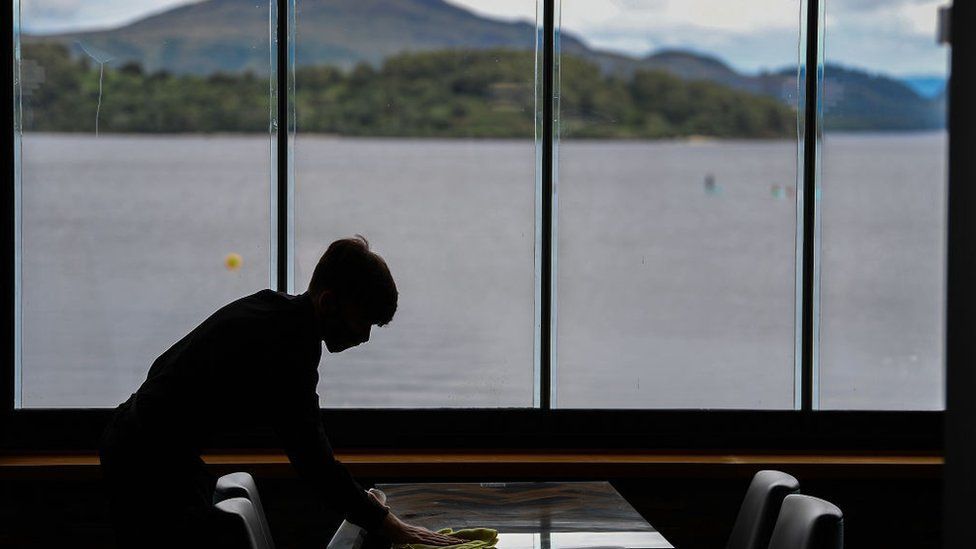
Some of the level zero changes expected by the hospitality industry have been modified by the Scottish government

The Federation of Small Businesses Scotland said no longer requiring people to book a slot in a bar or restaurant "should hopefully generate some extra passing trade", but said there was "less good news" for the events sector with outdoor restrictions to continue.

The Scottish Chambers of Commerce said the move to level zero was "another encouraging milestone", but said the modifications to plans would cause uncertainty - and said postponing the return to offices would be "a bitter blow for employees and employers alike".

The continued wearing of facemasks won the backing of shop worker union Usdaw.

Tracy Gilbert, the union's regional secretary for Scotland, said: "We ask the public to show their support and respect for shop workers by following the law.

"Wearing a face covering in a shop is an important measure to help protect workers who have no option but to interact with large numbers of people as a part of their job."


Newsletter

Related Articles

0:00
0:00
Close
UK Announces New Military Infrastructure at Catterick to Support Engineer Regiment Relocation
University of Reading Ranked Among Top 100 Globally for Sustainability Impact
UK Launches Counter-Fraud Taskforce to Investigate Covid Loan Scams
UK Government Introduces Customs and Tax Reforms to Support High Street Retailers
Jonathan Haskel Nominated as Chair of the UK Office for Budget Responsibility
UK Government Expands Powers to Recover Benefit Debt and Tackle Welfare Fraud
Labour Party Leadership Contest Intensifies as Andy Burnham and Ed Miliband Clash Over Economic Direction
Rail Operators Urge Essential Travel Only as Extreme Heat Threatens UK Network Stability
United Kingdom Issues Red Extreme Heat Warning as Temperatures Forecast to Reach 38°C
Keir Starmer Announces Resignation as UK Prime Minister Amid Deepening Political Instability
UK Biotechnology Sector Receives Increased Public Funding to Support Regional Growth
Police Chiefs Update National Protest Management Guidelines Amid Rising Demonstration Activity
UK Aviation Regulator Expands Support for Regional Airports to Strengthen Domestic Routes
CMA Launches Investigation Into Retail Pricing Across UK Grocery Sector
UK Energy Operator Warns of Winter Supply Pressures Despite Stable Overall Grid Outlook
UK Research Council Expands Funding for Regional Biotechnology and Life Sciences Clusters
UK Compensation Scheme for Post Office Horizon Scandal Reaches 80 Percent Completion
Police Chiefs Issue Updated National Guidance on Managing Large Public Demonstrations
UK Expands Regional Airport Funding Scheme to Boost Domestic Connectivity
UK Competition Watchdog Launches Inquiry Into Grocery Pricing Practices
National Grid Warns of Tight Energy Management Needs During Upcoming Winter Peak Demand
UK Education Department Introduces National Standards for AI Use in Secondary Schools
UK High Court Clears North Sea Carbon Capture Project After Final Legal Challenge Fails
Northern Ireland Leaders Hold Emergency Talks on Trade Disruption Under Windsor Framework
Welsh Government Moves to Expand Social Housing in Response to Severe Affordability Pressures
UK Economy Sees Unexpected Rise in Business Investment in Second Quarter, ONS Data Shows
Scottish Government Unveils Multi-Billion Pound Investment Plan for Renewable Energy and Grid Expansion
UK and EU Agree Enhanced Defence Cooperation Pact Covering Intelligence and North Sea Security
Prime Minister Orders Independent Review of NHS Performance After Record Waiting Lists
Bank of England Holds Interest Rates at 5 Percent as Services Inflation Remains Persistent
UK Heatwave Disrupts Transport, Healthcare and Public Services as Red Weather Alerts Expand Nationwide
Barclays Warns of Growing Cyber Risk Divide Between Large UK Firms and Micro Businesses
European Defence Plans Including Ukraine Integration Prompt UK Strategic Reassessment
UK Equity Markets React as US–Iran Peace Roadmap Eases Oil Price Pressures
United Kingdom Expands Global Clean Energy Partnerships With Brazil, Morocco and Tanzania
Lord David Frost Urges Incoming UK Leadership to Abandon EU Regulatory Reset Strategy
Housing Groups Support Amendment to Strengthen Fire and Gas Safety Access Powers in Social Housing
South London NHS Estates Staff Ballot on Industrial Action Over Pay Structures in Hospital Maintenance Services
United Kingdom Government Invests £60 Million in AI Research Labs at Oxford and University College London
Barclays Cyber Security Report Highlights Rising Threat Exposure Among UK Small Businesses in AI-Driven Attacks
UK Met Office Heatwave Triggers Transport Warnings as Rail Operators Urge Cancellations Amid Infrastructure Strain
South London NHS Estates Workers Ballot for Strike Action Over Pay Disputes Across Major London Hospitals
Barclays Warns of Severe Cyber Security Gap Between Large Corporations and Small Businesses in the United Kingdom
United Kingdom Government Allocates £60 Million for Artificial Intelligence Research Laboratories at Oxford and UCL
National Health Service Approves Teplizumab Treatment to Delay Onset of Type One Diabetes in First European Rollout
Met Office Issues Rare Red Extreme Heat Warning Across London, South East and West Midlands as Transport and Health Systems Face Disruption
Prime Minister Keir Starmer Resigns After Labour Party Revolt Following Economic Stagnation and Local Election Losses
United Kingdom Economy Contracts for Second Consecutive Month as Private Sector Weakens and Job Loss Fears Rise
Taxpayer Support Grows for Higher Digital Levies on Multinational Tech Companies
Bank of England Signals Caution Over Inflation Despite Easing Energy Prices
×