London Daily

Focus on the big picture.
Friday, Oct 02, 2026

Covid-19: Regular tests a 'game-changer' for schools, says science adviser

Covid-19: Regular tests a 'game-changer' for schools, says science adviser

Regular testing of secondary pupils will be a "game-changer" in giving confidence that schools are safe, a government science adviser has said.

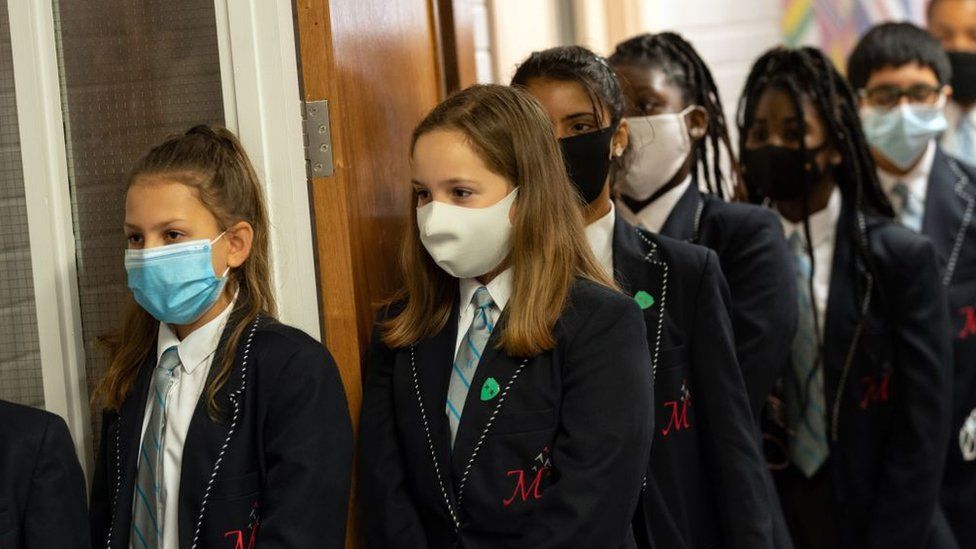
Prof Calum Semple told the BBC better ventilation and face masks would also contribute to a safe reopening in England from 8 March.

Rates of infection in schools had been "quite low", he said.

But a school leaders' union warned the testing demands may mean a staggered return for many.

Secondary pupils in England will be asked to take a rapid lateral flow test twice a week to help identify anyone who might be infectious.

Pupils are required to be given three initial tests at school or college before moving to home testing. There is no testing planned for primary school pupils.

Prof Semple, a member of the Scientific Advisory Group for Emergencies, told BBC Breakfast: "The good news is we're finding quite low rates of active infection within the schools."

He said 1.2% of secondary students and 1.6% of teachers had tested positive, quoting a survey published on Monday by the Office for National Statistics. The ONS tested about 12,000 pupils and teachers in early December.

In some areas, only 0.4% of the tests came back positive, Prof Semple said.

The introduction of regular testing would be "a game-changer, it is giving confidence that schools are safe," he said.

Prof Semple said there was "more and more evidence that children are not the primary drivers of transmission within the community" unlike with flu.

Antibody tests which showed who had been infected in the past suggested that primary school pupils were about half as likely to have had the virus as teachers, while secondary school students were about two-thirds as likely, he said.

"I think we're now at the stage where we can open the schools with extra measures: improved ventilation is going to be so important, face masks will help, and the lateral flow tests to identify the most infectious children," the professor said.

Prof Semple said that a detailed examination into how teachers caught the virus suggested that they were more likely to be infected by another adult in the staffroom than by a pupil in class.

"It's the interaction with other adults which poses the greater risk. Like doctors and nurses, they have to be just as careful in the coffee room and canteen as they are in the workplace environment of the classroom," he said.

Geoff Barton, general secretary of the Association of School and College Leaders, told the BBC that the testing regime would "inevitably" mean a staggered start for secondary school pupils.

"Those young people won't be able to go into their classroom until the first of those tests has been done," he said.

He said it would depend on how much space each school has to conduct the initial tests, but suggested that the week of 8 March would be a "transitional week" for many, with a more normal level of attendance from 15 March.

Announcing the testing regime last week, Prime Minister Boris Johnson said it would offer "even greater reassurance", although he said the evidence showed "schools are safe and the risk posed to children by Covid is vanishingly small".

Reopening schools has been the government's first priority as it eases England's lockdown.

Downing Street said regular testing will be voluntary and kits to perform the tests at home will be available within the first couple of weeks.

Secondary pupils will also be asked to wear masks in classes, as well as in corridors and communal spaces as before, the prime minister's official spokesman said. He added that the issue will be reviewed after Easter.

Prof Semple said that the experience so far is that after undergoing tests a couple of times under supervision, children "get used to" the swabs - which go in the nose or the back of the throat.

He suggested the tests were also giving pupils an example of science in action.

"Perhaps we're generating a new generation of scientists in the process," he said.


What does Covid testing in schools look like?


Newsletter

Related Articles

0:00
0:00
Close
UK Councils to Receive Sweeping Planning Powers to Ban New Vape and Betting Shops
Scottish Court to Rule on Bid to Force No-Confidence Vote Against Aberdeen Council Co-Leader
UK Bans Extra Charges for Seating Children Under 12 Beside Accompanying Adults
UK Introduces Vaping Duty and New Licensing Requirements
Greggs to Close Four UK Factories and Cut 740 Jobs
Hundreds of Prisoners Released Early as England and Wales Prisons Reach 98% Capacity
UK Unveils New Russia Sanctions Targeting War Funding and Shadow Fleet
Burnham Says There Are Strong Indications of Iranian Involvement in RAF Fairford Security Breach
Prime Minister Andy Burnham Raises Prospect of Reviewing Britain's Post-Brexit EU Relationship
Markets Price in Bank of England Rate Increases as Inflation Rises to 3.1%
UK Borrowing Costs Climb Toward 5.5% as Global Bond Sell-Off Intensifies
UK-France One-In-One-Out Migration Agreement Expires as London Seeks Alternative Measures
Southwest England Faces Flood Alerts After Heavy Autumn Storms
UK Expands Funding for Rapid Electric Vehicle Charging Infrastructure
Welsh Government Approves Funding to Upgrade South Wales Transport
Northern Ireland Tensions Rise as Orange Order Rejects Drumcree Compromise
NHS Leaders Back Early Design of Proposed National Care Service
More Than One-Third of Regional UK Universities Face Financial Deficits
UK Current Account Deficit Narrows as Cross-Border Financial Flows Remain Strong
Bank of England and FCA Issue New Rules for Stablecoins and Digital Assets
MI5 Warns UK Universities Over Research Links With Chinese Institutions
UK Energy Price Cap Rises 4% as Electricity VAT Is Temporarily Suspended
Equity Calls for UK Personality Rights to Protect Performers From AI Replication
OpenAI Pauses Advanced Model Training Following Safety Concerns
Scottish Government Proposes Replacing 32 Councils With Larger Regional Authorities
Ofgem Raises UK Household Energy Price Cap by 4% From October
UK Counter-Terrorism Police Continue Investigation After Five Arrests Near RAF Fairford
OECD Cuts UK 2027 Growth Forecast to 1%
Labour Says State Pension Triple Lock Remains Protected Through Current Parliament
Andy Burnham Pledges National Care Service With Free Social Care in England
Six Flags Permanently Shuts Landmark X2 Roller Coaster Following Safety Scandals
Metropolitan Police Rule Out Terrorism in Golders Green Stabbing Investigation
Lithium-Ion Battery Identified as Cause of Fatal Merseyside House Fire
UK Department Rejects New Sea Use Framework Due to Stakeholder Fatigue
Major Thames Water Pipe Burst Causes School Closures in London
Aldi Commits £900 Million to Expand UK Supermarket Network
Scottish Affairs Committee Warns Skills Shortages Threaten Defence Sector Expansion
Parliamentary Committee Warns Northern Ireland Budget Deadlock is Stalling Economic Growth
NHS Hospitals in England Face Severe Shortages of Essential Medications
Home Secretary Signals Major Overhaul of UK Immigration and Leave to Remain Policies
Chancellor Promises New Job Schemes Alongside Strict Fiscal Discipline
Energy Secretary Proposes Taxpayer-Funded Green Transition and National Electricity Grid
UK Government to Renationalise Avanti West Coast Railway Franchise in March
Prime Minister Andy Burnham Pledges Major Social Care and Infrastructure Reforms
Five Suspects Released on Bail Following Alleged Bomb Plot Near RAF Fairford
UK Diesel Prices Hit Record High of 199p Per Litre
Transport for Wales and Network Rail Complete Electrification of South Wales Metro
Defra Expands Incentives for Sustainable Farming and Biodiversity in England
Northern Ireland Executive Approves Funding Package to Resolve Public Sector Pay Disputes
Universities UK Warns of Financial Insolvency Risks for Higher Education Institutions
×