London Daily

Focus on the big picture.
Monday, Jun 15, 2026

Coronavirus: England death count review reduces UK toll by 5,000

Coronavirus: England death count review reduces UK toll by 5,000

A review of how deaths from coronavirus are counted in England has reduced the UK death toll by more than 5,000, to 41,329, the government has announced.

The recalculation is based on a new definition of who has died from Covid.

Previously, people in England who died at any point following a positive test, regardless of cause, were counted in the figures.

But there will now be a cut-off of 28 days, providing a more accurate picture of the epidemic.

This brings England's measure in line with the other UK nations.

New counting method


The new methodology for counting deaths means the total number of people in the UK who have died from Covid-19 comes down from 46,706 to 41,329 - a reduction of 12%.

And figures for deaths in England for the most recent week of data - 18 to 24 July - will drop by 75%, from 442 to 111.

Prof John Newton, director of health improvement at Public Health England (PHE), said: "The way we count deaths in people with Covid-19 in England was originally chosen to avoid underestimating deaths caused by the virus in the early stages of the pandemic."
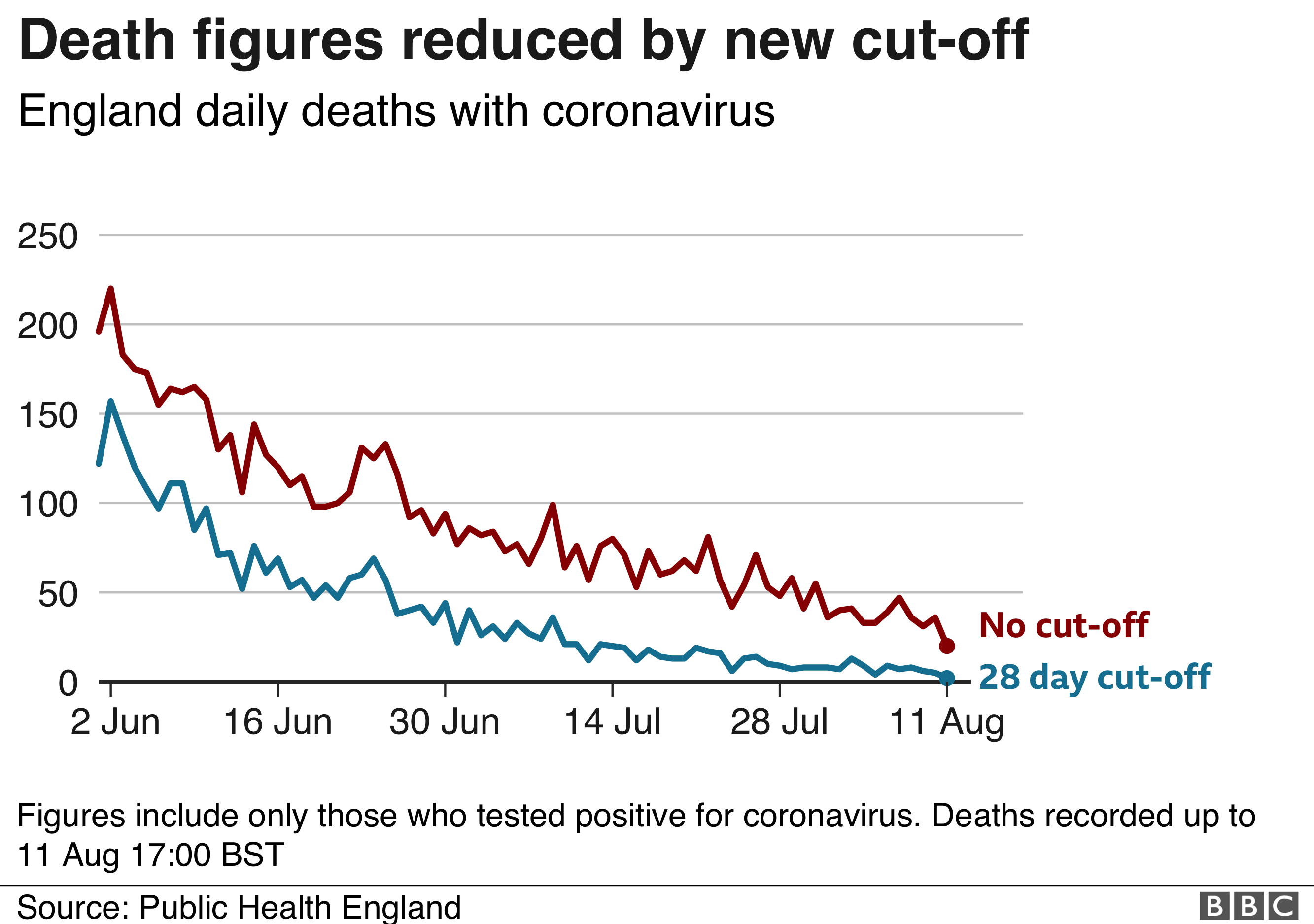


But he said the new methods of calculating deaths from the virus would give "crucial information about both recent trends and the overall mortality burden due to Covid-19".



Calculating the total number of deaths linked to coronavirus is far from straightforward.

It seemed very odd when we learned last month that PHE's figures included everyone who had tested positive, even if they died months afterwards and their death may have had another cause.

Scotland, Wales and Northern Ireland's 28-day limit between a positive test and death looked reasonable. But even so, that measure does not include those who might have been on a ventilator for more than 28 days.

There is no yardstick endorsed by the World Health Organization and PHE argued there was no single ideal way of working out the total.

In future, death numbers for England will be published using both 28-day and 60-day cut off points.

The 28-day limit will, however, be the headline measure and will at least achieve consistency across the UK.

Cutting around 5,400 from the death total will be a talking point among statisticians.

But it won't make any difference to tens of thousands of families who have been bereaved because of the virus.

The health secretary in England, Matt Hancock, called for a review into the way deaths from coronavirus were calculated in July.

It followed concerns raised by Oxford scientists that this was being carried out differently across the four nations of the UK.

In Scotland, Wales and Northern Ireland, the count only included people who died within four weeks of a positive test.

Someone who stayed in intensive care with Covid-19 for five weeks and died would not be counted as a coronavirus death, for example
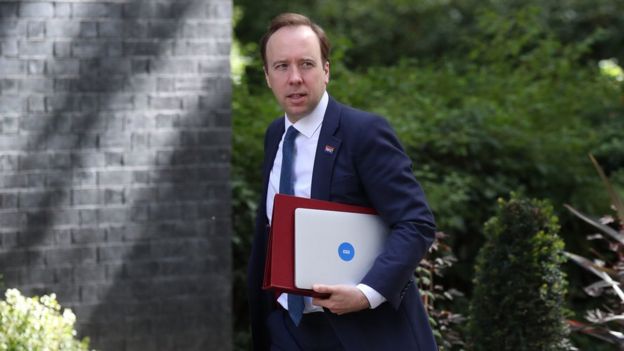

Matt Hancock called for a review into the way deaths were calculated in England


In England, there was no time limit. Someone who recovered from Covid-19 in March and died in a car crash in July would have been counted as a coronavirus death.

Now the UK's four chief medical officers have decided to use a single, consistent measure and publish the number of deaths that occurred within 28 days of a positive coronavirus test confirmed in a lab, every day.

Every week for England, a new set of figures will be published showing the number of deaths that occur within 60 days of a positive test.

Deaths that occur after 60 days - such as those who have been in intensive care for many months - will also be added in if Covid-19 appears on the death certificate.

Sensible step


Prof Keith Neal, emeritus professor of the epidemiology of infectious diseases, from the University of Nottingham, said the two new measures were "sensible".

"The 28 days is widely used in many countries and England is now the same as the rest of the UK," he said.

"The previous measure of always being a Covid death, even if recovered, was unscientific.

"As Covid deaths fall, the number of recovered patients, particularly the very old and those with severe underlying conditions, are now dying from these conditions and not Covid-19."

Prof Neal added: "These non-Covid deaths in survivors would become an ever increasing percentage of the England Covid deaths being reported. It had become essentially useless for epidemiological monitoring."


Newsletter

Related Articles

0:00
0:00
Close
Royal Navy Takes Part in Trooping the Colour for the First Time in 350 Years
Think Tank Warns Labour's European Union Reset Could Carry Significant Economic Costs
UK Semiconductor Centre and Japan's Rapidus Forge Advanced Chip Manufacturing Partnership
UK and Japan Launch Offshore Wind Compact Backed by £9 Billion in Investment
Starmer and Trump Discuss Iran Peace Efforts and Reopening of the Strait of Hormuz
United Kingdom and Japan Sign £18 Billion Investment Partnership Focused on Clean Energy and Advanced Technology
Barclays Moves to Acquire GoHenry in Bid to Expand Youth-Focused Fintech Services
UK Lupus Patients Show Remission in NHS Genetic Therapy Trial
London Clean Air Zones Linked to Fewer Emergency Hospital Admissions for Respiratory Illness
UK World Cup Scheduling Research Suggests Energy Bill Savings From Off-Peak Usage
UK Economic Anxiety Rises Among Young People Over Long-Term Job Prospects
NHS Expands Meningitis B Vaccination Programme for School Leavers and New Students
London Ultra-Low Emission Zone Linked to Drop in Emergency Respiratory Hospital Admissions
Derbyshire Police Officer Investigated Over Alleged Use of AI-Generated Evidence in Case Files
UK Parents Back Proposed Under-16 Social Media Ban as Online Safety Concerns Grow
Four Palestine Action Activists Jailed Over Sabotage Attack on Israeli-Linked Arms Facility
Barclays to Acquire GoHenry in Push to Expand Digital Banking for Children and Teenagers
UK Government Reaffirms Defence Spending Commitment Amid Cabinet Pressure and Political Disputes
Belfast Unrest Prompts Security Review as Paramilitary Activity Comes Under Renewed Scrutiny
SpaceX IPO Pushes Elon Musk to Become World’s First Trillionaire After Record Valuation Surge
United States and Iran Near Landmark Peace Framework as Negotiations Reach Final Stages
UK Competition Watchdog Investigates Ryanair Family Seating Charges
Imperial College Study Links London Emissions Charges to Lower Hospital Admissions
Scottish First Minister Launches US Trade Initiative Ahead of World Cup Match in Boston
Fifteen Million Workers Gain Expanded Sick Pay Rights Under UK Reforms
British Retail Investors Secure Record Participation in SpaceX Share Offering
Keir Starmer and Micheál Martin Coordinate Response to Northern Ireland Violence
NHS Prepares for Major Disruption as Resident Doctors Announce Four-Day Strike
Bank of England Expected to Hold Rates as Energy Costs Complicate Inflation Outlook
Britain Moves to Ban Under-16s From High-Risk Social Media Platforms and AI Chatbots
UK Economy Contracts as Middle East Conflict Weighs on Growth
Defence Secretary John Healey Resigns Over Military Spending Dispute With Treasury
Prime Minister Keir Starmer Faces Leadership Crisis After Senior Cabinet Resignations
NHS Trust Secures Funding for AI Tool to Detect Heart Failure Earlier
Government Unveils £4.5 Billion Investment Plan for Walking and Cycling Infrastructure
Nationwide Reports UK House Prices Falling as Borrowing Costs Remain Elevated
Centre for Social Justice Says Two Million Britons Are Using Illegal Loan Sharks
UK Carmakers Warn EU Local Content Rules Could Damage British Manufacturing
UK Government Imposes Emergency Ban on Seven Potent Synthetic Opioids
Royal Navy Completes Major North Atlantic Anti-Submarine Exercise Off Norway
NHS Figures Show Nearly 3,000 Patients a Day Receiving Care in Hospital Corridors
CBI Cuts UK Growth Forecast as Middle East Tensions Drive Inflation Risks Higher
Dan Jarvis Appointed UK Defence Secretary Following Major Government Reshuffle
University College London Study Links Physical Punishment to Higher Risk of Bullying
East Midlands Railway Unveils First Refurbished Train in £60 Million Modernization Programme
RNLI Issues National Water Safety Appeal Ahead of Expected Heatwave
Climate Change Raises Subsidence Risks for Millions of Homes Across Southeast England
Manchester Advances Plans for Underground Piccadilly Station With £1 Million Funding Commitment
Anti-Immigration Violence Continues in Belfast Amid Heightened Security Concerns
UK Law Locks Great British Railways Into Public Ownership
×