London Daily

Focus on the big picture.
Thursday, Jun 18, 2026

Can the UK-France crackdown on Channel smugglers work?

Can the UK-France crackdown on Channel smugglers work?

French patrols often describe their mission as a game of cat-and-mouse, played against the clock, in the dark.

The northern French coastline offers a smorgasbord of hiding places for smugglers. Trees give good protection from surveillance planes, World War Two bunkers are ideal accommodation for passengers, and sand dunes and scrubland hide boats and slow patrols.

Equipment has helped. UK-funded drones, equipped with thermal-imaging cameras, have changed the game for gendarmes here, spotting people even under tree cover.

Specialist buggies built for sand dunes - another contribution from the UK - have helped units get there faster. But the last stretch to where a boat is being prepared for launch often must be covered on foot - through soft sand and thickets of thorny shrubs, sometimes chest-high.

I've seen officers emerge from the chase with long deep scratches on their bodies - the thorns having torn through both uniform and flesh.

It's not hard to hear a patrol wading through that scrub. By the time gendarmes arrive, there's often just an abandoned boat and some petrol left behind.

The smugglers know what they're doing.

There is, the UK government says, no silver bullet. But the resources ploughed into this coastline, year after year, are having some effect: 30,000 crossings attempts have been intercepted so far this year.

And this latest deal contains two key messages about what's working - operationally and politically.

Firstly, there's more investment for equipment and patrols, with the goal of doubling the proportion of crossings that are intercepted.

And secondly, there's a new agreement that France will host British officers in command centres on French soil, to share information and help direct resources.

Sources close to the negotiations also tell me that France has also offered to allow British officers to come out on patrol with French unit as observers.

And Tony Smith, former Border Force director-general, believes it's a step in the right direction.

It might reduce the flows if it works, but it's not going to stop the boats altogether.

"We haven't had very much control in the past, about exactly how the French deploy the resources we're paying for," he told me. "This new agreement means that we have now got operational and tactical liaison going on about deployments."
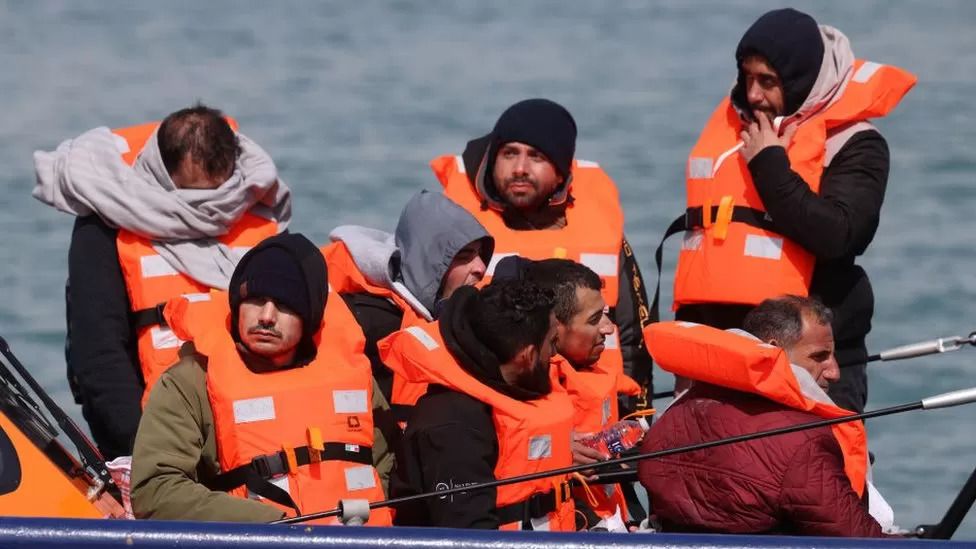

The UK is coming under increasing pressure to reduce migrant journeys across the Channel in small boats

The UK has lobbied for years to have police on the ground here.

When I asked the French Interior Minister last year about France's refusal of this request, he said it was an issue of sovereignty. Giving me a little smile, he added: "Sovereignty is something the British understand."

So this new concession by the French government could be read as a sign of slowly warming relations between Paris and London, after years of tension under Boris Johnson and Liz Truss.

"I'm hearing that liaison with the French is much better now than it was," said Tony Smith. "Now that Rishi Sunak and Suella Braverman have reached out the olive branch to the French, that seems to have paid at least some dividends."

"These observers could help [the UK] understand the difficulties we are in," said the Republican MP for Calais, Pierre Henri Dumont. "We cannot have half our police officers on the French coast. We don't have the human resources. We're talking about human personnel, not just drones and cameras."

Others here are more cynical. As one official at the Calais town hall privately suggested to me, including British police in the operation here - even as observers - makes it harder for those in the UK to continue pointing the finger of blame at France.

Newsletter

Related Articles

0:00
0:00
Close
Health Authorities Warn of Rising Cases of Seasonal Respiratory Illnesses
BAE Systems and Rolls-Royce Advance Multi-Nation Fighter Aircraft Programme
National Archives Publish Declassified Documents on Cold War Energy Security Planning
British Retail Spending Rises Despite Continuing Cost-of-Living Pressures
Wales Launches Social Housing Pilot to Address Affordability Pressures
British Energy Companies Commit £5 Billion to Geothermal and Hydrogen Projects
Northern Ireland Debates Cross-Border Healthcare Partnership With the Republic of Ireland
UK Establishes National Artificial Intelligence Safety Centre With Leading Universities
UK Reports Decline in Small Boat Crossings After Expanding Intelligence Cooperation With France
Scottish Parliament Launches Inquiry Into Delays to Renewable Energy Projects
National Crime Agency Dismantles Alleged Multi-Million-Pound Money Laundering Network in London
Transport Strikes Disrupt Rail and Bus Services Across Northern England
United Kingdom and European Union Open New Security Dialogue on Defense and Border Cooperation
Bank of England Holds Interest Rates at 5% as Services Inflation Remains Elevated
UK Government Unveils Major National Health Service Reform Focused on Decentralization and Performance Funding
Government Advances New Airport Slot Rules to Ease Airline Operating Constraints
BBC Opens Flagship Science-Fiction Franchise to Competitive Production Bids
Chancellor Meets City Leaders Amid Concerns Over Gilt Market Liquidity
Rathbones Shares Fall Seventeen Percent After Regulatory Review Reveals Compliance Failings
United Kingdom Joins Group of Seven Initiative Using Artificial Intelligence and Quantum Computing for Cancer Research
Parliament Debates Doubling Tax Allowance for Pensioners After Major Public Petition
Measles Cases Exceed Seven Hundred in London and the West Midlands
British Military Leadership Faces Parliamentary Scrutiny After Defence Secretary's Sudden Resignation
House of Lords Begins Debate on Steel Industry Nationalisation Legislation
Parliament Advances Bill to Abolish NHS England and Create Single Patient Records
Parliament Fast-Tracks National Security Bill to Expand Powers Against Foreign Threats
United Kingdom and European Union Set July Summit to Deepen Post-Brexit Cooperation
United Kingdom Imposes Seventy New Sanctions on Russia and Expands Support for Ukraine's Nuclear Sector
United Kingdom Announces Social Media Ban for Children Under Sixteen
0British Government Investigates Reports of Russian Warship Firing Warning Shots Near Isle of Wight
UK Supreme Court Revises Legal Definition of Deprivation of Liberty
King’s Birthday Honours Recognise Contributions Across Science, Culture and Public Service
UK Ministry of Defence Reports Interdiction of Russian Shadow Fleet Vessel
UK and US Launch Joint Regulatory Programme for Medicines and Healthcare Products
Solicitor General Refers Murder Sentence to Court of Appeal Under Unduly Lenient Scheme
UK Launches £1.6 Million Mobile Museum Initiative to Expand Cultural Access
Judicial Pay Structure Undergoes Government Review Following Senior Recommendations
Government Confirms Nearly 180 New Youth Hubs Across the United Kingdom
UK Government Expands Careers Support Through Partnership with LinkedIn
Digital News Report Highlights Growing Global Concern Over AI and Information Overload
UK Chancellor Reaffirms Fiscal Discipline and Borrowing Reduction Strategy
UK Government Invests £219 Million in Sustainable Aviation Fuel Development
Rolls-Royce Small Modular Reactors Secures Major Swedish Export Contract
Government Confirms Locations for Nearly 180 Youth Hubs Across Great Britain
UK Government Partners with LinkedIn to Expand Employment Support Services
Reuters Institute Report Flags Rising Public Anxiety Over News and Information Overload
UK Government Commits £219 Million to Expand Sustainable Aviation Fuel Industry
Chancellor Convenes Market Engagement Group to Assess UK Economic Outlook and Productivity Risks
Rolls-Royce Wins Multibillion-Pound Swedish Contract for Small Modular Nuclear Reactors
Government to Ban Social Media Access for Under-Sixteens Across the United Kingdom
×
