

Boris Johnson's taxpayer-funded legal bill rises to £245,000
The former PM is being investigated by MPs over whether he misled them over lockdown parties in Downing Street.
He is facing growing calls to cover the legal costs himself, as the bill for his defence team increased this week for a second time.
The BBC has learned the Treasury did not sign off the decision to use public money to pay the bill.
Ministers and civil servants are expected to follow Treasury guidance when making decisions about spending public money.
The Treasury's spending rulebook says its consent should always be sought for costs "which set precedents, are novel, contentious or could cause repercussions elsewhere in the public sector".
The BBC asked the Cabinet Office if this would apply to Mr Johnson's legal bills, in a freedom of information (FOI) request. We were told the Treasury was not required to approve all spending decisions.
Mr Johnson was flanked by lawyers during a four-hour, televised grilling by MPs on the Commons Privileges Committee in March, when he denied knowingly or deliberately misleading Parliament.
If the committee finds him in contempt of Parliament, he faces suspension as an MP, which could trigger a by-election in his Uxbridge and South Ruislip constituency.
Mr Johnson's spokesperson said he had "fully co-operated with this very long process at every stage" and would consider the committee's findings when they are brought forward.
'Surprised'
The contract to hire Mr Johnson's legal team - led by top barrister Lord Pannick KC - was signed last August, shortly before he was forced to resign as prime minister.
It was this week extended for a second time, rising in value from £222,000 to £245,000.
Opposition parties say Mr Johnson should pay the legal fees himself given he has earned millions since standing down as prime minister.
The Cabinet Office and a source close to Mr Johnson argued there is a long-standing precedent that former ministers are supported with legal representation.
But former senior civil servants disputed this, telling the BBC that it would not normally apply to parliamentary inquiries, like the one into Mr Johnson.
"Payment of legal fees to the former prime minister in these circumstances would seem to set a precedent and is certainly contentious, so looks on the face of it to meet the test to require Treasury approval," said Alex Thomas, a former top civil servant and director of the Institute for Government think tank.
"I'm surprised that the payments were made at all - but also that they were signed off in this way."
A former permanent secretary also said they were surprised that Treasury approval wasn't sought.
"I would have regarded this as novel and contentious," the former senior civil servant said. "The whole situation is highly unusual, if not unique.
"It's just the sort of situation that Treasury cover is needed for."
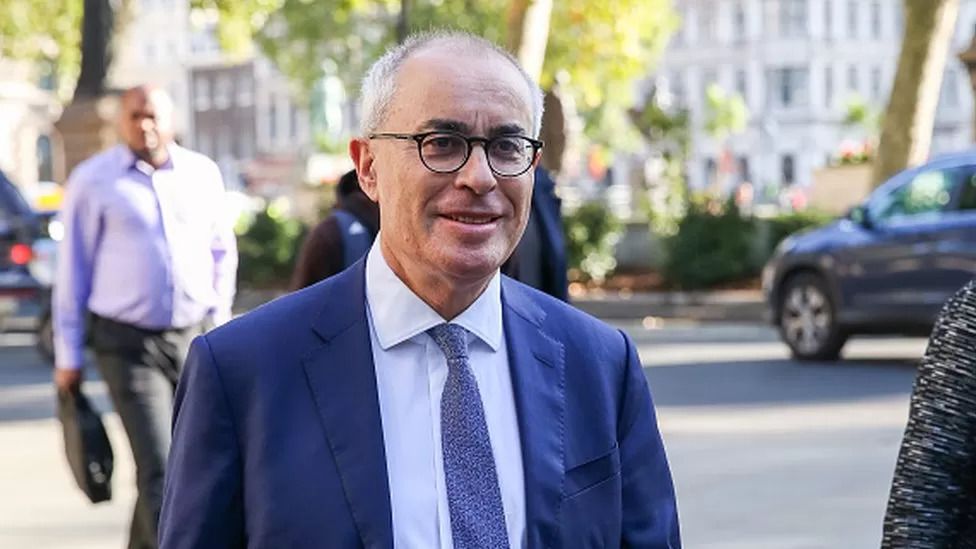 Lord Pannick KC was on the legal team hired to defend Mr Johnson during the Partygate inquiry
The government has cited legal support given to former ministers during public inquiries into the Grenfell Tower fire, the BSE disease outbreak in cattle, and infected blood products as examples of precedents.
But these were statutory public inquires initiated by the government, rather than political parliamentary inquiries carried out by MPs.
Byers inquiry
The last former minister to be investigated by a parliamentary committee for misleading Parliament was former Labour MP and transport secretary Stephen Byers in 2005.
Mr Byers was investigated by the standards committee over allegations he misled MPs over the collapse of British railway infrastructure operator Railtrack.
In 2006, the committee cleared Mr Byers of lying to MPs about Railtrack, but told him to apologise for giving an "untruthful" answer.
During the four-month inquiry, Mr Byers appeared in front of MPs to give evidence, as Mr Johnson did in March this year.
But unlike Mr Johnson, Mr Byers did not have any legal representation - taxpayer funded or otherwise - during the parliamentary inquiry, nor was he offered any by the government.
More recently, Dominic Raab, the former deputy prime minister, paid his own legal fees during a bullying inquiry.
Investigation calls
The latest register of interests for MPs shows Mr Johnson has earned more than £5.5m since he stood down as prime minister last year.
Labour's deputy leader, Angela Rayner, said the arrangement that left taxpayers covering Mr Johnson's "Partygate defence fund is not only without precedent but without justification".
She said Prime Minister Rishi Sunak "must explain why he failed to put a stop to this brazen scheme and take immediate steps to ensure his disgraced predecessor returns this money to the public purse".
The Liberal Democrats have urged Mr Sunak to ask his ethics adviser to launch an investigation into Mr Johnson's legal costs and "how this precedent has been set".
"Boris Johnson needs to pay back every penny to the public purse immediately," said Wendy Chamberlain, the party's chief whip.
The National Audit Office (NAO), which scrutinises government spending, has been examining the decision to cover Mr Johnson's legal costs during the inquiry, including whether Treasury approval was sought.
A spokesperson said the spending watchdog had spoken to the Cabinet Office about the contract to hire Mr Johnson's lawyers "as part of our standard audit procedures".
"The NAO will publish its report on the Cabinet Office's 2022-23 accounts when the audit is complete, which we are planning to be this summer," a spokesperson said.