

Beijing delegation’s Hong Kong visit about more than economy, analysts say
At first glance, the high-profile visit by Beijing officials to Hong Kong this week appeared to be simply a series of meetings and forums to discuss China’s five-year grand plan, but analysts have said key messages were imparted during the four-day trip.
Not only was the central government keen to make known its impatience with the failure of local officials to push forward policies from Beijing’s perspective, the city’s administration and legislators were told they should act in concert with the central government and scrutinise relevant laws that benefit cross-border economic development under the “new political climate”.
Leading the delegation, deputy director Huang Liuquan of the State Council’s Hong Kong and Macau Affairs Office (HKMAO) made several telling speeches over the four days.
Addressing senior officials and lawmakers on Monday, Huang pointed to the “great responsibility” local leaders had, not only to govern and develop the city, but also to improve residents’ quality of life.
 Huang Liuquan, a deputy director of the State Council’s Hong Kong and
Macau Affairs Office, attends a Hong Kong United Youth Association
event.
Huang Liuquan, a deputy director of the State Council’s Hong Kong and
Macau Affairs Office, attends a Hong Kong United Youth Association
event.
While integration with the five-year plan required the city’s officials to align their thinking with Beijing’s, he said, alignment went beyond convergence in policies and market practices.
In the forums, which included an unprecedented session at the Legislative Council, Huang and Luo Huining, director of Beijing’s liaison office in Hong Kong, warned the city must pick up the pace of its economic development.
The speed of integration with mainland China must increase, they said, adding too much time had already been wasted on endless politicking and infighting.
Senior officials said these warnings proved how the relationship between Hong Kong and the mainland had changed over the years.
Long considered the world’s freest economy, Hong Kong has been on a learning curve over its role in national development following its return from British to Chinese sovereignty in 1997.
In the past decade, however, Hong Kong has been striving for greater integration with the vast, fast-growing and often aggressively capitalist market across the border, amid fears and warnings that the city may otherwise be marginalised.
A senior local official, who has a working relationship with mainland authorities, said while Hong Kong authorities and community leaders might be enthusiastic about economic integration with the mainland at a policy level, they were often perceived in Beijing as being unable to see the big picture.
“The central government’s impatience may be more of a feeling that Hong Kong people, including senior officials, don’t often see their work from the perspective of the central government’s grand blueprint, and therefore have not done enough political work to align Hong Kong’s interests with those of the central government,” the official said.
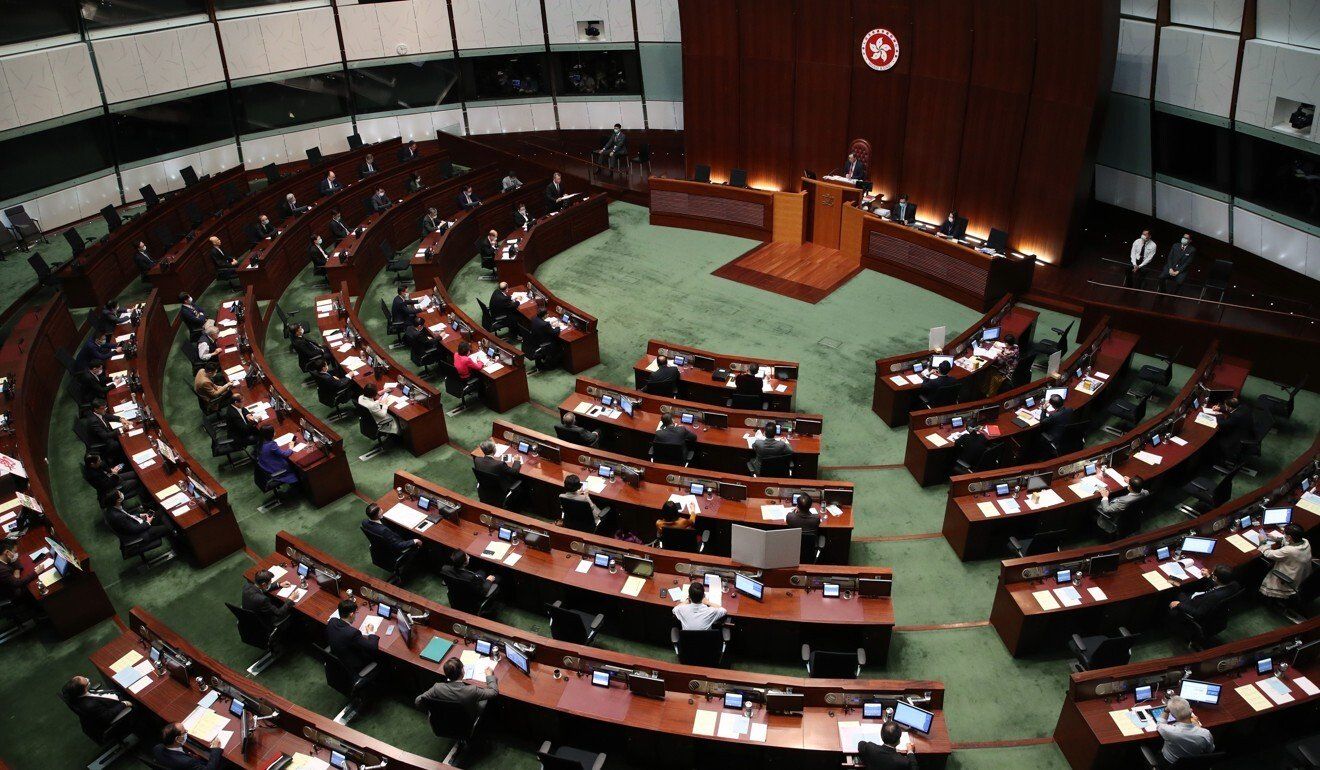 The four-day visit included an unprecedented meeting with lawmakers.
A Hong Kong finance official said the city’s leader, Carrie Lam Cheng Yuet-ngor, and other high-ranking office holders might be well aware of Beijing’s expectations, but civil servants, the business sector and the public were not responsive enough, which was why Lam invited mainland officials to come and “provide directions directly”.
“In the past few years, there has been increased cross-border cooperation, such as the launch of the northbound Bond Connect scheme, and ongoing discussions on the southbound plan, but it seems only the finance sector knew what was going on, and the public were largely not involved,” the source said.
“Now at least all officials and all legislators took a lesson. There will be only more top-down instructions in the future. This was just a trial.”
Passed in March, the 14th five-year plan, a national blueprint for the new era, has dedicated a chapter to outlining strategies to support the development of Hong Kong, with the focus on enhancing the city’s competitive advantages in all spheres of economic activity, and helping it better integrate with the overall development of the country.
A pro-Beijing heavyweight, who attended one of the forums, said all officials and lawmakers should get used to the “new political climate”.
“It’s so explicit that the central government is demanding cooperation from the Legislative Council, and these talks and conversations are proving to us that we should put ‘one country’ higher than ‘two systems’ when we discuss any new legislation and law amendments,” the person, who preferred to stay anonymous, told the Post.
The politician said one of the more direct messages from the mainland delegation was one made by Zhou Chengjun, the director of the People’s Bank of China’s Finance Research Institute, who suggested Hong Kong, as home to the largest pool of offshore renminbi deposits, enjoyed “the best conditions” to offer tailor-made products in the currency for global markets.
Arrangements for this high-level visit were also starkly different from those of other HKMAO leaders in previous years.
It was the first time that the session between officials of both governments was formally called “a briefing”. Previous meetings were referred to as “seminars”, including the one led by Zhang Xiaoming, the office’s deputy director, when he visited in March to gauge views on the electoral overhaul
, which is designed to ensure only patriots can govern Hong Kong.
All of the three sessions were hosted only in Mandarin, with officials from the National Development and Reform Commission giving lengthy speeches on national policies for the first time.
Only members from pro-establishment business and youth groups were selected to attend the other two separate briefings with the mainland officials.
In 2011, the then HKMAO director, Wang Guangya, invited opposition lawmakers to join hundreds of other attendants at a lunch.
Speaking on condition of anonymity, a Hong Kong government information officer said that in the past, Beijing’s liaison office would discuss various arrangements with their local counterparts before a major event involving mainland officials, but the practice had changed this time.
“The liaison office refused to explain the media arrangements to us before we got to the site,” the officer said. “That’s a new normal we have to adapt to.”
Fang Zhou, research director of the One Country Two Systems Research Institute, a Hong Kong think tank, disagreed with the assessment that the two senior mainland officials’ remarks showed Beijing’s impatience with Hong Kong.
But Fang said until recently, the local government seldom promoted economic development from the perspective of easing growth of a particular industry.
“Hong Kong officials should have a better mastery of the nation’s policies on economic and social development so as to complement the nation’s economic development strategies,” he said.
Fang added that Huang’s delegation highlighted Beijing’s high expectations for Hong Kong after the imposition of the national security law
in June last year.