London Daily

Focus on the big picture.
Tuesday, Jun 16, 2026

BBC loses 200,000 licence fee payers as boss watches numbers ‘like hawk’

BBC loses 200,000 licence fee payers as boss watches numbers ‘like hawk’

The BBC saw the number of households choosing not to pay for a TV licence and therefore not use the broadcaster’s services rise from 1.5million to 1.7million in 2020.

On Monday March 22, Tim Davie, director-general of the BBC, Glyn Isherwood, interim chief operating officer at the BBC and Charlotte Moore, chief content officer of the BBC, met with the Public Accounts Committee in the House of Commons to discuss the ‘future of the BBC’ and the firm’s financial strategy moving forward.

During the committee meeting, Glyn explained that there are more than 27 million households across the UK, of which ‘1.7million elect not to have a licence and do not enjoy the BBC services’.

The interim chief operating officer stated that while they did not have the figures for the past five years, ‘we do know that last year there was a small increase’ in the number of people choosing not to pay for a licence.

‘The current figures show that 1.7million people have taken that option and that grew from the previous year of about 1.5 million people. So it is still a relatively small number, and it is within the context of having annual licences of between 25million and 26million each year,’ he said.

BBC boss Tim acknowledged that TV licence fees make up the ‘majority’ of the BBC’s revenue, stressing that it is ‘utterly critical to us’.
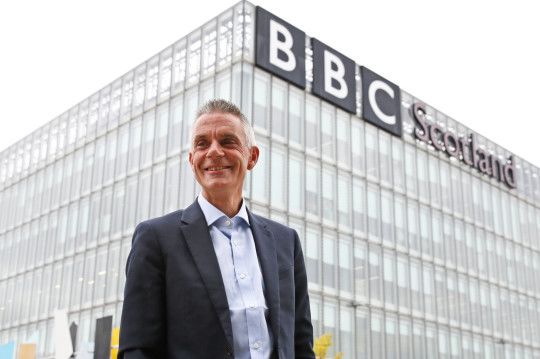
Tim Davie, was appointed director-general of the BBC in September 2020


‘Just to be clear, there are two levers to the number we are talking about in terms of our income risks. One is the level of households, obviously, and the other is this number of 1.7 million that say they no longer need or technically don’t qualify for the licence,’ he said.

‘It is worth saying that we are watching that number like hawks. It is the majority of our revenue, so it is utterly critical to us.’

When asked how the BBC could ‘persuade the next 200,000 people to carry on paying’, Tim explained that it’s ‘understandable’ that viewers may choose on-demand TV over live TV viewing.

‘The reason why they are not is that they are understandably saying – this is exactly the conversation we have been in – that in the land of a lot of competition, are they watching a live television stream?’ he said.

‘It is not surprising that when on demand is burgeoning in the way that it is and other services are there, you are going to get some marginal erosion of people who are not watching a live stream or television.’

BBC Three’s return as a broadcast channel was recently announced


However, he added that the BBC’s ‘role is not to beat Netflix’, emphasising that the company has to be ‘incredibly well focused on where we differentiate ourselves versus the rest of the market’.

‘Just to be clear to the Committee, we are not going to beat Netflix. We need to do something radically different,’ he said.

Tim continued, stating: ‘We always have sat alongside competitors. The issue is that the BBC needs to be highly distinctive, whether that be Bitesize education provision or locally made drama.

‘I remain optimistic that we can maintain reach and maintain our value, but I have been very clear with the BBC: there is jeopardy there and we have no inalienable right to exist.

‘There can’t be room for complacency about that, but I do not subscribe to the view that universality is an impossible mission to deliver.’

On the government’s website, it outlines that a TV licence costs £157.50 for homes and businesses, with the licence costing £53 for black and white TV sets.

Households must pay for a TV licence if they watch or record programmes on a TV, computer or other digital device as they air and to download or watch BBC programmes on iPlayer, either live or on demand.


Newsletter

Related Articles

0:00
0:00
Close
UK Supreme Court Revises Legal Definition of Deprivation of Liberty
King’s Birthday Honours Recognise Contributions Across Science, Culture and Public Service
UK Ministry of Defence Reports Interdiction of Russian Shadow Fleet Vessel
UK and US Launch Joint Regulatory Programme for Medicines and Healthcare Products
Solicitor General Refers Murder Sentence to Court of Appeal Under Unduly Lenient Scheme
UK Launches £1.6 Million Mobile Museum Initiative to Expand Cultural Access
Judicial Pay Structure Undergoes Government Review Following Senior Recommendations
Government Confirms Nearly 180 New Youth Hubs Across the United Kingdom
UK Government Expands Careers Support Through Partnership with LinkedIn
Digital News Report Highlights Growing Global Concern Over AI and Information Overload
UK Chancellor Reaffirms Fiscal Discipline and Borrowing Reduction Strategy
UK Government Invests £219 Million in Sustainable Aviation Fuel Development
Rolls-Royce Small Modular Reactors Secures Major Swedish Export Contract
Government Confirms Locations for Nearly 180 Youth Hubs Across Great Britain
UK Government Partners with LinkedIn to Expand Employment Support Services
Reuters Institute Report Flags Rising Public Anxiety Over News and Information Overload
UK Government Commits £219 Million to Expand Sustainable Aviation Fuel Industry
Chancellor Convenes Market Engagement Group to Assess UK Economic Outlook and Productivity Risks
Rolls-Royce Wins Multibillion-Pound Swedish Contract for Small Modular Nuclear Reactors
Government to Ban Social Media Access for Under-Sixteens Across the United Kingdom
Government Approves Fast-Tracked Broadcast Merger Reshaping UK's Media Landscape
Resignation of Defence Secretary John Healey Triggers Debate Over UK Military Strategy
Britain Intensifies Diplomatic Efforts to Support US-Iran Ceasefire
Bank of England Faces Tough Interest Rate Choices After Economic Contraction
Belfast Sees Second Day of Anti-Migrant Riots as Police Deploy Water Cannons
UK Economy Shrinks in April as Energy Price Shocks Weigh on Growth
UK to Ban Social Media Access for Children Under 16 From 2027
UK Parliament Opens Week of Fast-Tracked Security and Infrastructure Legislation
Northern Ireland Projects £21 Million Boost From Major Cultural and Sporting Events
UK and Japan Sign Technology Security Pact to Strengthen AI and Supply Chain Cooperation
UK Welcomes US-Iran Peace Breakthrough Aimed at Restoring Strait of Hormuz Shipping
British Forces Intercept Russian Shadow Fleet Oil Tanker in English Channel Sanctions Operation
UK to Ban Social Media for Under-16s Under Landmark Online Safety Expansion
Anti-Immigrant Riots Spread Across Belfast, Raising Security Concerns
Ministry of Defence Opens Europe's Largest Drone Testing Facility in Swindon
Kemi Badenoch Calls for Deregulation to Restore City's Global Competitiveness
UK Housing Market Posts Sharpest June Price Decline in Fourteen Years
NHS Waiting Lists Rise to 7.22 Million as Diagnostic Delays Reach New Highs
Makerfield By-Election Raises Prospect of Labour Leadership Challenge
Bank of England Expected to Hold Interest Rates at 3.75% Despite Growing Policy Divisions
Royal Marines Seize Sanctioned Russian Oil Tanker in English Channel
Prime Minister Keir Starmer Set to Ban Social Media and AI Chatbots for Under-16s
United Kingdom Markets Rally After US-Iran Deal Reopens Strait of Hormuz
Defence Secretary John Healey Resigns Over Military Spending Dispute, Triggering Cabinet Crisis
Royal Navy Takes Part in Trooping the Colour for the First Time in 350 Years
Think Tank Warns Labour's European Union Reset Could Carry Significant Economic Costs
UK Semiconductor Centre and Japan's Rapidus Forge Advanced Chip Manufacturing Partnership
UK and Japan Launch Offshore Wind Compact Backed by £9 Billion in Investment
Starmer and Trump Discuss Iran Peace Efforts and Reopening of the Strait of Hormuz
United Kingdom and Japan Sign £18 Billion Investment Partnership Focused on Clean Energy and Advanced Technology
×