Assisted-Suicide Reform Stalls in UK as Parliament Rejects Key Legislative Push
Pro-life campaigners celebrate the failure of a proposed legal change, while supporters of assisted dying signal the debate will continue amid deep political division
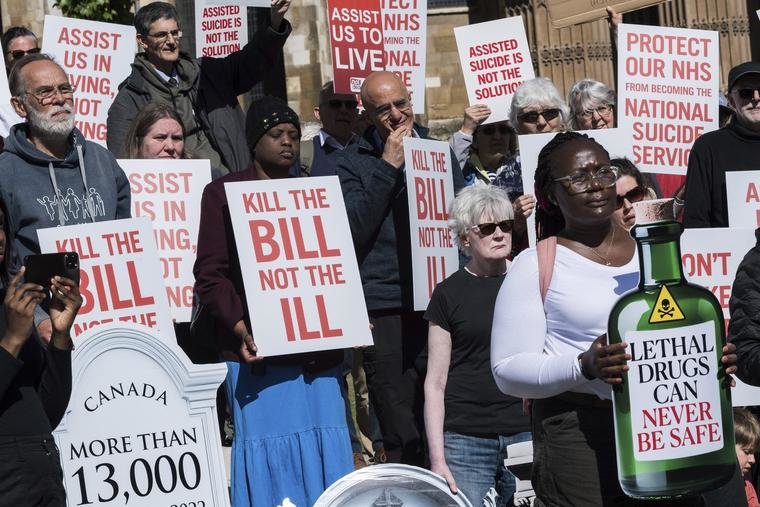
A major legislative attempt to change end-of-life law in the United Kingdom has failed to advance, reinforcing the country’s long-standing legal prohibition on assisted suicide and exposing deep divisions in Parliament and public opinion over how terminal illness should be managed.
What is confirmed is that a proposed reform aimed at legalising or expanding access to assisted dying did not pass through the UK’s legislative process, effectively halting its immediate progress.
The result preserves the existing legal framework, under which assisting another person’s death remains a criminal offence, even in cases involving terminal illness.
The outcome was welcomed by pro-life advocacy groups, which described it as a significant victory for the protection of vulnerable people.
These groups argue that legalising assisted dying would introduce risks of coercion, undermine palliative care, and create pressure on elderly or seriously ill patients to end their lives prematurely.
On the opposing side, supporters of reform argue that current law forces some terminally ill patients to endure prolonged suffering and travel abroad to access assisted dying services in jurisdictions where it is legal.
They frame the issue as one of individual autonomy and medical compassion, particularly in cases where death is imminent and pain is difficult to manage.
The key issue underlying the debate is the legal and ethical boundary between preserving life and permitting medically assisted death.
In the UK, the law currently treats assisted suicide as a criminal act, while allowing palliative care that may indirectly shorten life as part of pain management under established medical practice guidelines.
The legislative failure does not end the broader political debate.
Assisted dying has been repeatedly raised in Parliament over the past decade, with shifting levels of support and opposition across party lines.
However, no consensus has emerged sufficient to overturn the existing prohibition.
Public opinion remains divided.
Surveys over time have shown significant support for assisted dying in cases of terminal illness, but that support often decreases when safeguards, eligibility criteria, and enforcement concerns are considered in detail.
Lawmakers have pointed to these complexities as a reason for caution in changing the law.
Healthcare professionals are also split.
Some medical associations warn that legalisation could fundamentally alter the doctor–patient relationship, while others argue that strict regulatory frameworks could allow for assisted dying without undermining broader medical ethics.
The immediate consequence of the failed legislative push is that the UK’s current legal position remains unchanged.
Assisted suicide remains illegal, and any future attempt to reform the law will require renewed parliamentary initiative, likely under conditions of continued political and ethical division.
What is confirmed is that a proposed reform aimed at legalising or expanding access to assisted dying did not pass through the UK’s legislative process, effectively halting its immediate progress.
The result preserves the existing legal framework, under which assisting another person’s death remains a criminal offence, even in cases involving terminal illness.
The outcome was welcomed by pro-life advocacy groups, which described it as a significant victory for the protection of vulnerable people.
These groups argue that legalising assisted dying would introduce risks of coercion, undermine palliative care, and create pressure on elderly or seriously ill patients to end their lives prematurely.
On the opposing side, supporters of reform argue that current law forces some terminally ill patients to endure prolonged suffering and travel abroad to access assisted dying services in jurisdictions where it is legal.
They frame the issue as one of individual autonomy and medical compassion, particularly in cases where death is imminent and pain is difficult to manage.
The key issue underlying the debate is the legal and ethical boundary between preserving life and permitting medically assisted death.
In the UK, the law currently treats assisted suicide as a criminal act, while allowing palliative care that may indirectly shorten life as part of pain management under established medical practice guidelines.
The legislative failure does not end the broader political debate.
Assisted dying has been repeatedly raised in Parliament over the past decade, with shifting levels of support and opposition across party lines.
However, no consensus has emerged sufficient to overturn the existing prohibition.
Public opinion remains divided.
Surveys over time have shown significant support for assisted dying in cases of terminal illness, but that support often decreases when safeguards, eligibility criteria, and enforcement concerns are considered in detail.
Lawmakers have pointed to these complexities as a reason for caution in changing the law.
Healthcare professionals are also split.
Some medical associations warn that legalisation could fundamentally alter the doctor–patient relationship, while others argue that strict regulatory frameworks could allow for assisted dying without undermining broader medical ethics.
The immediate consequence of the failed legislative push is that the UK’s current legal position remains unchanged.
Assisted suicide remains illegal, and any future attempt to reform the law will require renewed parliamentary initiative, likely under conditions of continued political and ethical division.