London Daily

Focus on the big picture.
Sunday, Jul 12, 2026

Almost 50 shops a day disappear from High Streets

Almost 50 shops a day disappear from High Streets

More than 8,700 chain stores closed in British High Streets, shopping centres and retail parks in the first six months of this year, research suggests.

That is an average of nearly 50 outlets a day as the impact of the pandemic and changing shopping habits continue to hit many towns and city centres.

But despite some high-profile retail failures, the number of closures has fallen compared with a year earlier.

City centres have suffered the worst, while retail parks are faring better.

The store closure figures were collected by the Local Data Company on behalf of accountancy firm PwC.

"After an acceleration in store closures last year couple with last minute Christmas tier restrictions and lockdowns extending into 2021, we might have expected a higher number of store closures this year," says Lisa Hooker, consumer markets lead at PwC.

She believes continued government support combined with resilient consumer spending has helped many operators weather the storm and survive the pandemic.

The Local Data Company tracked more than 200,000 stores operated by businesses with more five outlets across Great Britain. These include everything from retail and restaurants, to cafes, banks and gyms.

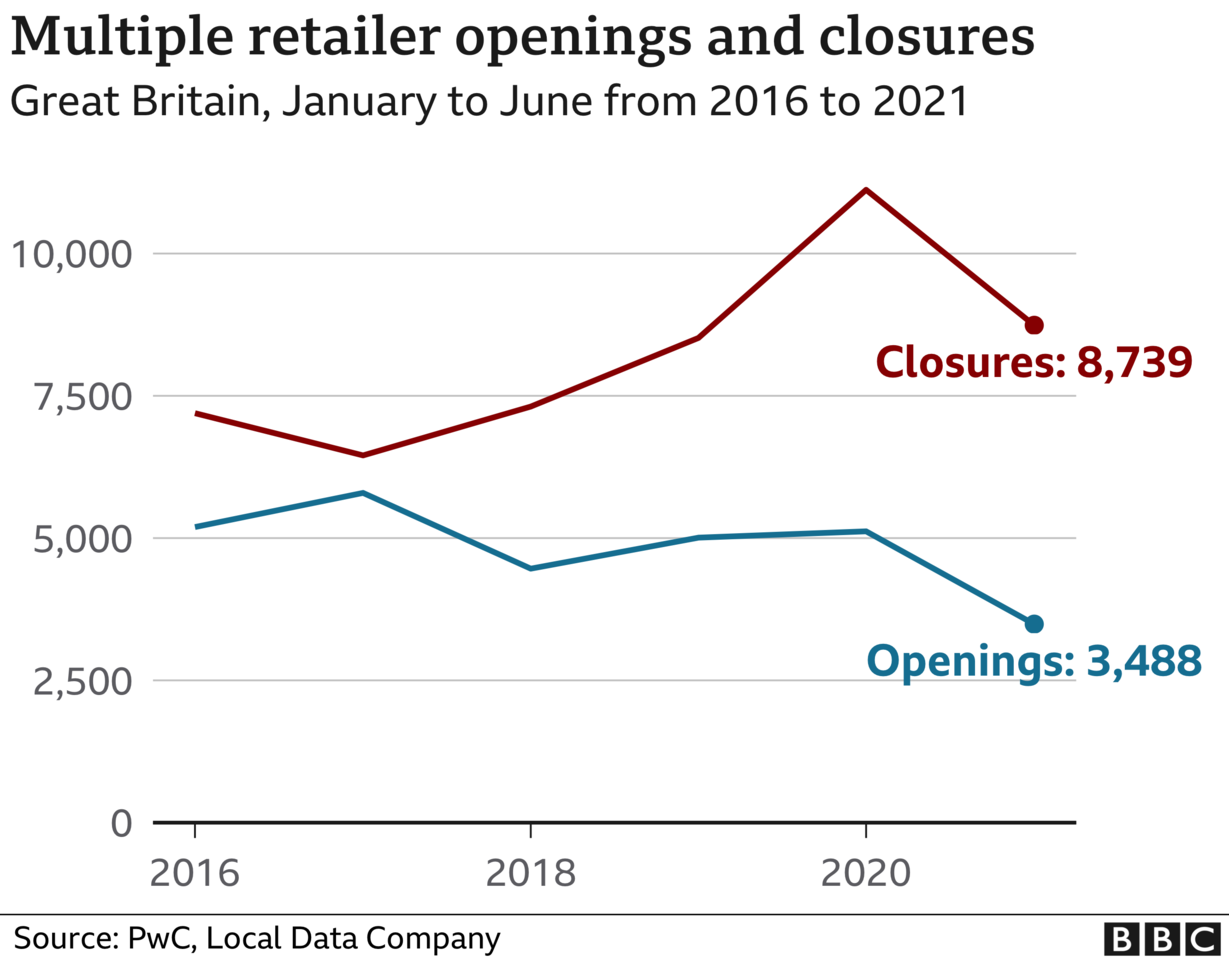
As the chart below shows, although 3,488 stores opened in the first six months of 2021 the closures were far greater. A total of 8,739 shops shut creating a net decline of 5,251 outlets - a huge number, but 750 less than this time last year.

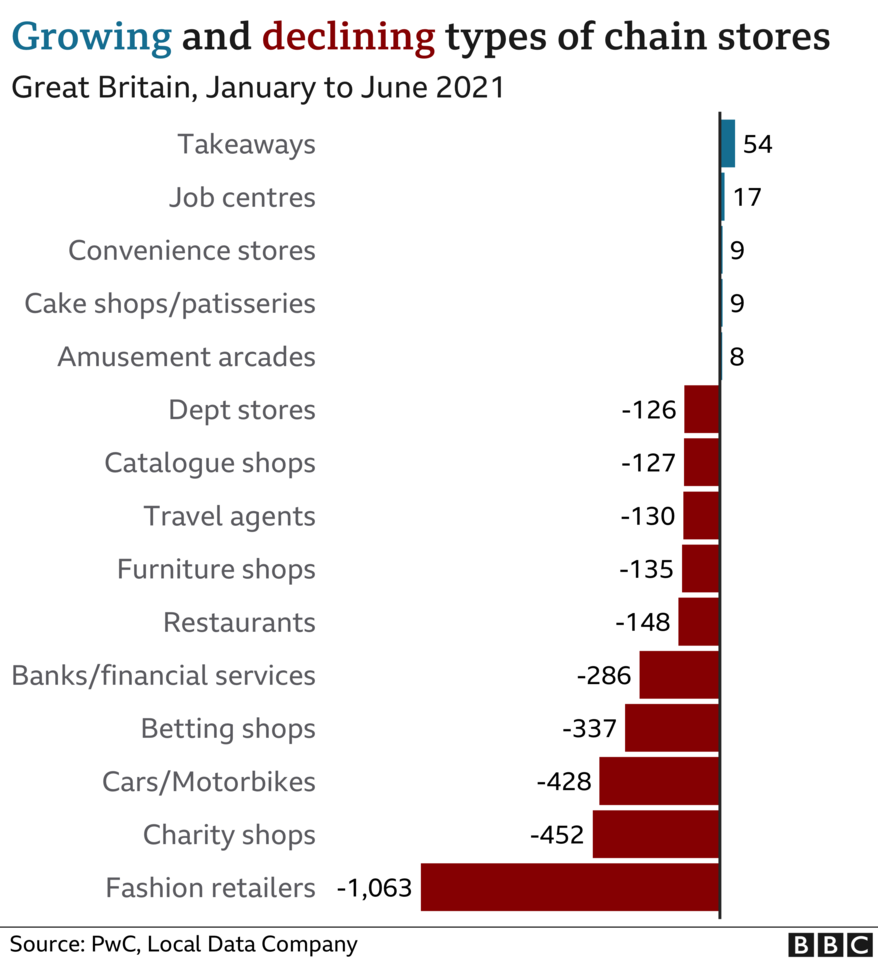
Fashion retailers recorded the biggest decline reflecting the collapse of Sir Philip Green's retail empire which saw his brands, including TopShop and Dorothy Perkins, disappear from the High Street.

More than 120 department stores also shut for good.

There was also a decline in car showrooms, betting shops and banks, providing yet more evidence of changing shopping behaviour and the shift to online.

Data also shows that store openings were at their lowest level for six years. Leisure dominated the growth with takeaway chains leading the way.

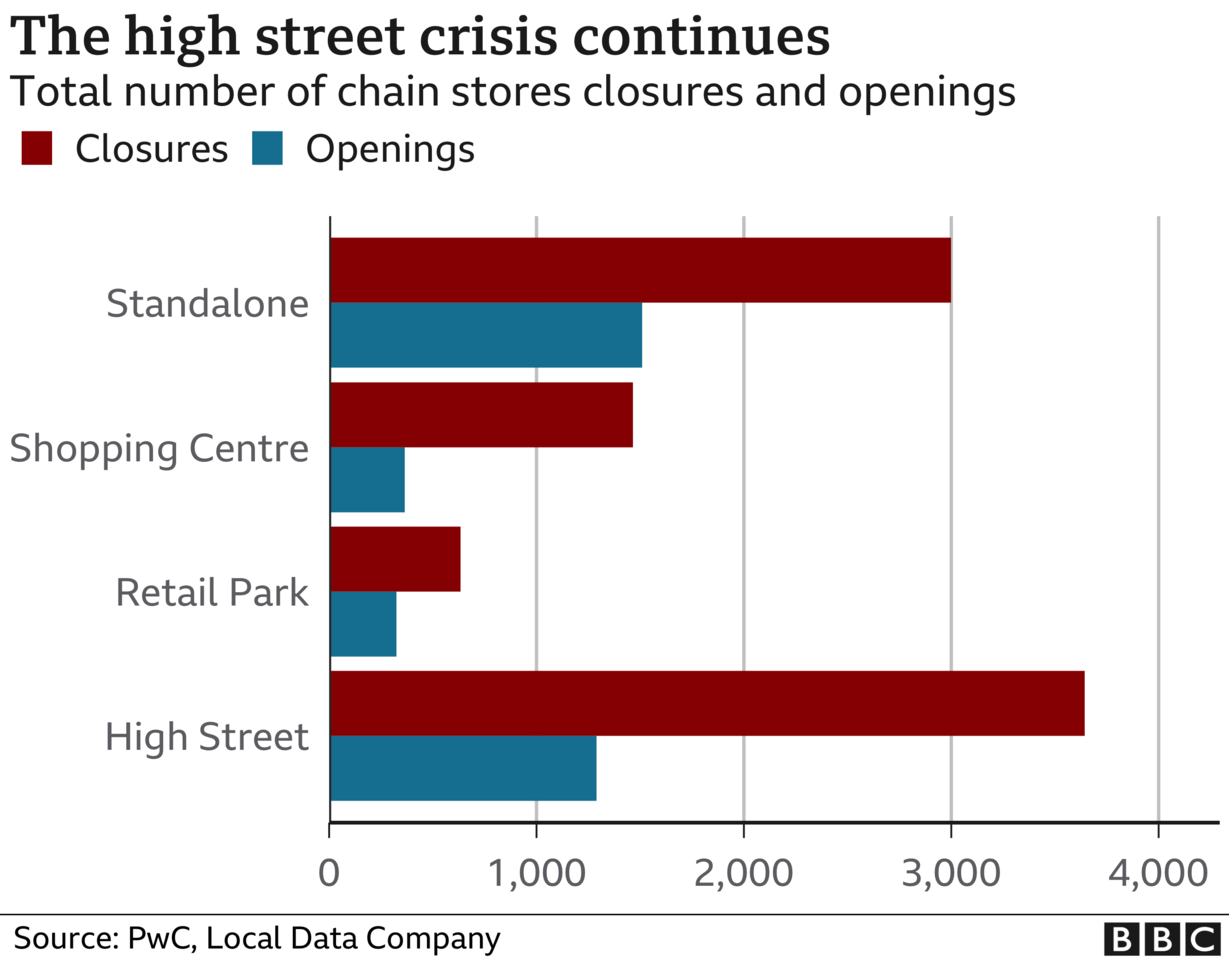
And it is city centres that are still suffering the most, declining faster than suburban areas which are being supported by people working from home.

London, for instance, has gone from being the best performing region in 2016 to the worst for two years running.

Retail parks have fared best of all. Many are anchored by supermarkets, DIY and furniture retailers which have all done well during the pandemic.

Footfall at these sites is almost back to pre-pandemic levels, showing how shoppers seem happier to drive to bigger shops than visit High Streets and shopping centres in towns.

However, there is still an appetite for new space on the High Street.

Gail's Bakery has just opened a new outlet in Kew, a suburb in south west London, in what was once a branch of Barclays bank. The chain has opened four bakeries during the pandemic, seizing the opportunity to take advantage of cheaper rents and a change in consumer behaviour.
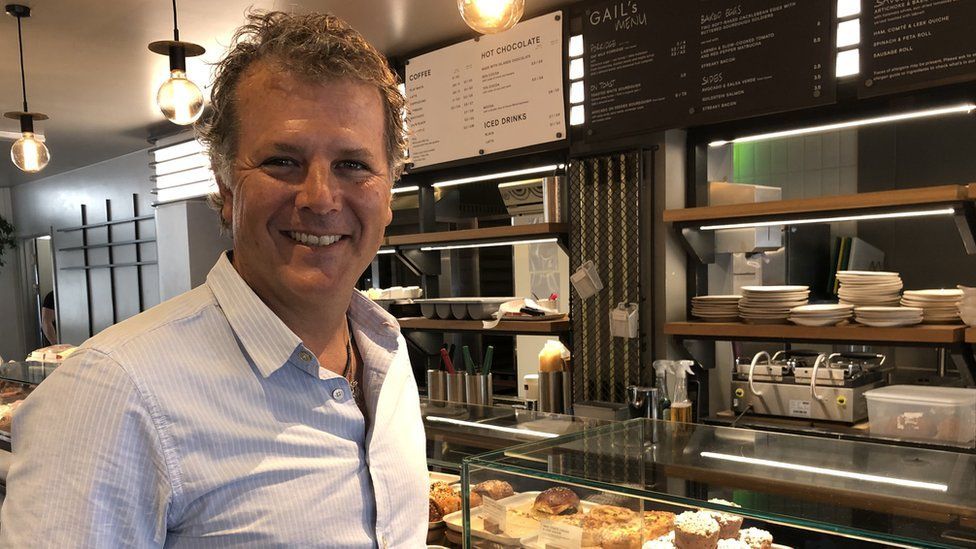
Gail's co-founder and chief executive Tom Molnar

"I definitely think people are eating better food more often and more often at home and I think that's a great trend for us," says co-founder and chief executive, Tom Molnar. "Instead of using Gail's as a treat, they're using it more as a staple,

"When rents go down, more creative-based businesses can survive... I do have some confidence that new ideas will come in [to the High Street]," he says.

'Green shoots'


So is the worst now over from the turmoil of the last few years?

These latest closures follows the loss of more than 17,500 chain outlets last year.

"There are promising signs that the speed of the decline we were tracking across the worst of the pandemic is slowing," says Lucy Stainton, head of retail and strategic partnerships at the Local Data Company.

"That being said, the compound impact of multiple lockdowns can't be ignored and whilst a slowdown in store closures is certainly welcome, the volume of empty units across Great Britain is at a record high with no sign that the demand will ever be there to meet the supply."

The next six months will be make or break for many chains, according to PwC's Lisa Hooker.

"Operators are far from out of the woods... particularly with the reinstatement of full business rates for all but the smallest operators, the winding-down of furlough support and agreement yet to be reached between many operators and landlords on rent arrears, " she says.

"But the good news is that there are some green shoots of optimism. Consumers still want a shopping experience and a number of chain stores and restaurants are opening."

Newsletter

Related Articles

0:00
0:00
Close
World Cup Visitors Turn American Big-Box Stores Into Souvenir Stops
Netflix Weighs Always-On Channels, Bundles and Short-Form Video
Passenger Is Pulled Partly Outside Ryanair Jet After Window Fails Mid-Flight
Innovation-led growth strategy
Public service reform pressure
Defence and industrial security
Labour leadership transition and economic reset
Northern England Pushes for Greater Influence in Britain’s Future Economic Model
UK Technology Strategy Focuses on Life Sciences, Digital Innovation and Research Investment
Britain and United States Maintain Focus on Pharmaceuticals Cooperation and Industrial Growth
UK Public Services Face Continued Pressure as Government Promises Visible Improvements
Regional Economic Power Becomes Key Theme in Britain’s Next Political Phase
Britain Expands Support for Small Businesses as Firms Seek Better Access to Finance
UK Economy Remains Central Political Challenge as Cost of Living and Growth Concerns Persist
National Health Service Introduces New Workplace Reviews to Improve Conditions for Healthcare Staff
UK Life Sciences Sector Secures More Than Three Billion Pounds in Investment to Support Innovation
Britain Strengthens Defence Strategy as Security Concerns Reshape Military and Industrial Policy
Andy Burnham Promises Stronger UK Defence Industry and Expanded Domestic Production
UK Government Faces Difficult Spending Choices as Labour Leadership Transition Approaches
Rachel Reeves Warns Andy Burnham of Immediate Economic Challenges After Expected Leadership Change
Andy Burnham Prepares to Lead UK Government With Plans for Regional Power Shift and Economic Reset
Government Creates Emergency Support Scheme for Financially Struggling Universities
United Kingdom Replaces Traditional Farm Subsidies With Payments Linked to Environmental Performance
National Grid Reports First Week of Electricity Generation Without Fossil Fuels
United Kingdom Financial Regulator Introduces Tougher Capital Rules for Cryptocurrency Exchanges
Belfast Harbour Expands Operations to Attract Investment Through United Kingdom and European Union Market Access
Scottish Government Threatens Legal Challenge Over Westminster Cuts to North Sea Transition Funding
United Kingdom Accelerates Trans-Pennine High-Speed Rail Project Linking Northern Cities
United Kingdom Secures Ten Billion Pound Investment for Cambridge Quantum Computing Campus
Port Talbot Steelworks Wins Support for Green Hydrogen Transition and Protection of Industrial Jobs
United Kingdom Sends Royal Navy Carrier Strike Group to Indo-Pacific as Regional Security Focus Expands
National Health Service Expands Artificial Intelligence Diagnostics Across England to Reduce Screening Backlogs
United Kingdom Launches Fifty Billion Pound Infrastructure Fund to Accelerate Housing and Construction
UK Medical Chiefs Update Health Guidance to Promote Everyday Physical Activity
Office of Communications Keeps Wikipedia Under Review Under UK Online Safety Rules
UK Defence Ministry Expands Deep-Strike Capability Through Precision Missile Programme
Russell Group Universities Warn Funding Cuts Could Damage NHS Workforce Training
UK Parliament Calls for National Emergency Broadcast as Heatwave Conditions Intensify
UK and Netherlands Strengthen Naval Cooperation With New Amphibious Defence Partnership
UK Defence Ministry Joins International Missile Programme With One Hundred and Ninety Million Pound Investment
Bank of England Warns Middle East Conflict and AI Risks Could Pressure UK Economy
UK Government Introduces New Rules to Limit Foreign Influence in Political Donations
UK and France Prepare Naval Mission to Protect Shipping Through Strait of Hormuz
United States Pressures UK to Increase Defence Spending at NATO Summit
Bank of England Warns Artificial Intelligence Investment Boom Could Create Financial Stability Risks
Bank of England Begins Direct Oversight of Critical Technology Providers Supporting UK Finance
Andy Burnham Set to Become UK Prime Minister After Labour Leadership Race Clears Path to Downing Street
Scottish Fishing Industry Calls for Emergency Support Amid Rising Costs
UK Supports Stronger European Response to Russian Actions in Ukraine
Devon and Cornwall Police Release Suspect in Ann Widdecombe Murder Investigation
×