

Women are finally having great sex on TV
Hashtag fake news has been around for far longer than Trump.
If you came of age in the early Noughties, it was a ‘truth’ universally acknowledged that male pleasure was on a higher plane of existence than female. It was normalised in everyday vocabulary: at home, school, on our screens. Those screens have a lot to answer for in promoting this widely accepted American Pie school of sexual thought. If this was the worst kept secret, the gender-reversed counterpart was MI6-levels of classified confidential (and quite frankly, you were always considered “a bit weird” if you even broached the subject). As such, the cultural sea change is refreshing, as more TV shows are finally bringing female pleasure out of the shadows, in innumerable ways.
First up, Netflix’s “regency-era romp” Bridgerton, a show that was streamed by 63 million households in its first month. My main takeaway when finally caving into the hype machine, was that what the show lacks in script — don’t @ me — it makes up for tenfold in other areas. The fantasy costumes are properly joyful. Though it is the scenes of a sexual nature between the protagonists, Daphne and Simon, that are its pièce de résistance.
Take the first scene to be shot for the series — which appears in the sixth episode... Warning: many a spoiler ahead. Cut to Simon going down on Daphne, who is perched on a ladder in a lavish library, with a version of Taylor Swift’s Wildest Dreams providing a melodic backdrop to her ecstatic moans.

Bridgerton/ Netflix
There are many layers to its brilliance. Firstly, from an aesthetic level, it looks great. The fact that she’s also wearing a voluminous dress, hoisted up for the duration, also makes it 80 per cent hotter. Secondly, when I consulted intimacy coordinator Lizzy Talbot about the clip, she revealed even the setting — filmed in The Reform Club in London — serves an empowering purpose. While it opened in 1832, it “only started to allow entrance to women in the Eighties”. Thirdly, the male character is in her orbit, singularly relishing in her rapture.
While this is a relatively rare feat to be depicted on screen, some recent examples do appear to point to a positive shift in perspective. From the BBC’s darkly comic series Back to Life, which features the main character’s sexually frustrated mother enjoying oral care from a younger guy, to Industry, which follows a bunch of graduates competing for a place at an investment bank. Money is almost a secondary character to female lust. Here, served like a full-bodied wine. Rich, complex and separate from — rather than facilitating — male fancy.
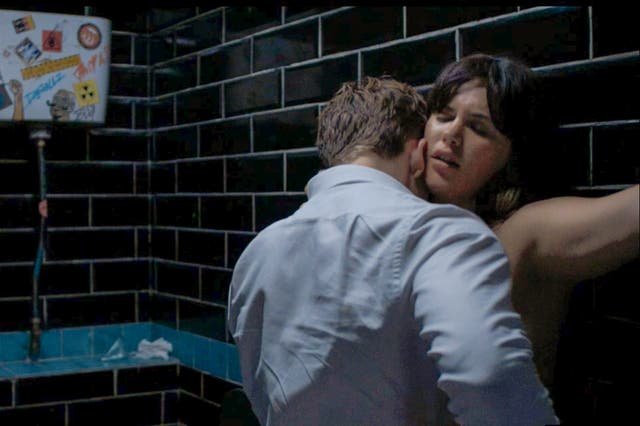
This is an important distinction, Rayner says, as so often it’s “positioned as kind of ‘nice to have’ or something that’s reserved for especially assertive women [on screen]. Bridgerton, too, is a great example. The female gaze is centre stage”.
And herein lies the missing piece of the liberating jigsaw puzzle. Something that has been elusive for years, so much so that one could be forgiven for deducing that ‘erogenous zones’ were a male-guarded enterprise. For instance, in all of Daphne’s moments of intimacy, it is her sensual awakening and hunger that one is immersed in. Her eyes widening, mouth parting, breathing changing. “It all validates female sexual pleasure as equal to a male,” Talbot explains. “I certainly didn’t see that growing up on TV.”
Sure, there was Sex and the City. As a teen, it was riveting to watch. Women talking openly about, and having, sex? This was an education. It incited between-the-sheets debates, everything from monogamy and sexuality to fetishism and threesomes. But even as a die-hard fan, I can’t help but feel a little duped, looking back.
Straight-talking PR executive Samantha Jones was wholly focused on f**king for fun, not merely for someone else’s enjoyment. Though, in its six years on air, she was routinely slut-shamed. Then you had Charlotte, who became “addicted” to her vibrator in one episode. The subtext: an abundance of self-serving pleasure is toxic.
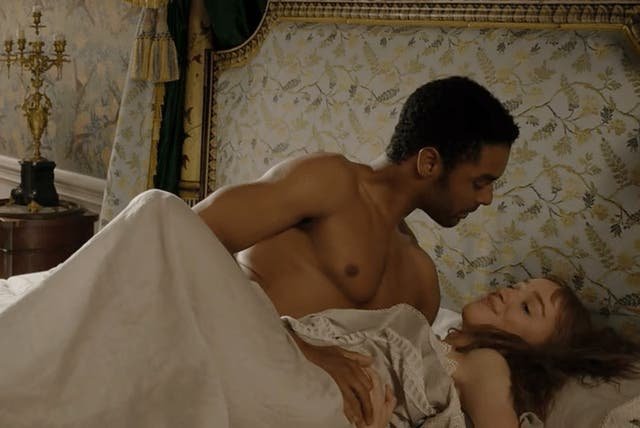
Duke of Hastings and Daphne in Bridgerton/ Netflix
You could almost hear women across the nation nodding in recognition in an episode of Sex Education where Aimee Lou Wood’s character realises she doesn’t know what she wants as “nobody ever asked me”. Delightedly, she takes the time to touch herself and find out.
“Before that scene we were saying how important this was,” says the show’s intimacy coordinator, Ita O’Brien (who also worked on Normal People and I May Destroy You). “I met up with Aimee [after it came out] and at that point she would be getting about 100 messages a day from women saying ‘thank you for that scene, it’s liberated me. It’s educated me.’ Afterwards, I was then teaching drama students and I had a lady come up to me and go ‘that scene has changed my life.’ It gives you permission.”
It seems pertinent, too, to point out that in the last year an up in female-centred erotica sequences has coincided with intense touch-deprivation. As such, these shows offer a magic mirror to project our fantasies. We’re hungry for more intimacy, pleasure, connection. And, when human contact is permissible again, hopefully we shall demand more from our sexual endeavours.
Meet someone that is listening when they ask you, to quote the Duke of Hastings: “What you thought about when you were alone.”