
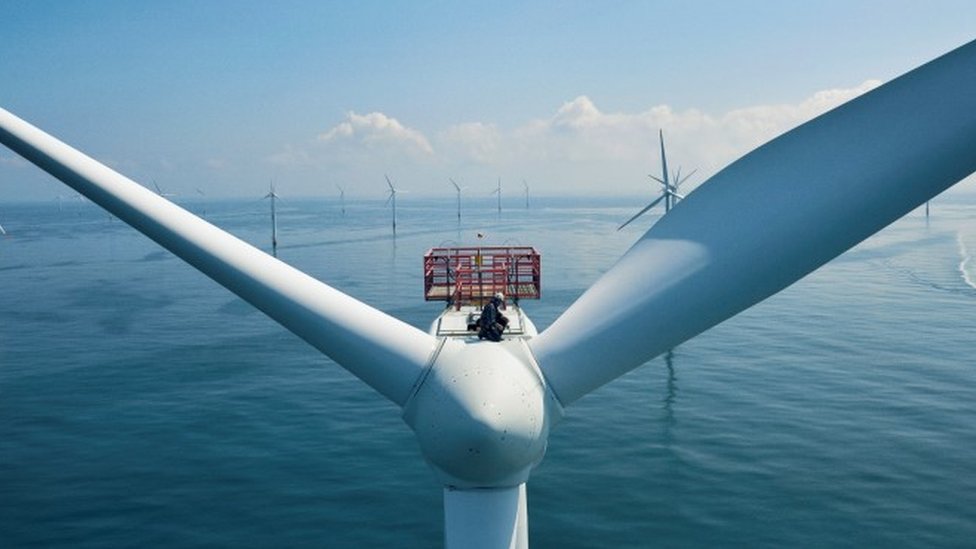
Vattenfall Shelves Norfolk Boreas Offshore Wind Farm Plan Due to Escalating Costs
In a recent development, Vattenfall, a Swedish energy giant, has announced that it is shelving its plans to develop the Norfolk Boreas offshore wind farm, citing that it no longer makes financial sense to continue with the project.
The decision has raised questions about the future of the UK's renewable energy industry, which aims to double wind capacity by 2030 and achieve net-zero emissions by 2050.
The reason behind Vattenfall's decision is the escalating costs of offshore wind farm development.
The company said that its costs have increased by 40% due to factors such as inflation, supply chain issues, and rising wages.
The guaranteed price for electricity generated by the wind farm under the Contracts for Difference (CfD) scheme was not sufficient to cover these increased costs, according to Vattenfall's Chief Executive Anna Borg.
The decision to shelve the Norfolk Boreas plan affects not only Vattenfall but also the two other Norfolk sites, Vanguard East and Vanguard West.
However, the company said it remains committed to the region and is evaluating the best way forward for all three projects in the Norfolk Zone.
Vattenfall has attractive wind power projects in the pipeline, and investment decisions will always be based on profitability, the company said.
The decision has significant implications for the local community and supply chain, which includes about 1,000 companies.
Norfolk County Council expressed disappointment but remained optimistic about the future, reassured that the rest of the Norfolk offshore plan would still go ahead.
The impact on the local supply chain will be felt, but there are opportunities and solutions to bring the project back on track, according to Orbis Energy, a Lowestoft-based clean energy hub for about 40 businesses.
Experts say that rising costs in offshore wind farm development require the government to consider the role of private sector in powering the future of Britain.
While renewable energy offers significant returns on investment, the private sector is currently unwilling to tolerate the returns over the next few decades.
The case for a UK-led renewable energy developer, backed by the UK public, has just become stronger, according to Professor Aled Jones, Director of the Global Sustainability Institute The UK government's recent decision to pause the current round of renewable energy auctions has caused concern among industry experts and lawmakers, with fears that the country could become even more reliant on foreign gas and leave households with higher energy bills.
The Department for Energy Security and Net Zero stated that the Contracts for Difference (CfD) offered developers burdened with high initial costs "direct protection from volatile wholesale prices." However, a government spokesman acknowledged that there were supply chain pressures for the sector globally and that they were listening to companies' concerns.
One of the reasons construction costs were high was due to the lack of a shared offshore ring main, which meant windfarms needed to run separate cables to onshore substations.
"The system and infrastructure for delivery is completely outdated," said Duncan Baker, Conservative MP for North Norfolk.
"We have been saying this for many years and now it's come back to bite us." George Freeman, MP for Mid Norfolk, was "not too worried" that the pause would undermine the government's long-term commitment to net zero.
However, there was concern among industry experts and some lawmakers that the CfD mechanism needed to be reviewed.
"I think this can be resolved," said Peter Aldous, the Conservative MP for Waveney in North Suffolk.
"I think all roads lead to the chancellor's autumn statement." Among MPs, councillors, and industry experts, there is real disappointment and frustration over the pause.
Energy companies had been expressing concerns about rising costs and supply shortages privately for some time, according to BBC Political Correspondent Andrew Sinclair.
"High inflation, supply shortages and rising wages made it inevitable that an energy company would reconsider its plans," he said.
There is a feeling that the government will have to come up with more money to compensate for the pause, which will likely result in higher electricity bills.
Reforming the contract with energy companies is also a possibility.
However, there are other grumbles too, including windfall taxes, delays in granting planning permission, and public anger over pylons, which one MP claimed made energy companies feel unwelcome.
The reason behind Vattenfall's decision is the escalating costs of offshore wind farm development.
The company said that its costs have increased by 40% due to factors such as inflation, supply chain issues, and rising wages.
The guaranteed price for electricity generated by the wind farm under the Contracts for Difference (CfD) scheme was not sufficient to cover these increased costs, according to Vattenfall's Chief Executive Anna Borg.
The decision to shelve the Norfolk Boreas plan affects not only Vattenfall but also the two other Norfolk sites, Vanguard East and Vanguard West.
However, the company said it remains committed to the region and is evaluating the best way forward for all three projects in the Norfolk Zone.
Vattenfall has attractive wind power projects in the pipeline, and investment decisions will always be based on profitability, the company said.
The decision has significant implications for the local community and supply chain, which includes about 1,000 companies.
Norfolk County Council expressed disappointment but remained optimistic about the future, reassured that the rest of the Norfolk offshore plan would still go ahead.
The impact on the local supply chain will be felt, but there are opportunities and solutions to bring the project back on track, according to Orbis Energy, a Lowestoft-based clean energy hub for about 40 businesses.
Experts say that rising costs in offshore wind farm development require the government to consider the role of private sector in powering the future of Britain.
While renewable energy offers significant returns on investment, the private sector is currently unwilling to tolerate the returns over the next few decades.
The case for a UK-led renewable energy developer, backed by the UK public, has just become stronger, according to Professor Aled Jones, Director of the Global Sustainability Institute The UK government's recent decision to pause the current round of renewable energy auctions has caused concern among industry experts and lawmakers, with fears that the country could become even more reliant on foreign gas and leave households with higher energy bills.
The Department for Energy Security and Net Zero stated that the Contracts for Difference (CfD) offered developers burdened with high initial costs "direct protection from volatile wholesale prices." However, a government spokesman acknowledged that there were supply chain pressures for the sector globally and that they were listening to companies' concerns.
One of the reasons construction costs were high was due to the lack of a shared offshore ring main, which meant windfarms needed to run separate cables to onshore substations.
"The system and infrastructure for delivery is completely outdated," said Duncan Baker, Conservative MP for North Norfolk.
"We have been saying this for many years and now it's come back to bite us." George Freeman, MP for Mid Norfolk, was "not too worried" that the pause would undermine the government's long-term commitment to net zero.
However, there was concern among industry experts and some lawmakers that the CfD mechanism needed to be reviewed.
"I think this can be resolved," said Peter Aldous, the Conservative MP for Waveney in North Suffolk.
"I think all roads lead to the chancellor's autumn statement." Among MPs, councillors, and industry experts, there is real disappointment and frustration over the pause.
Energy companies had been expressing concerns about rising costs and supply shortages privately for some time, according to BBC Political Correspondent Andrew Sinclair.
"High inflation, supply shortages and rising wages made it inevitable that an energy company would reconsider its plans," he said.
There is a feeling that the government will have to come up with more money to compensate for the pause, which will likely result in higher electricity bills.
Reforming the contract with energy companies is also a possibility.
However, there are other grumbles too, including windfall taxes, delays in granting planning permission, and public anger over pylons, which one MP claimed made energy companies feel unwelcome.