London Daily

Focus on the big picture.
Tuesday, Mar 10, 2026

US election 2020: Why it matters so much to Germans

US election 2020: Why it matters so much to Germans

Panting into the cold night air, the Berlin Thunderbirds are training hard, steam rising from their helmets and padded shoulders.

American sport, culture and, many would say, values pump through the veins of Germany. Which is why so many people here - including the players tackling each other with enthusiasm - are also keeping a close eye on the upcoming US presidential election.

"You're kind of like a bystander," says Christoph, a quarterback. "You have no influence but in the end it does influence you."

To stroll under reddening trees through the small market which stands on Berlin's Kennedy Platz is to get a glimpse of how closely Germany and America have been bound, how deeply rooted the transatlantic relationship.
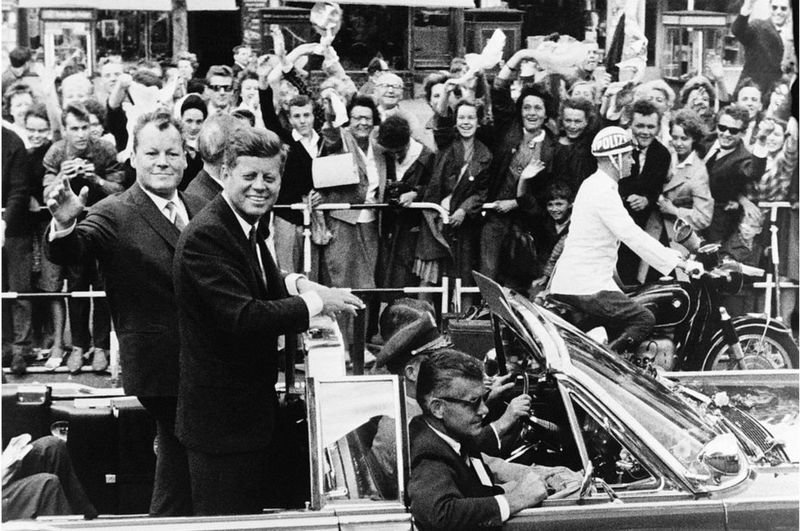

President Kennedy was given a warm welcome in Berlin


Beyond the stalls packed with pumpkins and flowers, looms the impressive stone edifice of Rathaus Schoeneberg where, nearly 60 years ago, John F Kennedy told a wildly cheering crowd packed deep into the neighbouring streets, "Ich bin ein Berliner" ("I am a Berliner").

Ute, who was a child at the time, pauses as she buys fruit to explain why today there's so little enthusiasm among Germans for the current American commander-in-chief.

"For my generation - born after the second world war - Americans were a great example of freedom and democracy. That's ended with Trump."


American football players in Berlin say they are watching the US election closely


President Trump - who once claimed he'd charmed Angela Merkel - remains deeply unpopular in Germany. A recent study by the Pew Research Center found that Germany rates the US president particularly unfavourably.

For her part, the German chancellor has never warmed to President Trump's style or his politics. She was openly dismayed by his dismissive attitude towards Nato, his withdrawal from the Paris agreement on climate change, and his rejection of the Iran nuclear agreement.

The lack of personal chemistry between the leaders has been in stark contrast to the relationship Mrs Merkel developed with Barack Obama. It's no secret in Berlin that the government has struggled to replicate the same level of co-operation with the Trump administration.

But Mrs Merkel won't be dealing with the White House for much longer. Germany is looking ahead to its own significant election.
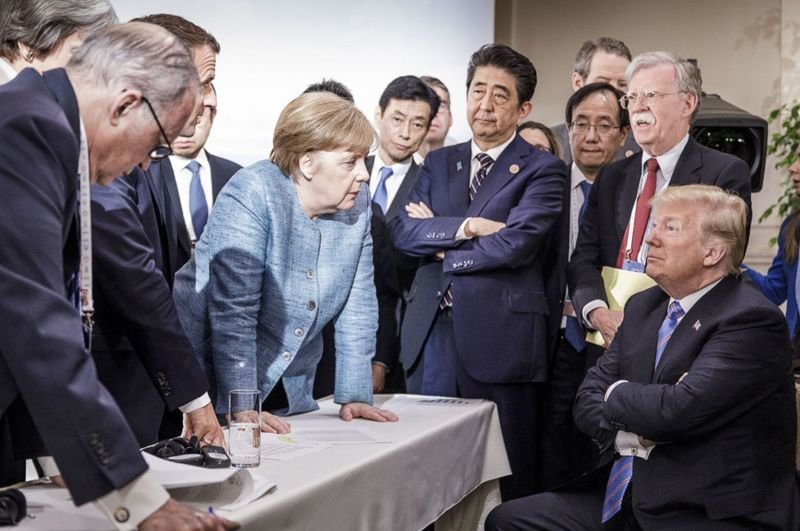

The body language between Merkel and Trump tells a thousand words


Norbert Roettgen, who chairs the German foreign affairs committee, is one of the candidates hoping to replace Mrs Merkel when she stands down next year.

"The four years of the Trump presidency have meant that everything, very fundamentally, has been called into question. The very existence of Nato, the predictability of US foreign policy. It has been a disruption which we haven't seen since World War Two."

He, like many in Berlin, fears that another term for President Trump could do irreparable damage to the transatlantic relationship.

"We are concerned. I'm totally convinced that the prospect of another four years would not only mean that we're going to see more of the same, but I'm quite certain we would see an acceleration of everything we've experienced.

"Because then President Trump would not be under the pressure to be re-elected. He would be unshackled."


Who really decides the US election?


It took many in Berlin by surprise that the president of a country long considered an ally, a military and trading partner, has singled out Germany as a target for such fierce and sustained criticism.

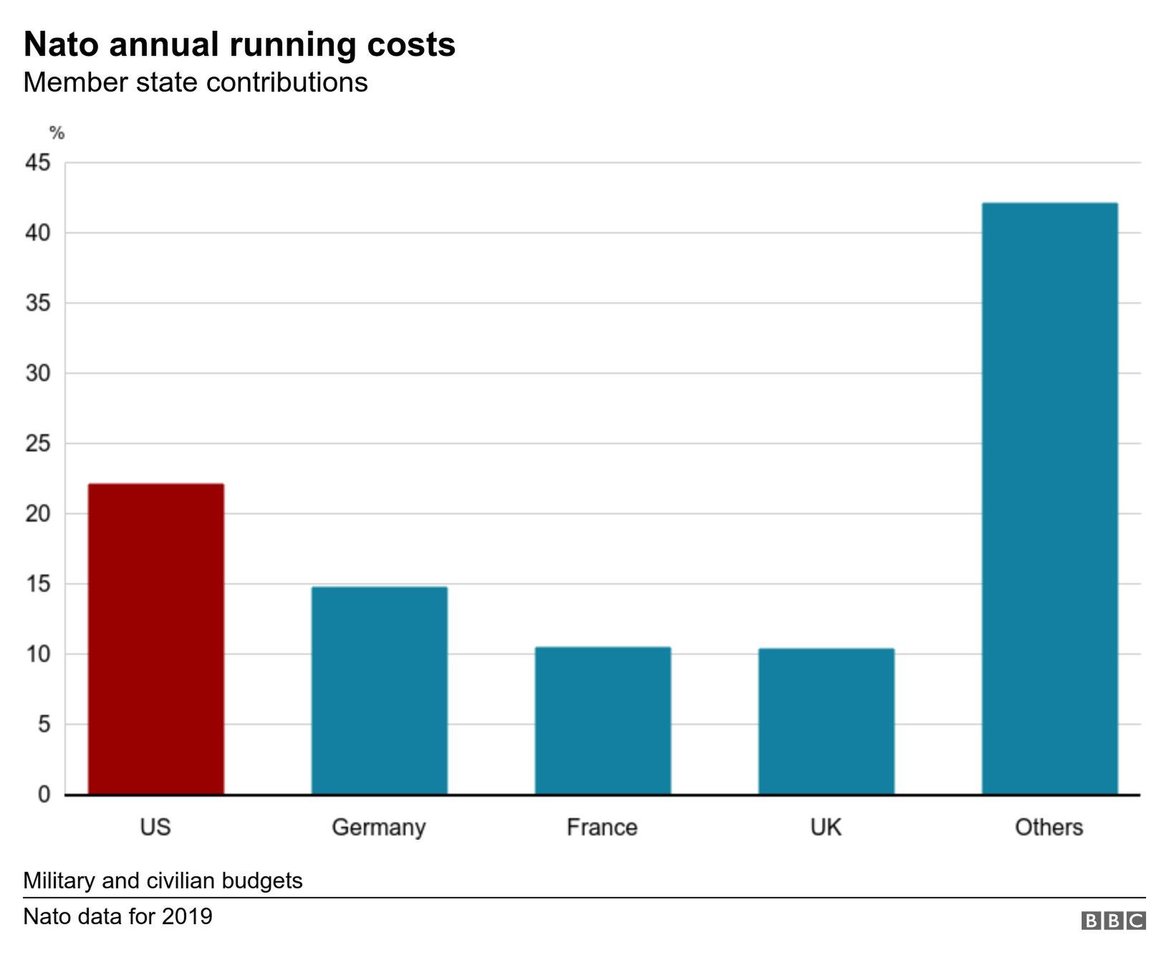
There've been clashes over defence spending (Germany is increasing expenditure but still falls short of the 2% GDP target agreed with Nato), Germany's trade surplus with the US, and the construction of the controversial Nordstream 2 pipeline which will double the amount of Russian gas entering Europe via Germany.

But it was President Trump's decision to reduce the number of US troops stationed in Germany which perhaps most potently symbolised the depths to which the transatlantic relationship had plummeted.


As Wolfgang Ischinger, former ambassador to Washington and the chair of the Munich security conference argues, as long as there are US troops on European soil, the actual location isn't particularly important but that "regretfully, trust has been lost over this issue".

He warns that a victory for Joe Biden - whose adviser for foreign policy has said he'd review the decision to withdraw troops from Germany - might not be the return to "some kind of transatlantic paradise" either because national differences over the big issues like climate change, Russia and China will remain.

However, most officials in Berlin expect such a political arena to be an easier one in which to negotiate and manoeuvre.

Ambassador Ischinger is not alone in seeing this election as a significant moment for Germany.

"The difficulties we've experienced in the last three and a half years have indeed served as a useful wake-up call for Germany to begin to reflect about its own responsibilities," he says.

Berlin has no desire for another four years of Donald Trump.

But, regardless of the outcome of the US election, there is a growing sense that Germany, which for so long considered America its teammate, may need to adjust its game plan.

Newsletter

Related Articles

0:00
0:00
Close
Roman Abramovich Signals Legal Fight if UK Seeks to Seize Chelsea Sale Funds
UK Ready to Back Emergency Oil Reserve Release as Middle East Conflict Pushes Prices Higher
Study of 40,000 Articles Sparks Debate Over Alleged Anti-Muslim Bias in UK Media
US and UK Army Chiefs Strengthen Cooperation on the Future of Armored Warfare
Britain’s Search for the Next ARM Intensifies as Startups and Investors Target the Semiconductor Frontier
Three US Strategic Bombers Arrive at RAF Fairford as Iran Conflict Intensifies
Cancer Death Rates in the UK Fall to the Lowest Level on Record
UK Government Bond Yields Retreat Slightly After Sharp Spike Triggered by Middle East Conflict
UK Chancellor Warns Middle East War Could Push Inflation Higher
UK Prime Minister Warns Iran Conflict Could Drive Up Prices and Threaten Economic Stability
Trump Declines UK Offer to Deploy Aircraft Carriers to Middle East Amid Iran Conflict
Prince Harry and Meghan Markle to Return to Australia After Seven Years for Philanthropic and Business Engagements
UK Government Signals Independence From Washington as Cooper Says Britain Does Not Agree With Trump on Every Issue
UK Experts Warn AI Chatbots Are Fueling Surge in Claims of Organised ‘Satanic’ Ritual Abuse
UK Political Parties Divided Over Strategy as Iran Conflict Reshapes Foreign Policy Debate
Britain Discloses Secret Military Repair Hubs Operating Inside Ukraine
Trump Says US No Longer Needs UK Carrier Support After Delayed Offer Amid Iran Conflict
Why Britain Has Become Involved in the US-Israel Military Campaign Against Iran
UK Gas Storage Falls to Under Two Days as Iran Conflict Jolts Global Energy Markets
UK Warned to Brace for Economic Shock as Iran War Drives Global Energy Price Surge
Starmer and Trump Hold First Call After Public Dispute Over Iran Conflict
UK Dentists Returned £1.3 Billion to Government as Shift Toward Private Care Accelerates
Expert Warns UK Must Build Emergency Food Stockpiles to Prepare for Climate Shocks or War
UK Plans Charter Flight to Evacuate British Nationals from Gulf as Regional Conflict Disrupts Air Travel
Families of Zimbabwe’s Liberation Fighters Call on Britain to Help Locate Skulls Taken During Colonial War
Iran’s Ambassador Warns Britain to ‘Be Very Careful’ Over Deeper Role in Expanding Middle East War
UK Military Leadership Defends Britain’s Defensive Role in Expanding Middle East Conflict
Four U.S. Strategic Bombers Arrive in Britain as Iran War Intensifies
Soham Murderer Ian Huntley Dies After Violent Attack in High-Security Prison
UK Lawmakers and Experts Condemn Scale of Overseas Human Remains Held in British Museums
Royal Navy Aircraft Carrier HMS Prince of Wales Placed on Standby for Potential Deployment
United Kingdom Confirms U.S. Military Using British Bases for Operations Targeting Iranian Missile Sites
Starmer Defends UK Role in Iran Conflict After Renewed Criticism from President Trump
Blue Owl Reveals £36 Million Exposure After Collapse of UK Lender Serving Wealthy Clients
UK Asylum Reform Plan Triggers Fierce Debate Over Border Control and Humanitarian Impact
US Stealth Bombers Head to UK Base as Trump Issues Stark Warning to Iran
UK Deputy Prime Minister Says Legal Case Could Exist for British Strikes on Iranian Missile Sites
Investigators Link Mysterious Parcel Fires Across Europe to Russian Intelligence Operation
Debate Intensifies Over Britain’s Legal Justification for US Military Operations Launched From UK Bases
Britain Faces Heightened Energy Price Risks as Iran-Linked Tensions Threaten Global Oil and Gas Supplies
British Counter-Terror Police Arrest Four Suspected of Spying on Jewish Community for Iran
Axel Springer Agrees $770 Million Deal to Acquire Britain’s Daily Telegraph
Iceland Supermarket Drops Trademark Challenge Against Icelandic Government in Long-Running Naming Dispute
UK Defence Secretary Visits Cyprus Following Scrutiny of Britain’s Response to Drone Attacks
Questions Grow Over Britain’s Military Readiness as Response to Iran Conflict Draws Scrutiny
UK Offers Failed Asylum Seeker Families Up to Forty Thousand Pounds to Leave Voluntarily
Saharan Dust Could Bring ‘Blood Rain’ to Parts of the UK as Weather Systems Shift
UK Deploys Additional Typhoon Fighter Jets to Qatar and Helicopters to Cyprus Amid Rising Middle East Tensions
Experts Urge Britain to Accelerate Renewable Energy Push as Global Conflicts Drive Up Costs
British Public Shows Strong Reluctance to Join Wider War in Iran
×