London Daily

Focus on the big picture.
Tuesday, Jul 14, 2026

UK inflation: Milk, cheese and eggs push food price rises to 14-year high

UK inflation: Milk, cheese and eggs push food price rises to 14-year high

The soaring price of milk, cheese and eggs has pushed food inflation to its highest level for 14 years.

Food prices rose at their fastest pace since 2008 in the year to August as the war in Ukraine continued to help drive up prices at supermarket tills.

Falling petrol and diesel prices meant the overall inflation rate eased slightly but it remains near a 40-year high, official figures show.

Rising costs are eating into budgets, with prices rising further than wages.

Overall UK inflation, which measures the rate at which prices rise, eased for the first time in almost a year in August, slipping to 9.9% from July's 10.1%.

The figure was not as high as economists had feared but some have warned the inflation rate is likely to continue to rise, noting that the cost of food, clothing and services - which include things such as shops and restaurant prices - were all continuing to rise sharply.

The Bank of England has warned inflation could top 13% this year, and is expected to keep raising interest rates to try to control it.
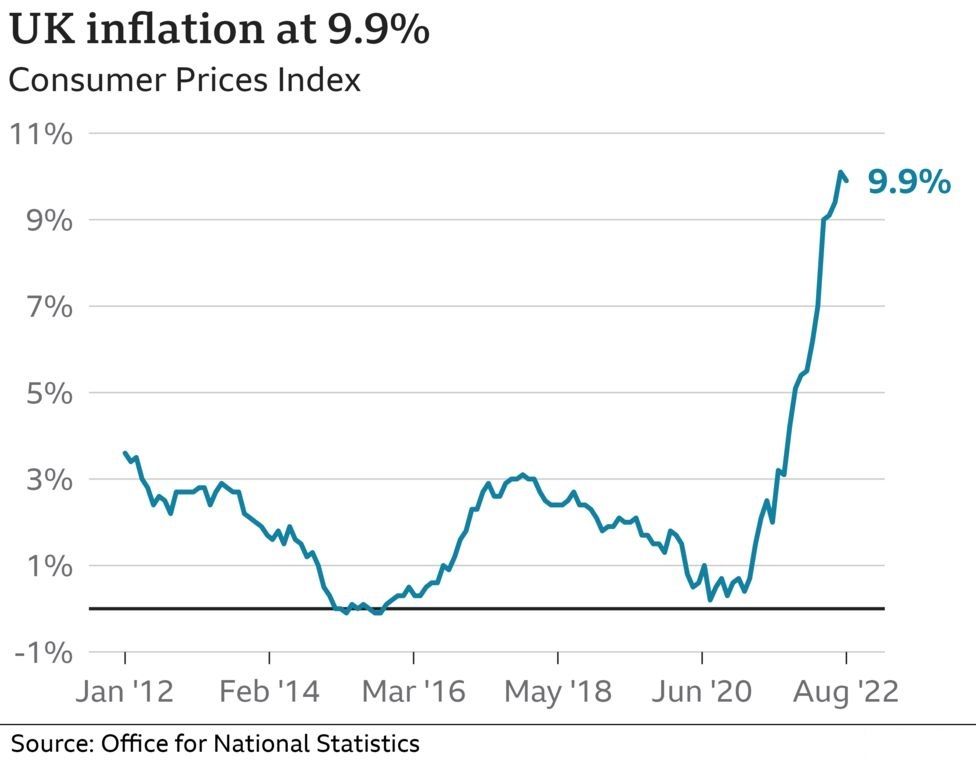

However, the government plan to try and prevent widespread hardship by limiting rises in household energy bills, is likely to mean inflation will now not rise as high as previously expected.

"High inflation continues to drive Britain's cost-of-living crisis, but the outlook has brightening considerably over the past week," said Jack Leslie, senior economist at the Resolution Foundation.

"The Energy Price Guarantee should prevent a second winter surge in prices."

"However, high inflation is set to be with us for some time, particularly for low-income who continue to be hit hardest by high prices."

Food prices have been going up around the world following Russia's invasion of Ukraine, which has been one of the factors pushing up prices at supermarket tills.

The war has disrupted supplies from the two countries, which are major exporters of goods such as sunflower oil, wheat, and fertiliser.

Inflation is the pace at which prices are rising. For example, if a bottle of milk costs £1 and that rises by 5p compared with a year earlier, then milk inflation is 5%.

Central banks around the world, including the Bank of England, have been trying to get soaring inflation under control by hiking interest rates.

Raising rates is a way of controlling inflation, as it increases the cost of borrowing and encourages people to borrow and spend less. It also encourages people to save more.

The Bank had been widely expected to increase rates again on Thursday, but it postponed that decision following the death of Queen Elizabeth II.

The Monetary Policy Committee's decision will now be announced on 22 September.

Kitty Ussher, chief economist at the Institute of Directors said she still expected interest rates to go up when the Bank of England announced its latest decision.

"The fact that the falling headline rate is due to changes in the price of petrol and diesel, which is driven predominantly by the international price of oil rather than by domestic factors, means news is unlikely to alter expectations of a rise in interest rates," she said, noting the Bank would act to try to stem UK price rises, such as food and services.


House prices


According to separate figures published by the ONS, house prices recorded their biggest annual increase in 19 years in the year to the end of July.

The 15.5% rise compared with a 7.8% annual increase the previous month.

The jump was mainly due to the effects of the stamp duty holiday last year.

The stamp duty holiday in England and Northern Ireland was reduced from July last year, before being phased out in October 2021.

A similar property tax holiday in Wales ended at the end of June last year and the equivalent holiday in Scotland ended at the end of March. All were a response to concerns about the economic effect of Covid lockdowns.

As a result, the jump recorded for this July was mainly because of the contrast with the falls in prices seen this time last year.

The average UK house price was £292,000 in July, the ONS said.

Newsletter

Related Articles

0:00
0:00
Close
UK Prime Minister Keir Starmer Offers Condolences Following Death of Qatar’s Father Amir
UK Regional Innovation Policy Focuses on Research Clusters Across Scotland, Wales, and Northern England
UK Corporate Transparency Rules Set to Become More Strict Under Modern Slavery Reform Plans
UK Civil Service Estate Strategy Shifts Government Activity Away From London
UK Strengthens National Security Powers Through New Threat Designations
Greater Manchester Police Conduct Drink and Drug Driving Operations After Football Events
UK Government Advances Darlington Economic Campus With Construction Milestone
UK Authorities Increase Football-Related Security Operations After Tournament Fixtures
UK Invests Fifty-One Million Pounds in National Cryogenics Facility and Regional Innovation Hubs
UK Moves Toward Tougher Modern Slavery Reporting Rules With Corporate Penalties
UK Government Reports Forty-Three Million Pounds in Savings From Office Estate Reform
UK Government Expands Civil Service Regional Strategy With Manchester and Darlington Campus Projects
UK Designates Iran’s Islamic Revolutionary Guard Corps as National Security Threat
United Kingdom Financial Markets Monitor Business Response to Economic Policy Changes
Scottish Renewable Energy Expansion Highlights Need for Faster Grid Development
Wales and Regions Strengthen Focus on Economic Development Through Tourism and Investment
Retail Industry Warns High Street Businesses Remain Under Pressure
Police Chiefs Highlight Growing Challenges Managing Protests and Public Order
Agriculture Leaders Seek Clarity on Post-Brexit Farming Support and Environmental Rules
Transport Unions Warn of Further Industrial Action Over Pay and Working Conditions
Welsh Tourism Sector Reports Strong Growth Driven by Domestic and International Visitors
National Infrastructure Review Gains Support as Leaders Seek Faster Project Delivery
Financial Markets Assess Impact of United Kingdom Corporate Tax Policy Changes
Northern Ireland Assembly Debates Cross-Border Trade and Infrastructure Cooperation Plans
Government Opens Consultations on Housing Reform and Planning System Changes
Scottish Government Faces Pressure to Accelerate Offshore Wind and Grid Expansion
National Energy System Operator Warns Grid Investment Is Needed for Future Electricity Demand Growth
United Kingdom Research Council Invests in Artificial Intelligence and Biotechnology Innovation Hubs
United Kingdom Expands Oversight of Skilled Worker Visa Sponsors Amid Migration Debate
Cross-Party MPs Call for National Infrastructure Strategy Review to Accelerate Economic Growth
Prime Minister Announces One Billion Pound NHS Funding Package Ahead of Winter Pressures
Bank of England Signals Cautious Approach to Interest Rates as Inflation Remains Above Forecasts
World Cup Visitors Turn American Big-Box Stores Into Souvenir Stops
Netflix Weighs Always-On Channels, Bundles and Short-Form Video
Passenger Is Pulled Partly Outside Ryanair Jet After Window Fails Mid-Flight
Innovation-led growth strategy
Public service reform pressure
Defence and industrial security
Labour leadership transition and economic reset
Northern England Pushes for Greater Influence in Britain’s Future Economic Model
UK Technology Strategy Focuses on Life Sciences, Digital Innovation and Research Investment
Britain and United States Maintain Focus on Pharmaceuticals Cooperation and Industrial Growth
UK Public Services Face Continued Pressure as Government Promises Visible Improvements
Regional Economic Power Becomes Key Theme in Britain’s Next Political Phase
Britain Expands Support for Small Businesses as Firms Seek Better Access to Finance
UK Economy Remains Central Political Challenge as Cost of Living and Growth Concerns Persist
National Health Service Introduces New Workplace Reviews to Improve Conditions for Healthcare Staff
UK Life Sciences Sector Secures More Than Three Billion Pounds in Investment to Support Innovation
Britain Strengthens Defence Strategy as Security Concerns Reshape Military and Industrial Policy
Andy Burnham Promises Stronger UK Defence Industry and Expanded Domestic Production
×