London Daily

Focus on the big picture.
Saturday, Jul 18, 2026

Train drivers offered 8% pay rise over two years in bid to resolve strikes

Train drivers offered 8% pay rise over two years in bid to resolve strikes

Rail Delivery Group says offer is contingent on ‘vital and long overdue changes’ to working arrangements

Train drivers have been offered a pay rise of 8 per cent over two years in a bid to end strikes on the railways - as the country braces for further industrial action over the weekend.

The Rail Delivery Group said it was offering a "landmark outline proposal" that would deliver more reliable services for passengers, in exchange for a back-dated pay increase of 4 per cent for 2022 and 4 per cent for this year.

Aslef, the union representing train drivers, has not yet responded to the offer.

The RDG said the offer also includes a commitment to no compulsory redundancies until at least March 31 2024.

A statement said: "The offer is contingent on common sense, vital and long overdue changes to working arrangements across the industry.

"Many of these are already best practice in parts of the railway and are designed to avoid disruptive gaps in services.

"If accepted, the proposal would mean the base salary for the average driver would increase from £60,000, to almost £65,000 by the end of 2023."

Steve Montgomery, chairman of the Rail Delivery Group, said: "This is a fair and affordable offer in challenging times, providing a significant uplift in salary for train drivers while bringing in common-sense and long-overdue reforms that would drive up reliability for passengers and allow the railway to adapt to changed travel patterns.

"With taxpayers still funding up to an extra £175 million a month to make up the shortfall in revenue post-Covid, these changes are also vital for us to be able to fund the pay rise our people deserve.

"Instead of staging yet more damaging strike action and holding back changes that will improve services, we urge Aslef to work with us to bring an end to the dispute for our people, our passengers and the future of Britain's railways.”
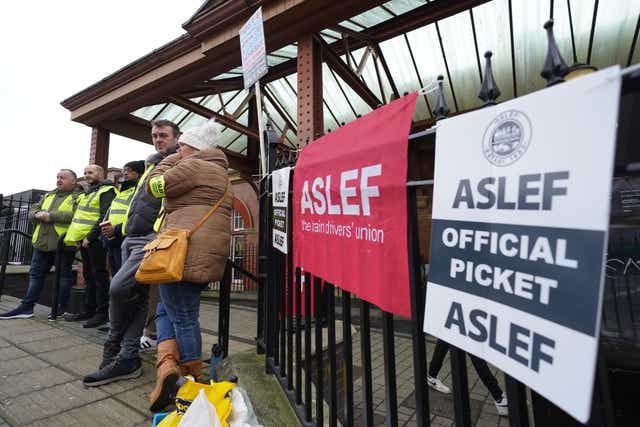

The Aslef picket line at Birmingham Moor street station

Aslef’s General Secretary Mick Whelan said that further strikes were “inevitable” unless the deadlock is broken.

He accused rail employers and the Government of “playing games” rather than making any serious attempt to resolve the pay dispute.

“The situation is getting worse and my members now want to go harder and faster because of the lack of progress,” he said.

Ministers deny they are interfering in negotiations.

Separate industrial action on the railways staged by the RMT union will continue over the weekend with just a fifth of trains expected to run on Saturday and Sunday.

Passengers have been advised to travel only if absolutely necessary, with services running between the hours of 7.30am and 6.30pm on main intercity and urban lines.

Talks are expected to be held early next week, but unions continue to accuse the Government of blocking a deal.

Unions, including those representing railway workers, reacted with anger to a Government announcement on Thursday on proposed legislation to ensure minimum levels of service during strikes in industries including the railways.

The RMT’s General Secretary Mick Lynch described the legislation as a “symbol” that the Government is “losing the argument”.

Speaking from the picket line at Euston station on Friday, Mr Lynch told BBC Breakfast that the Government is trying to “close down” the unions with the new legislation.

“What this is a symbol of is that the Government are losing the argument,” he said.

“They’ve lost the argument on austerity and pay, and the state of our national public services.

“And instead they want to close that argument down by closing down the unions and stopping us from campaigning against poverty.”

Union officials said any laws would be unworkable and might lead to even more industrial action as a response to the controversial move.
Newsletter

Related Articles

0:00
0:00
Close
Ukrainian Drone Barrage Kills Eight and Strikes Russian Logistics Network
The Monaco Bombing Has Become a Test of Ukraine’s Intelligence Accountability
Leadership Change and Strategic Rivalry Redraw the Political Map
Energy Risk, Uneven Growth and the New Geography of Global Capital
The AI Race Enters Its Infrastructure Era
Security and resilience remain long-term national priorities
Britain balances growth ambitions with public finance pressures
Regional devolution becomes a defining theme of the next Labour era
Industrial strategy returns to the centre of British economic policy
Political Instability Remains a Challenge for UK Investment Confidence
Brexit Economic Debate Continues as Public Concerns Over Long-Term Impact Remain
UK Climate Risks Rise as Met Office Warns Extreme Weather Is Becoming More Common
Housing Shortages and Regional Inequality Become Key Priorities Under Incoming Labour Leadership
National Health Service Reform Remains One of Britain’s Biggest Political Challenges
Bank of England Remains at Centre of UK Economic Debate Over Inflation and Growth
UK Economy Shows Recovery Signs but Households and Businesses Remain Under Pressure
Britain Deepens European Defence Cooperation as NATO Allies Seek Stronger Security Capabilities
United Kingdom Expands Sanctions Against Russian Cyber Networks Over Security Threats
UK Industrial Strategy Faces Test After Government Takes Control of British Steel
British Businesses Seek Policy Clarity as Andy Burnham Prepares to Lead Labour Government
Andy Burnham’s Labour Leadership Signals Major Shift Toward Regional Power and Devolution
British Steel Nationalisation Creates New UK-China Tensions Over Control of Strategic Industry
For 36 Years, He Scammed About 300 Luxury Hotels — Until He Was Caught
England's World Cup Exit Expected to Cost Hospitality and Retail £334 Million
Former ICC Prosecutor Aide Speaks Publicly About Allegations Against Karim Khan
Opposition Raises Questions Over June Heatwave Power Grid Pressures
Mastercard Explores Sale of Majority Stake in UK Payments Operator Vocalink
Boeing Forecasts Global Commercial Aircraft Fleet Will Double by 2045
London GP Surgeries Receive £18 Million to Expand Primary Care Capacity
Health Advisers Recommend Nationwide Meningitis B Vaccination for Teenagers
OECD Warns UK Economy Faces Slower Growth and Weak Productivity
Treasury Places Major Global Cloud Providers Under Direct Financial Oversight
Financial Markets Rally as Shabana Mahmood Emerges as Leading Treasury Candidate
Incoming Government Prepares Thames Water Nationalisation and New North Sea Drilling Approvals
UK Government Plans Deep Cuts to Bilateral Aid for African Nations
United States and Iran Exchange Direct Strikes for Seventh Consecutive Night
Incoming Prime Minister Andy Burnham Confirmed as Labour Leader Ahead of Downing Street Handover
Britain Nationalises British Steel to Protect Scunthorpe Production and Strategic Supply
Andy Burnham Takes Labour Leadership and Prepares to Become Britain’s Seventh Prime Minister in a Decade
Tech Companies Want to Move Computing Off Your Screen and Onto Your Body
White House Teleprompter Operator Earned More Than $100,000 From Bets Linked to the President's Speeches
French Prime Minister Survives No-Confidence Vote After Controversial Budget Cuts
European Commission Opens Excessive Deficit Procedure Against France
French Senate Blocks Key Immigration Reform Measures
French Government Pushes EU Action Against Ultra-Fast Fashion Imports
French Parliament Debates Expanded Autonomy Powers for Corsica
France Reopens Autonomy Talks With New Caledonia After Months of Unrest
Bordeaux Wine Producers Seek Three Hundred Million Euro Aid Package After Export Collapse
French Farmers Block Spain Border Crossings Over Imported Food Competition
Cannes Film Festival Bans Fully Artificial Intelligence-Generated Films From Competition
×