Washington’s Internal Fractures Are Now a Governance Crisis, Not a Political Mood
When party control is this fragile and consensus this rare, the system stops governing and starts merely surviving.
The United States is entering a period in which political division is no longer simply ideological; it is operational.
The clearest signal is Congress itself: a House majority so narrow that routine absences can change outcomes, and major votes increasingly shaped by procedural workarounds rather than coherent leadership.
This is what a governing system looks like when it is structurally allergic to agreement.
Leaders cannot reliably count votes.
Committees cannot reliably deliver compromises.
The legislative calendar becomes a defensive exercise—managing attendance, limiting exposure to hard choices, and postponing collisions with reality.
The consequences are not abstract.
When lawmakers cannot sustain bipartisan consent on core functions, such as funding the government, the country lurches from deadline to deadline.
When a coalition is assembled through rebellion against party leadership rather than persuasion across party lines, the message is plain: authority is weaker than faction.
That is not a healthy pluralism.
It is a warning light.
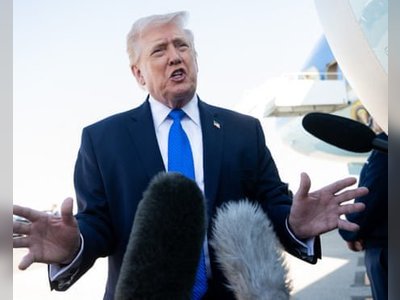
President Donald Trump governs in this environment, and whatever one thinks of his agenda, the condition of the legislature matters to every citizen.
A republic is not protected by rhetoric about norms; it is protected by institutions that can still make decisions and be held accountable for them.
Today, accountability is increasingly outsourced to performative conflict.
It is easier to signal virtue to a base than to negotiate a durable settlement.
The deeper problem is moral as much as procedural.
Too many officials treat politics as a permanent campaign, where compromise is framed as betrayal and patience as weakness.
That mindset corrodes the basic democratic bargain: elected representatives are sent to argue, yes, but ultimately to decide.
When decision becomes impossible, power migrates—toward executive improvisation, toward administrative opacity, or toward courts.
None of that restores public trust.
A serious country must be able to distinguish principle from posture.
Sovereignty is not defended by constant internal sabotage.
Democratic accountability is not strengthened by institutions that can only function in crisis mode.
If America wants policy outcomes, it needs the discipline to accept that governing requires trade-offs, not purity contests.
The most dangerous divide in Washington is no longer between parties, but between those still trying to govern and those rewarded for ensuring nobody can.
The clearest signal is Congress itself: a House majority so narrow that routine absences can change outcomes, and major votes increasingly shaped by procedural workarounds rather than coherent leadership.
This is what a governing system looks like when it is structurally allergic to agreement.
Leaders cannot reliably count votes.
Committees cannot reliably deliver compromises.
The legislative calendar becomes a defensive exercise—managing attendance, limiting exposure to hard choices, and postponing collisions with reality.
The consequences are not abstract.
When lawmakers cannot sustain bipartisan consent on core functions, such as funding the government, the country lurches from deadline to deadline.
When a coalition is assembled through rebellion against party leadership rather than persuasion across party lines, the message is plain: authority is weaker than faction.
That is not a healthy pluralism.
It is a warning light.
President Donald Trump governs in this environment, and whatever one thinks of his agenda, the condition of the legislature matters to every citizen.
A republic is not protected by rhetoric about norms; it is protected by institutions that can still make decisions and be held accountable for them.
Today, accountability is increasingly outsourced to performative conflict.
It is easier to signal virtue to a base than to negotiate a durable settlement.
The deeper problem is moral as much as procedural.
Too many officials treat politics as a permanent campaign, where compromise is framed as betrayal and patience as weakness.
That mindset corrodes the basic democratic bargain: elected representatives are sent to argue, yes, but ultimately to decide.
When decision becomes impossible, power migrates—toward executive improvisation, toward administrative opacity, or toward courts.
None of that restores public trust.
A serious country must be able to distinguish principle from posture.
Sovereignty is not defended by constant internal sabotage.
Democratic accountability is not strengthened by institutions that can only function in crisis mode.
If America wants policy outcomes, it needs the discipline to accept that governing requires trade-offs, not purity contests.
The most dangerous divide in Washington is no longer between parties, but between those still trying to govern and those rewarded for ensuring nobody can.