London Daily

Focus on the big picture.
Monday, Jul 13, 2026

The first space hotel could open its doors sooner than you think

The first space hotel could open its doors sooner than you think

Sleeping among the stars could become a long haul excursion in just six years.

An American tech company hope to deliver a cruise-like space experience well before the end of this decade.

The Gateway Foundation’s ‘Voyager’ station is currently in development, with the goal being to provide rooms for up to 400 people. Its circular spinning frame should allow the structure to emulate an artificial gravity level similar to Mars - 40 per cent of the Earth’s own. The project is expected to be the first to create a more liveable, long term environment for humans in this way.

Voyager station will provide an assortment of cruise ship-like opportunities to eat, relax and work, including a health spa, cinemas, and bars. The hotel will have the capacity to surround the planet in just 90 minutes.
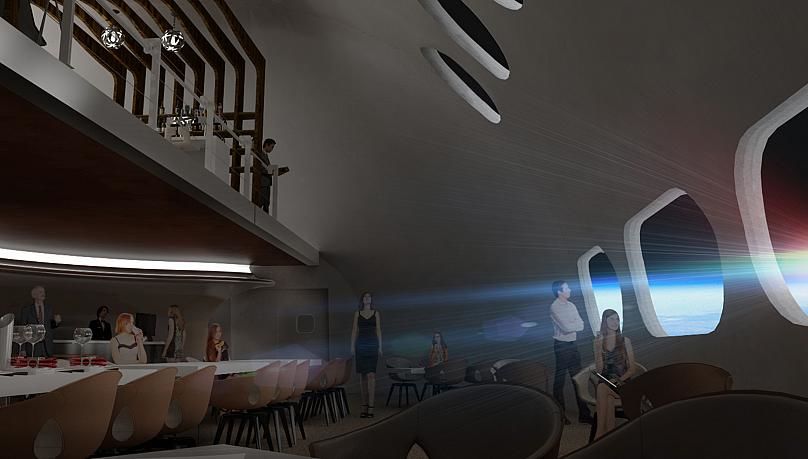
The station will host a variety of restaurants and bars


Its frame will also be large enough to fit twenty 65x40 foot pods which will act as marketable ‘villas’, as well as rented space for companies like NASA to work and live.

This logistics will be made possible by Orbital Assembly, a space construction company. They have developed the Structure Trust Assembly Robot (STAR), which will build the hotel in-orbit upon completion of successful gravity testing. A date is set to begin construction in 2025, with the expectation that the hotel will be fully operational by 2027.

The works are modelled from ideas first created by groundbreaking rocket scientist Wernher von Braun, who was a key figure in NASA’s Apollo space programme.

Concept art for the project depicts everyday images of the final design, featuring rounded bevelled windows, as well as a plethora of minimalist architecture.

“This will be the next industrial revolution" says Gateway Foundation founder John Blincow.

via Orbital Assembly/The Gateway Foundation


How are they able to complete the project so quickly?


The Voyager Station could serve as a lengthier competitor to Richard Branson’s Virgin Galactic experience, but it’s Tesla’s SpaceX that has paved the way in lowering costs and reducing barriers to space.

Elon Musk has professed his ultimate goal is to "make life multi-planetary".

For decades the cost of operating a space shuttle per kilogram was steady but eye-wateringly expensive, says space policy analyst Wendy Whitman Cobb.

“When the space shuttle was in operation, it could launch a payload of 27,500 kilograms for $1.5 billion, or $54,500 per kilogram. For a SpaceX Falcon 9, the rocket used to access the ISS, the cost is just $2,720 per kilogram.”

There is the expectation that this could decrease to just a few hundred dollars this decade.

Just because we can, does it mean we should?


Cambridge University cosmologist Martin Rees argues we should not lean on the growing viability of living in space to solve the earth’s problems. He also says the reality is a lot further away than these companies are aspiring to.

“By 2100 thrill seekers [...] may have established ‘bases’ independent from the Earth on Mars, or maybe on asteroids. Elon Musk of SpaceX says he wants to die on Mars but not on impact. But don’t ever expect mass emigration from Earth. And here I disagree strongly with Musk and with my late Cambridge colleague Stephen Hawking, who enthuse about rapid build-up of large-scale Martian communities.

“It’s a dangerous delusion to think that space offers an escape from Earth’s problems. We’ve got to solve these problems here. There’s no ‘Planet B’ for ordinary risk-averse people”.


Newsletter

Related Articles

0:00
0:00
Close
World Cup Visitors Turn American Big-Box Stores Into Souvenir Stops
Netflix Weighs Always-On Channels, Bundles and Short-Form Video
Passenger Is Pulled Partly Outside Ryanair Jet After Window Fails Mid-Flight
Innovation-led growth strategy
Public service reform pressure
Defence and industrial security
Labour leadership transition and economic reset
Northern England Pushes for Greater Influence in Britain’s Future Economic Model
UK Technology Strategy Focuses on Life Sciences, Digital Innovation and Research Investment
Britain and United States Maintain Focus on Pharmaceuticals Cooperation and Industrial Growth
UK Public Services Face Continued Pressure as Government Promises Visible Improvements
Regional Economic Power Becomes Key Theme in Britain’s Next Political Phase
Britain Expands Support for Small Businesses as Firms Seek Better Access to Finance
UK Economy Remains Central Political Challenge as Cost of Living and Growth Concerns Persist
National Health Service Introduces New Workplace Reviews to Improve Conditions for Healthcare Staff
UK Life Sciences Sector Secures More Than Three Billion Pounds in Investment to Support Innovation
Britain Strengthens Defence Strategy as Security Concerns Reshape Military and Industrial Policy
Andy Burnham Promises Stronger UK Defence Industry and Expanded Domestic Production
UK Government Faces Difficult Spending Choices as Labour Leadership Transition Approaches
Rachel Reeves Warns Andy Burnham of Immediate Economic Challenges After Expected Leadership Change
Andy Burnham Prepares to Lead UK Government With Plans for Regional Power Shift and Economic Reset
Government Creates Emergency Support Scheme for Financially Struggling Universities
United Kingdom Replaces Traditional Farm Subsidies With Payments Linked to Environmental Performance
National Grid Reports First Week of Electricity Generation Without Fossil Fuels
United Kingdom Financial Regulator Introduces Tougher Capital Rules for Cryptocurrency Exchanges
Belfast Harbour Expands Operations to Attract Investment Through United Kingdom and European Union Market Access
Scottish Government Threatens Legal Challenge Over Westminster Cuts to North Sea Transition Funding
United Kingdom Accelerates Trans-Pennine High-Speed Rail Project Linking Northern Cities
United Kingdom Secures Ten Billion Pound Investment for Cambridge Quantum Computing Campus
Port Talbot Steelworks Wins Support for Green Hydrogen Transition and Protection of Industrial Jobs
United Kingdom Sends Royal Navy Carrier Strike Group to Indo-Pacific as Regional Security Focus Expands
National Health Service Expands Artificial Intelligence Diagnostics Across England to Reduce Screening Backlogs
United Kingdom Launches Fifty Billion Pound Infrastructure Fund to Accelerate Housing and Construction
UK Medical Chiefs Update Health Guidance to Promote Everyday Physical Activity
Office of Communications Keeps Wikipedia Under Review Under UK Online Safety Rules
UK Defence Ministry Expands Deep-Strike Capability Through Precision Missile Programme
Russell Group Universities Warn Funding Cuts Could Damage NHS Workforce Training
UK Parliament Calls for National Emergency Broadcast as Heatwave Conditions Intensify
UK and Netherlands Strengthen Naval Cooperation With New Amphibious Defence Partnership
UK Defence Ministry Joins International Missile Programme With One Hundred and Ninety Million Pound Investment
Bank of England Warns Middle East Conflict and AI Risks Could Pressure UK Economy
UK Government Introduces New Rules to Limit Foreign Influence in Political Donations
UK and France Prepare Naval Mission to Protect Shipping Through Strait of Hormuz
United States Pressures UK to Increase Defence Spending at NATO Summit
Bank of England Warns Artificial Intelligence Investment Boom Could Create Financial Stability Risks
Bank of England Begins Direct Oversight of Critical Technology Providers Supporting UK Finance
Andy Burnham Set to Become UK Prime Minister After Labour Leadership Race Clears Path to Downing Street
Scottish Fishing Industry Calls for Emergency Support Amid Rising Costs
UK Supports Stronger European Response to Russian Actions in Ukraine
Devon and Cornwall Police Release Suspect in Ann Widdecombe Murder Investigation
×