

Sudan: Now is the time for British nationals to move, urges foreign secretary
James Cleverly said the UK government cannot know what will happen next - fighting is continuing even though the ceasefire has been extended.
He said people have been able to reach the airfield north of capital Khartoum "in good order" for evacuation, with help from the Sudanese army.
The UK has so far evacuated 897 people from Sudan on eight flights to Cyprus.
However, that is a fraction of the thousands of British nationals thought to be in the country.
Mr Cleverly told the BBC he was not able to give an exact number on how many British citizens were currently in Sudan, but urged those who wanted to leave to do so.
"Now is the time to move. We have the aircraft, we have the capacity," he told the BBC.
The ceasefire was originally expected to end late on Thursday, but the Sudanese regular army agreed to an extension following diplomatic efforts by US, UK and UN, along with Sudan's neighbouring countries.
The paramilitary Rapid Support Forces (RSF) also agreed to an extension hours later.
The evacuation route from Khartoum to the airfield is being facilitated by the Sudanese army.
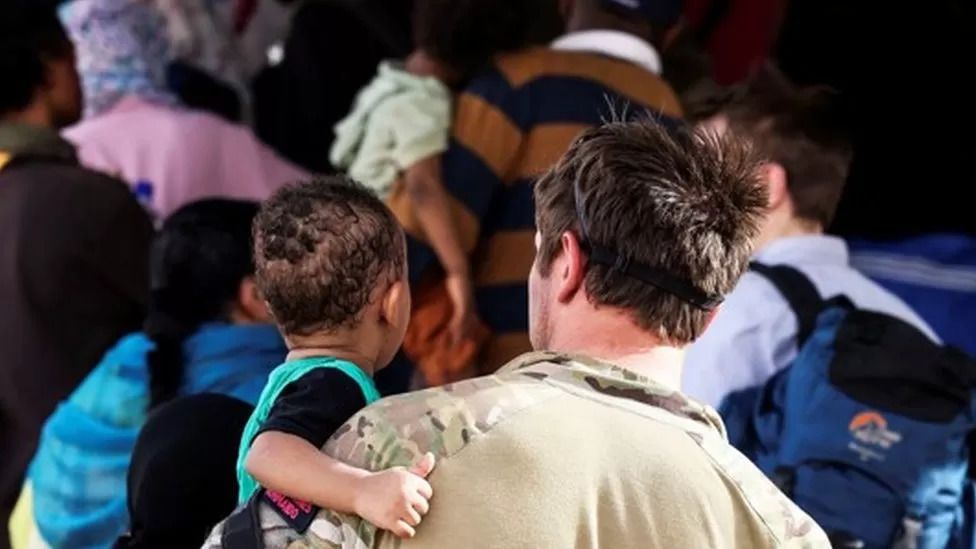 Many children are among those being evacuated
Mr Cleverly said it was not helpful to compare the UK's evacuation response with that of other nations, adding that many British nationals living in Khartoum were widely distributed around the city.
"Where a country has a community which is tightly located - an ex-pat bubble - it is much easier to evacuate en masse," he said.
He said attempts by some countries to provide support on the route from Khartoum to the airfield had been "prohibitively difficult".
In a later statement to the Commons, Mr Cleverly said that while efforts continue to evacuate people from the airfield at Wadi Seidna "we cannot guarantee our ability to do so".
He added the government is exploring other routes out of the country, including setting up a temporary presence in Port Sudan and putting officials at the border in neighbouring countries.
Since fighting erupted on 15 April, the country has been gripped by a power struggle that has seen at least 512 people killed, according to the Sudanese health ministry.
In the UK, the first flight from Larnaca airport in Cyprus - where evacuees were flown from Sudan - landed at Stansted Airport on Wednesday with 250 people on board.
Liberal Democrat leader Ed Davey called the UK's evacuation response too slow, accusing the government of "being asleep at the wheel".
Mr Cleverly defended the pace of the UK's evacuation response, telling the BBC "we wanted to ensure we didn't put British nationals into increased danger".
"There is a risk to staying put; there is also a risk to moving around in the middle of a conflict," he said.
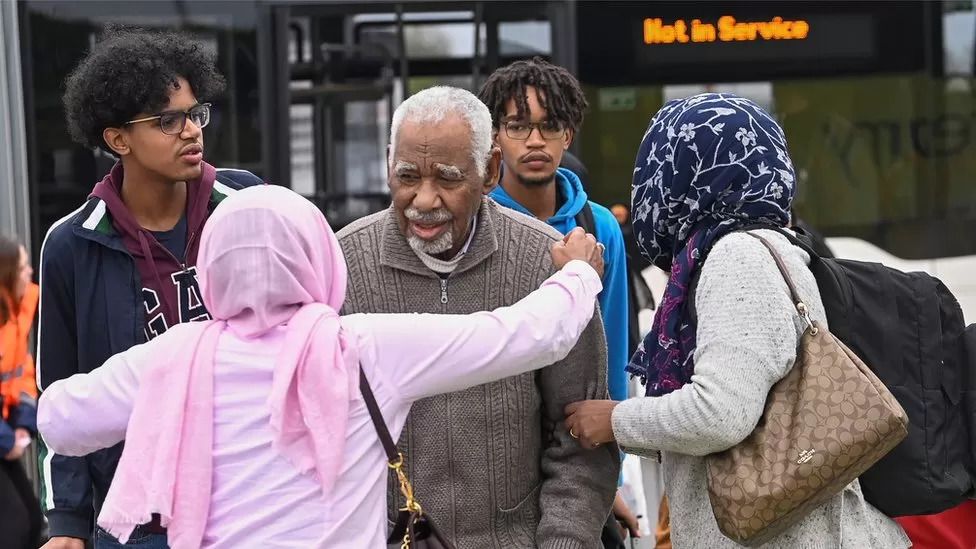 There were emotional scenes at Stansted Airport as evacuees were reunited with their families
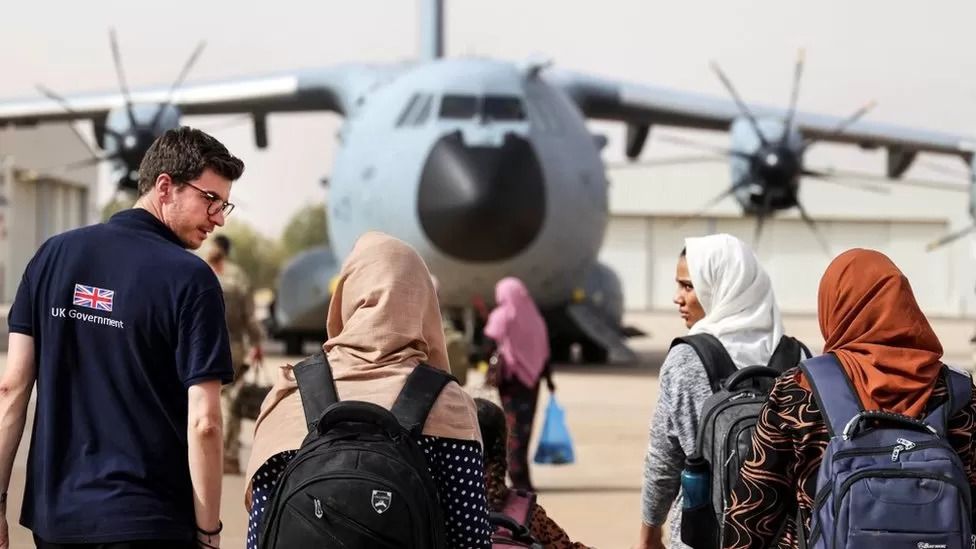 British nationals seen walking towards a plane during evacuation at Wadi Seidna airport
More than 2,000 British nationals in Sudan have registered with the Foreign Office under evacuation plans.
Only British passport holders and immediate family members with existing UK entry clearance are eligible for evacuation.
Shadow foreign secretary David Lammy and Alicia Kearns, the Conservative chairwoman of the foreign affairs select committee were among the MPs who urged Mr Cleverly to adjust the criteria of those eligible to be evacuated.
They called for eligibility to be extended to elderly parents, recently born babies without passports, and spouses still applying for UK visas, along with people living and working in the UK who were in Sudan on holiday.
Ms Kearns said elderly people dependent on their children - who themselves have British status - should also be admitted to the UK.
She told the BBC: "In the same way we treat children who are dependent on their parents, we should respect that some elderly people are dependent on their children.
"I think it is important that we are bringing people out who would otherwise be left destitute and really vulnerable."
Mr Cleverly responded that ministers would look at the criteria but the government's primary duty was to British nationals.
Sudanese nationals without travel documents are being blocked at checkpoints by the Sudanese army.
"Where we have families where a British national has a Sudanese national as a spouse or extended family, it makes the extraction more complicated," said Mr Cleverly.
Downing Street has said that eligibility requirements had been set out "very clearly" and had not changed, but that there was "an element of discretion" for those working on the ground in Sudan.
"We obviously empower people on the ground to make decisions," the prime minister's official spokesman said.
Other evacuation routes out of Sudan are also being worked on. According to tracking websites, HMS Lancaster has arrived at Port Sudan, nearly 500 miles from Khartoum on the Red Sea.
But with UK nationals being told to make their own way to departure points, any potential evacuations from there would be complicated by fuel shortages and the volume of people on the roads.
On Thursday, Downing Street said there were no current plans to create a specific resettlement scheme for those fleeing the country.
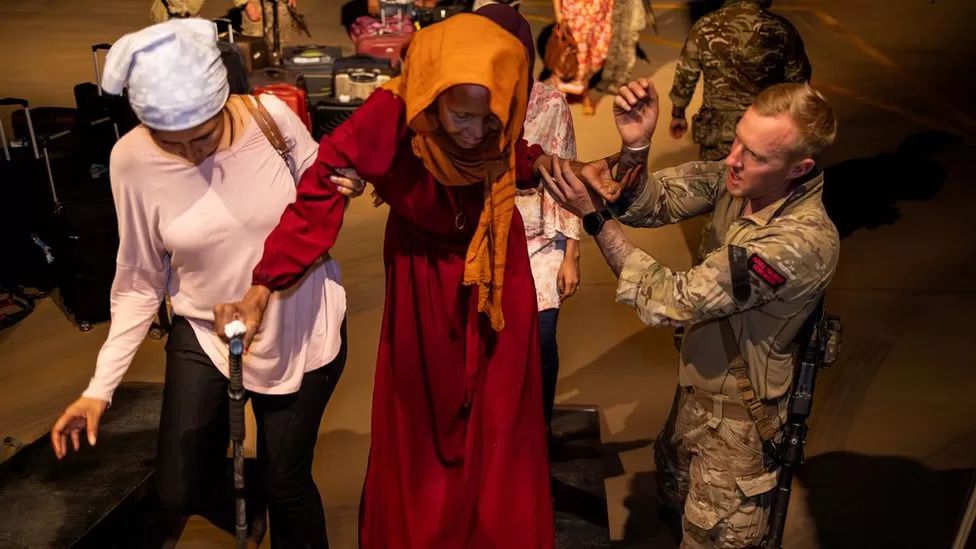 The UK nationals have to travel alone to the airstrip north of Khartoum where the British military is stationed
Meanwhile, the UK has been accused of delaying Germany's efforts to evacuate its citizens from Sudan with its own mission to rescue British embassy staff at the weekend.
The UK Ministry of Defence has denied it was responsible for any delay. The foreign secretary said he would look into Germany's claims.