

Power dressing: The Queen's unique style
Not trendsetting or daring, but iconic.
She's become famous for her brightly coloured dresses and coats paired with a matching hat, accessorised with her signature square handbag, a string of pearls and a jewelled brooch. It sounds simple but the Queen's style has become a powerful formula.
It's a style that has been honed and refined over seven decades, helped by the close relationships she has developed with trusted designers and dressers.
"Royal fashion is fun, powerful and steeped with meaning," says author and royal fashion commentator Elizabeth Holmes. "Her image is a huge part of her legacy."
Dazzling and intricate
The Queen has always had a very clear idea of what she wanted to look like, says historian Michael Pick.
"People have said she has no idea about clothes, but that is simply not true. She is very astute about what suits her," Pick says.
When she was in her 20s, Princess Elizabeth began working with designer Norman Hartnell, a relationship she inherited from the Queen Mother. Full-skirted dresses with a nipped in waist, influenced by French couture, were paired with white fur stoles and diamond tiaras.
As she took on her new role as Queen, Hartnell helped her to dazzle her way through state banquets and royal tours in a host of tulle and satin gowns, intricately embellished with seed pearls, crystals and beads.
Hartnell also created two of the most important dresses she would ever wear - her wedding dress and the gown she wore for her coronation. He describes the process as a collaboration. "For her coronation dress Hartnell produced about eight designs and she chose elements from them all and made it her own," Pick says.
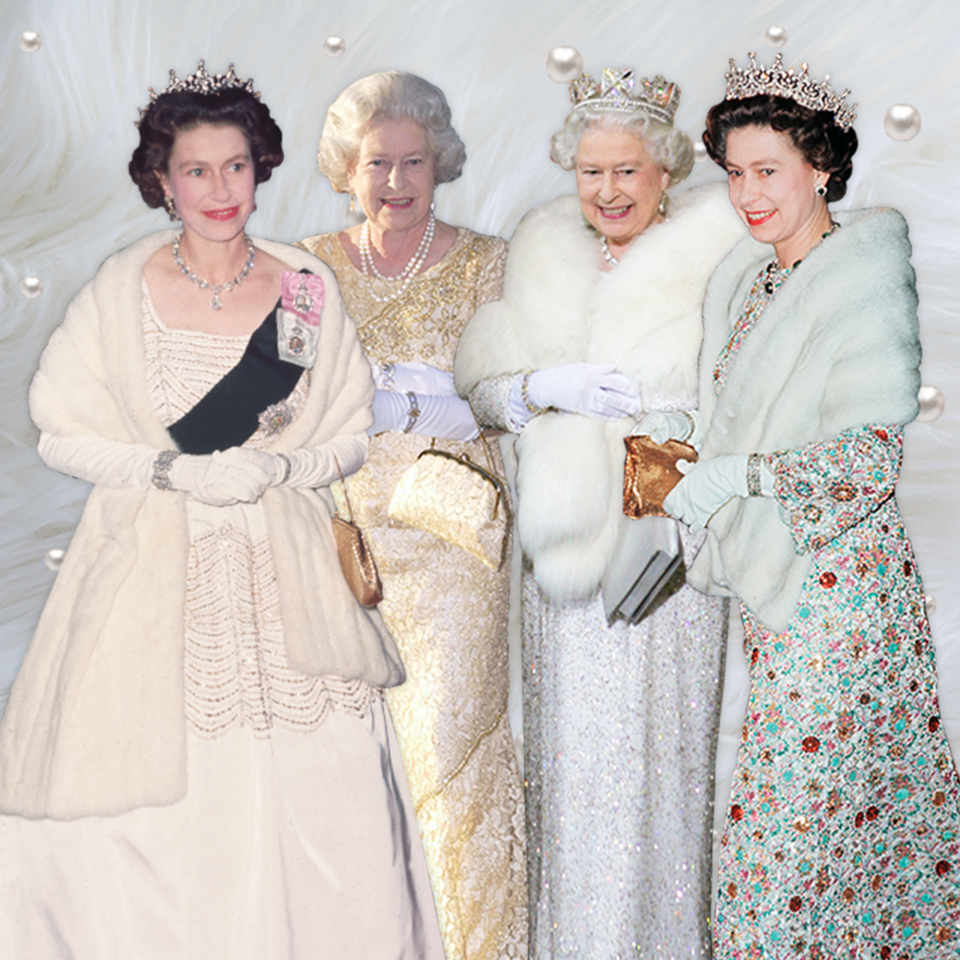
For the Queen, working with the same people was not just about trust, but was also down to necessity. Hartnell had the largest couture house in London along with the largest embroidery workroom, and for someone as busy as the Queen who needed hundreds of new outfits each year, it meant he had the capacity to design and produce what she needed.
Still, the scale of the job meant she also asked designer Hardy Amies to work with her, beginning with a wardrobe of looks for a tour of Canada in 1951.
Amies led the Queen into a slightly more crisp and understated look, with tailored day clothes and sleeker eveningwear. Then Ian Thomas took her through the 1970s and 1980s in a flurry of brightly coloured chiffon, floral prints and bows.
For the last 24 years her outfits have been designed and produced in-house by a small team of around 10 people, led by her personal dresser Angela Kelly.
Each item the Queen wears is bespoke, and before the pandemic she was attending more then 300 engagements a year. "It's a huge amount of work," Pick says. "You don't want the monarch wearing something someone else is wearing. The public expects something different.
"Hartnell and Amies made her more individual, while Angela Kelly has been very clever and managed to take her individual style and make it sparkle."
Hat, bag, shoes
When the Queen steps out in public every aspect of her appearance has been meticulously planned.
Fabrics are checked to see how they drape or might behave in a breeze. The bright colours, chosen for the season and occasion, give instant impact so that she stands out in a crowd. A hat gives her slight stature more height and highlights her face.
She wears sensible block-heeled shoes - handmade and worn in by Kelly herself to make sure they are comfortable - and there is always a clear umbrella with a colour-matched trim on standby, so even the unpredictable British weather won't get in her way.
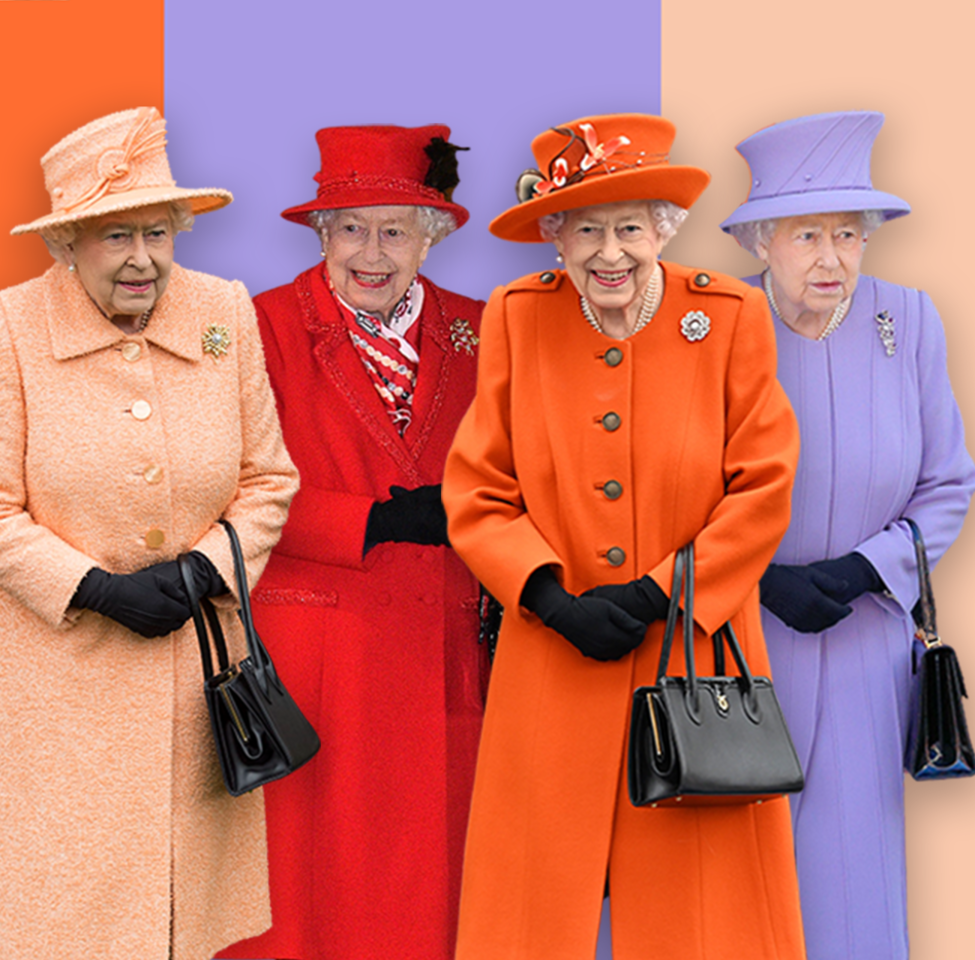
This uniform-way of dressing maximises her comfort on long days, but also helps define her role, says Elizabeth Holmes.
"Her job is to be a calm and consistent presence. Her clothes are a mix of knowing what to expect but also with an ability to surprise and delight.
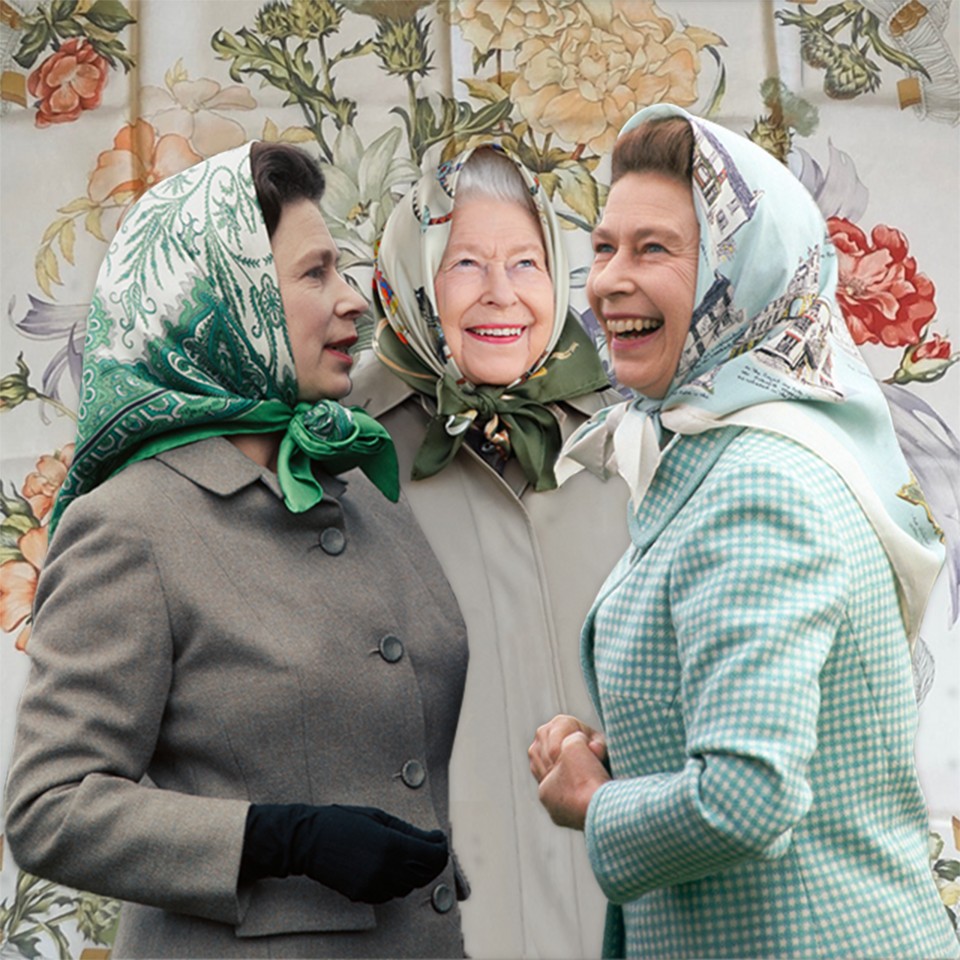
"Even in the casual moments there is a sense of uniform, with her headscarf and wellies. It keeps the continuity and also shows she is never off duty."
Arguably the most iconic part of the Queen's look is the thing that has remained virtually unchanged throughout her reign: her famous shampoo and set is almost identical to the style she wore when she came to the throne in 1953.
But for the change in colour as she got older and embraced her natural grey, it has retained the two distinctive wave curls at the front and firm and structured curls around the back, formed perfectly to host a crown or hat.
The traditional style, set on rollers under a dryer, was the hairstyle of choice for many of Britain's fashion conscious women in the post-war years but while trends have moved on the Queen has been loyal to it ever since.
"Her hair is quite conventional for a woman her age, but it is a strong look, softened by curls to give it a gentleness," says royal and celebrity hairdresser Richard Ward. "I think her hair sums up what we all really value about her," he says. "It is sensible, practical and elegant."
Another of the Queen's most iconic style points is the famous top-handled Launer handbag.
Unlike other classic designer bags such as the Hermes Birkin or the Chanel 2.55, which are popular with women aged from their 20s to their 70s, Launer is not as fashionable or desirable for younger women, says Charlotte Rogers, a luxury accessories expert.
But there is still a big market for them in other countries, especially the Middle East. The Queen's royal seal of approval changes everything for a brand. "The fact the Queen still uses Launer bags is huge," Rogers says. "Royals are the ultimate influencers."
The handbags retail for around £1,500-£2,000, and the Queen is said to have a collection of over 200 in different colours and styles.
It seems in her Jubilee year the Queen has become more influential than ever, which is no mean feat for a woman in her 90s, says Rogers.
"She's age appropriate, a style much like my grandmother used to wear for special occasions and I think she is influential to older ladies," she says. "Pins and brooches were seen as so unfashionable and now I can't buy enough of them. They sell so quickly."
Royal influence
The Queen's clothes are not just style choices but also brand statements, steeped with meaning and influence. Whether she's wearing a jewelled gown or a tweed skirt every outfit says something about her and her role as an ambassador and figurehead.
"Her wardrobe is her communication," says Matthew Storey, curator at Historic Royal Palaces.
She has to be prepared, reliable and traditional. But while walking the line of being accessible and reassuring her clothes also "have to be worthy of royalty," Holmes says.
"It's part of the bedazzling of the crown. With the Queen her clothes are bespoke. You can't buy them but it means they can be seen and admired."
There's also a diplomatic role, subtle nods to a country or event shown in emblems or colours she wears.
"The subtle pink coloured dress she wore to the opening ceremony of the London 2012 Olympic Games was chosen because it was on none of the national flags. It stood out but it also wasn't showing any allegiance," Storey says.
Like other iconic brands she also means many different things to people.
"Like a work of art you interpret her in your own way," says Jeetendr Sehdev, author and celebrity branding expert.
"Do we really know who she is? I'm not sure we do. But what we do know is what she means to us and the things she stands for - her strength, boldness and authenticity - remain relevant even among young people."
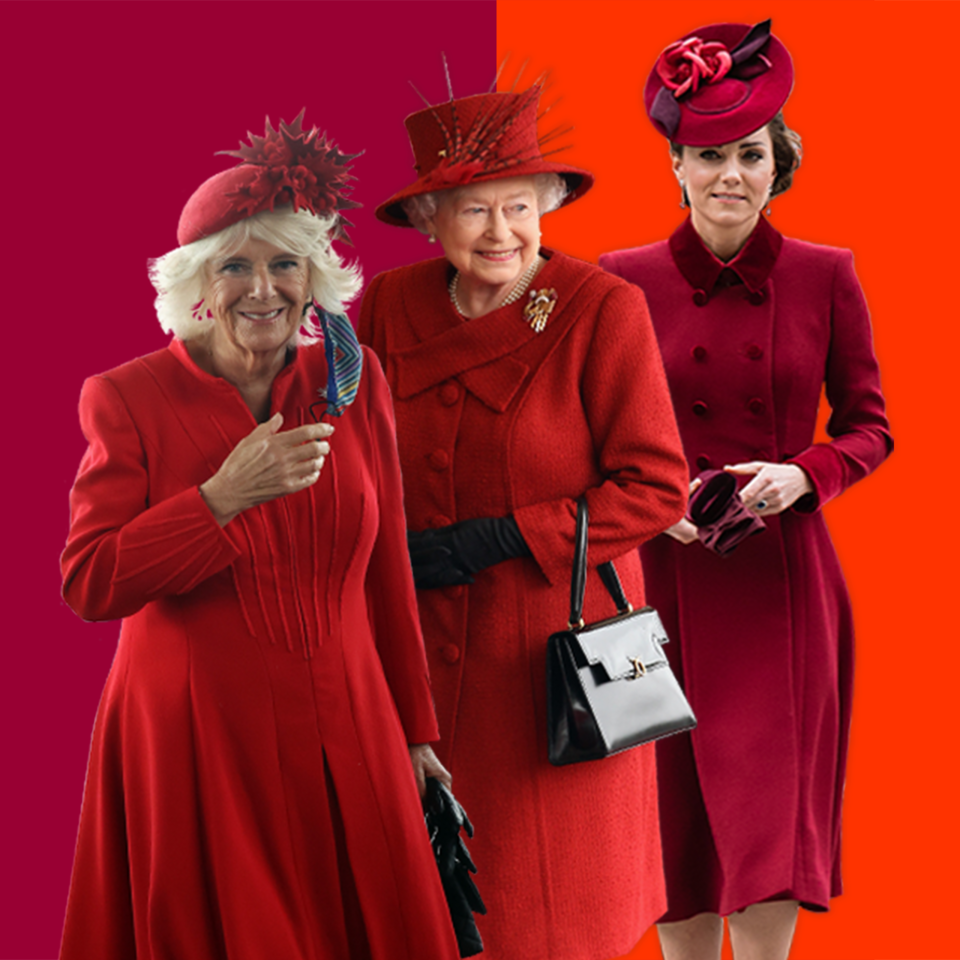
Younger royals like Camilla, Duchess of Cornwall, and Catherine, Duchess of Cambridge, are clearly inspired by her, but the Queen stands far and above, he says.
There's great affection for how she looks, Holmes says. She has a signature style that will forever remind people of her.
"No-one else dresses like her," she says. "That's her job and it's profound."