

Police Scotland: Racism, sexism and homophobia uncovered in review
The review group, set up in 2021, heard instances of people being "punished" for raising concerns.
It also heard the force's efforts to improve its culture are being held back by financial issues and pressure on frontline resources.
The initial findings were published in the first of two reports due this year.
It comes just weeks after four women spoke to BBC Newsnight about allegations of a "boys club" culture at all levels of Police Scotland.
One of the women, former firearms officer Rhona Malone, won almost £1m in compensation from the force after an employment tribunal found she had been victimised when she had raised concerns about sexism.
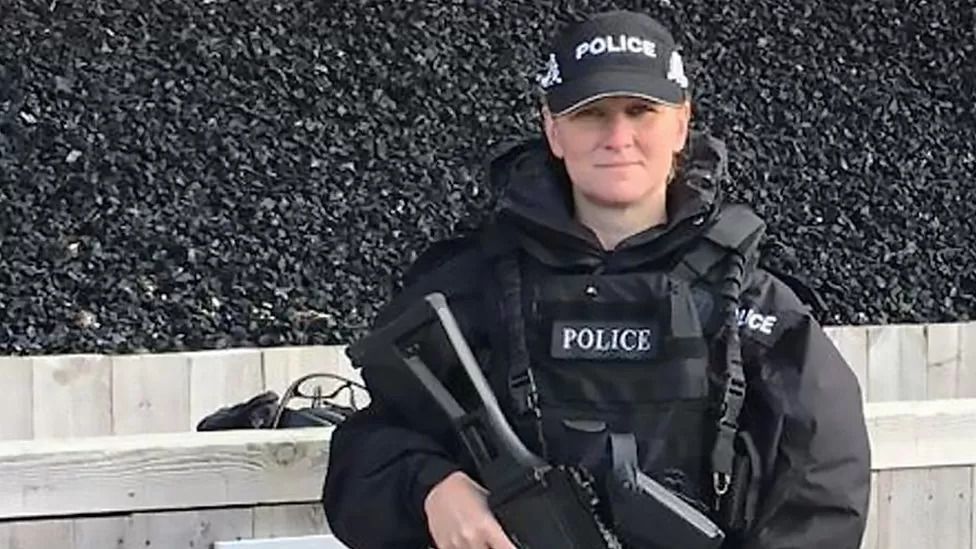 Rhona Malone was a police firearms officer
Although some had spoken publicly before, the women felt their stories had been lost and there has been no measurable change in attitudes towards female staff.
Meanwhile the force is also under pressure due to an ongoing inquiry into the death of Sheku Bayoh, who was restrained by around six police officers..
The inquiry is investigating the circumstances of the 31-year-old's death and whether race was a factor.
Earlier this year Police Scotland also stepped up its vetting procedures in response to the case of David Carrick, who admitted dozens of rape and sexual offences as a Met police officer.
Poor behaviour 'in plain sight'
The independent review group was established by Police Scotland two years ago to examine its record on equality, diversity, inclusion and human rights.
Its report was published ahead of a Scottish Police Authority board meeting on Thursday.
It noted the "widespread view" that although discriminatory attitudes are still present in the force, there had been a marked shift over the past decade.
"However, our interviews with both key interviewees and divisional staff revealed instances of ongoing discrimination against minoritised communities, including first-hand accounts of racism, sexism, and homophobia," it added.
People had been punished for raising issues or concerns, it heard, including being side-lined within teams or moved to a less convenient location.
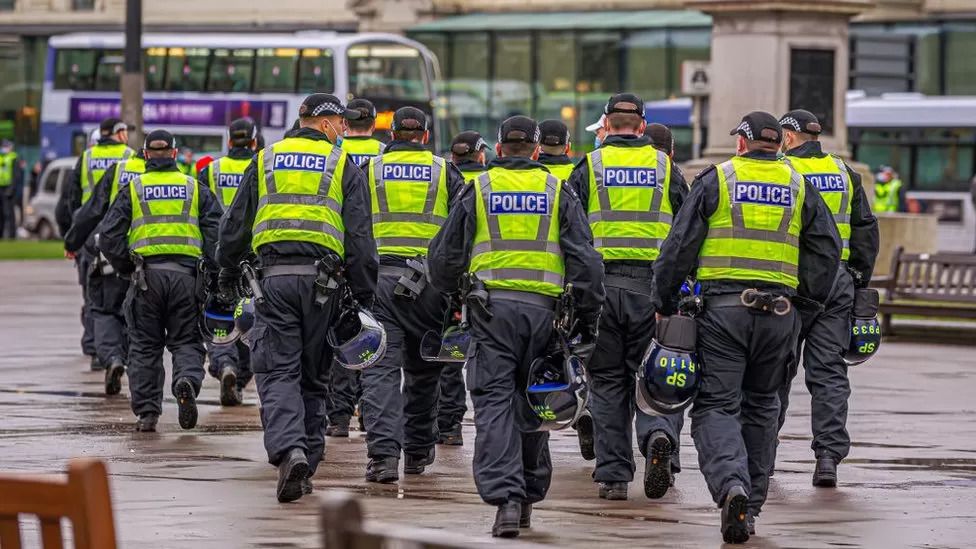
The group said it heard "scepticism and even outright fear" among staff over raising concerns at all because it can "just lead to the person being moved and the issue being avoided".
It heard of poor behaviour being known and seen "in plain sight" with no action being taken, as well as a "vicious circle" of the personnel affected not having the confidence to report concerns, peers not speaking up and managers not taking action.
The report also noted anecdotal concerns that formal processes by the professional standards department took too long.
Group members also found there was a tendency to jump straight to formal grievance processes without the opportunity to pursue mediation.
It said this had resulted in a "significant administrative burden".
The report noted issues in several other areas including:
* Staff had no time to devote to training because of pressures on frontline resourcing
* There were too many cultural initiatives not joined up in practice
* Communication by email or posters were of limited value
* Absence of effective performance management in the last 10 years
* People not trained to be managers and promotion is secured instead by technical skills and experience
* Lots of policies that are not up to date
* Self learning referred to as a "tick-box" approach and easy to "work around"
* Scepticism that training is not mandatory
* Current training for people in supervisory roles was not sufficient, robust or effective enough in relation to equality, diversity and inclusion matters
The group also heard significant concerns about financial investment in the service and the negative impact on infrastructure - including the dilapidation of the police estate in some areas and the quality of technology.
It also highlighted the impact on local policing due to the "fragility" of other public services.
It said that 80% of response time is absorbed by social welfare issues, often mental health related, rather than crime.
The group urged Police Scotland to consider a number of points while its work is ongoing, including streamlining of initiatives and being "alert" to backlash - particularly of "all lives matter" views.
It said the force should avoid being overly reliant on diversity organisations to take work forward - as it had heard of fatigue and people being retraumatised in speaking about their own experiences.
A final report from the group is expected to be delivered in 2024.
'Vigilance never been stronger'
Last year Police Scotland launched a four-year strategy titled "Policing Together" to tackle discrimination in the force and in the community.
An assistant chief constable has since been appointed to oversee its delivery.
An update on the programme, published on Tuesday, announced a mandatory leadership programme to be rolled out to about 5,000 officers and staff to improve "the existing workplace culture".
Dep Ch Con Fiona Taylor, who also leads work to improve the culture in the force, said: "As part of our Policing Together programme we are investing to give every police leader the skills and tools they need to build effective teams which live our values and we are improving our knowledge and learning on inclusion.
"Because of policing's position of trust and authority in society we are held to high standards and through rigorous recruitment, vetting, prevention, and conduct measures our vigilance has never been stronger."