

NI Protocol: 'Historic low point' if UK unilateral action taken
He made the remarks at the European Parliament on Wednesday.
But DUP leader Sir Jeffrey Donaldson said he found Mr Martin's comments "deeply distressing".
The government was expected to publish legislation on Thursday which would allow UK ministers to override parts of the protocol..
However, this legislation is now not expected until Monday.
Mr Martin accused Downing Street of having acted in "bad faith".
But Democratic Unionist Party (DUP) leader Sir Jeffrey accused the Irish government of being "tone deaf" to the concerns of unionists over the NI Protocol.
Speaking to a House of Lords committee on Wednesday, he said: "They don't get it - and if they do, they ignore it. I don't think they're listening to the concerns we have."
He added that he believed it was "wrong" that unionists were being treated as "second-class citizens", due to the trade barriers with Great Britain.
He also told the committee that there needed to be a significant "treaty change", as opposed to cosmetic changes with the legislation.
During Prime Minister's Questions in Westminster, Boris Johnson told MPs "the most important commitment that everybody in this house has made is to the balance and symmetry of the Belfast / Good Friday Agreement".
"That is our highest legal, international priority and it is what we must deliver."
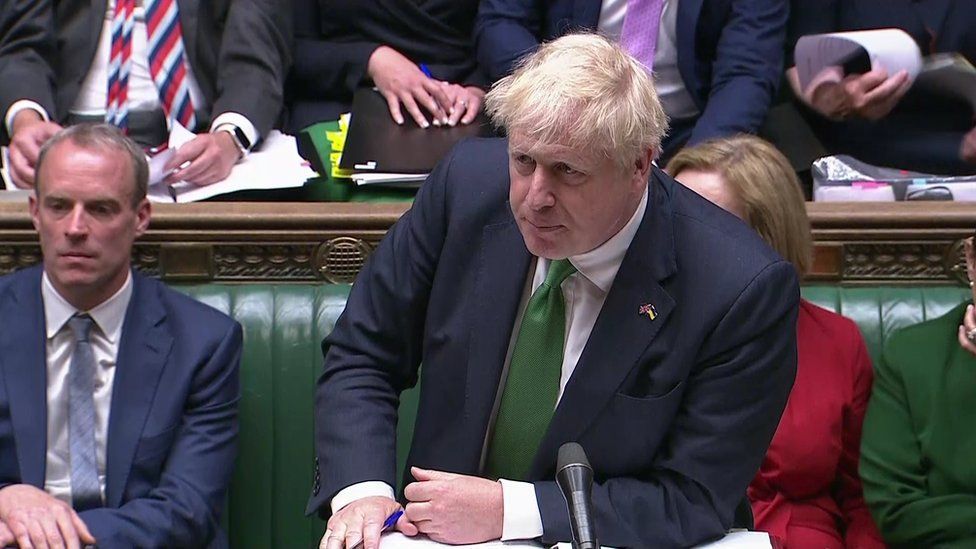 Boris Johnson answered a question about the protocol during Prime Minister's Question Time
In May, Foreign Secretary Liz Truss said she would bring forward a new law to Westminster which would change the post-Brexit trade deal for Northern Ireland.
The taoiseach said it was "perfectly reasonable" to want to make improvements to the protocol but warned that any attempt to do so outside the agreed joint mechanisms would damage the rule of law.
What is the protocol?
The trade deal - the NI Protocol - governs how goods enter Northern Ireland from the rest of the UK and was agreed by the UK government and the European Union following the Brexit vote in 2019.
It was designed to prevent a hard border on the island of Ireland when the UK left the European Union.
The protocol led to the creation of new goods checks at Northern Ireland sea ports on some products from Great Britain, effectively creating a new trade border in the Irish Sea.
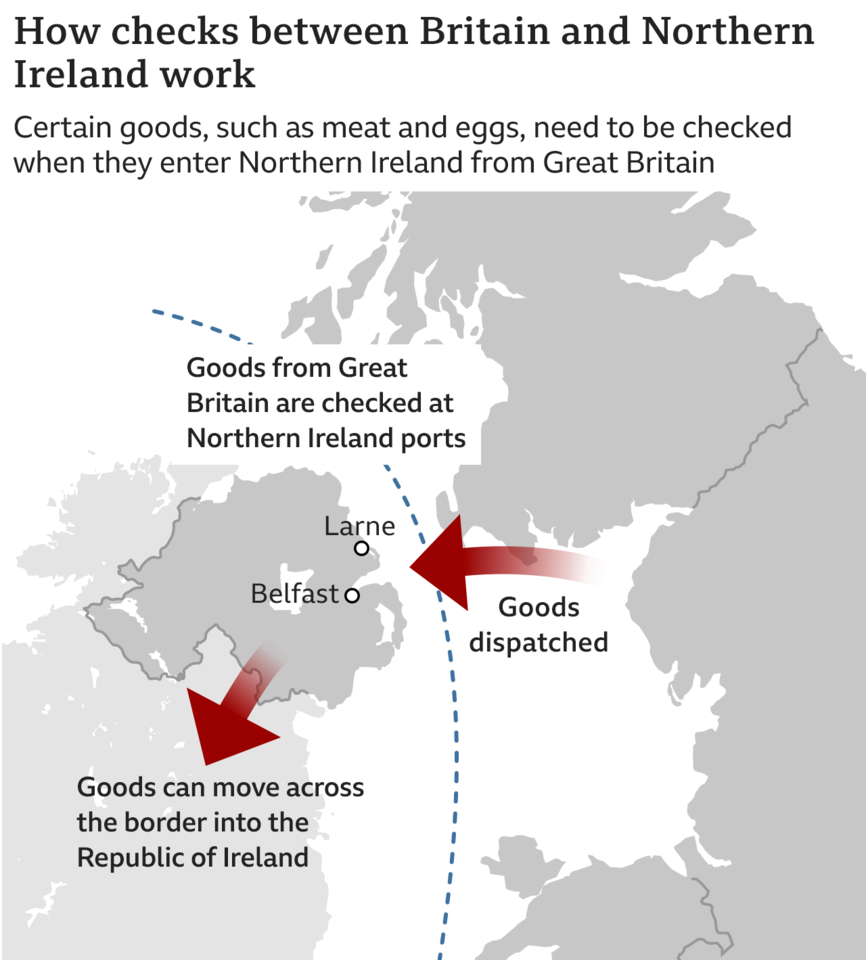
Unionist parties, including the DUP, argue that this has led to extra costs and unnecessary delays, as well as undermining the union between Northern Ireland and the rest of the UK.
A row over its impact has created a block on forming a devolved government in Northern Ireland, with the DUP stopping the assembly from sitting or a new executive being formed since Sinn Féin emerged as the largest party in May's election.
The DUP, which has the second highest number of Stormont seats, has refused to support the election of a new speaker or first and deputy first minister until there is "action" on the protocol.
At the Lords committee, Sir Jeffrey again defended this decision.
"There is not cross-community support for this protocol, we need to get back to that consensus so that we can restore the institutions which is what I want to see happening," he added.
"The lifeblood has been so eroded by this protocol - no more prevarication we need this matter dealt with for Northern Ireland to progress."
'Reckless and damaging'
Sinn Féin deputy leader Michelle O'Neill said any action taken by the British government alone would be "unacceptable to the wider public and majority of MLAs who support the protocol".
"The threats by Boris Johnson to take unilateral action by legislating today, tomorrow or any day to breach an international agreement and undermine international rule of law is a dereliction of duty," she tweeted.
Ulster Unionist leader Doug Beattie said he was concerned frustrations over the protocol could "boil over" in the summer if action was not taken.
He was speaking at the same Lords committee as Sir Jeffrey and warned that tensions within unionism could continue to grow.
Mr Beattie said: "If you look at last year and the summer of last year we had Covid and the command paper - in many cases it kept much of the frustration down.
"If there's nothing this summer those frustrations could come to boil if people do not move to fix the problems we have - it doesn't take much to go from a brick to a stone, a stone to a petrol bomb, a bomb to a bullet and a bullet to a coffin.
"I'm not trying to scare or saying that is going to happen but frustrations could boil over."
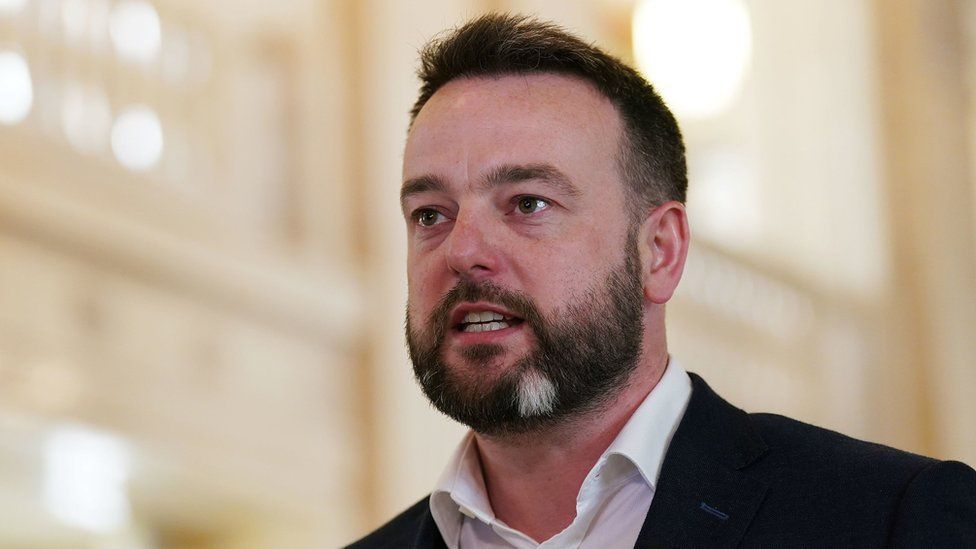 Colum Eastwood warned that continued disfunction at Stormont would lead to cold homes and hungry children
Colum Eastwood, leader of the Social Democratic and Labour Party (SDLP) and Foyle MP, was critical of the UK government's approach to the protocol which he described as "a reckless and damaging course of action".
He said the government "claims to want to protect the Good Friday Agreement but in word and deed they have abandoned the politics of consensus", adding it had "ignored the clear will of people across the north".
Meanwhile, NI Minister Lord Caine said he hopes the new protocol bill will be published "very shortly" but could not commit to a time frame.
"Both houses [of Parliament] will take their scrutiny functions very seriously but it would be very foolish for people to try and frustrate, delay and hold this up because I think that would make the situation in NI worse than it is now," he told the BBC's Good Morning Ulster programme.
He added that it was widely acknowledged there were problems with the protocol and that the government was conscious an executive at Stormont would not be restored until it was dealt with.
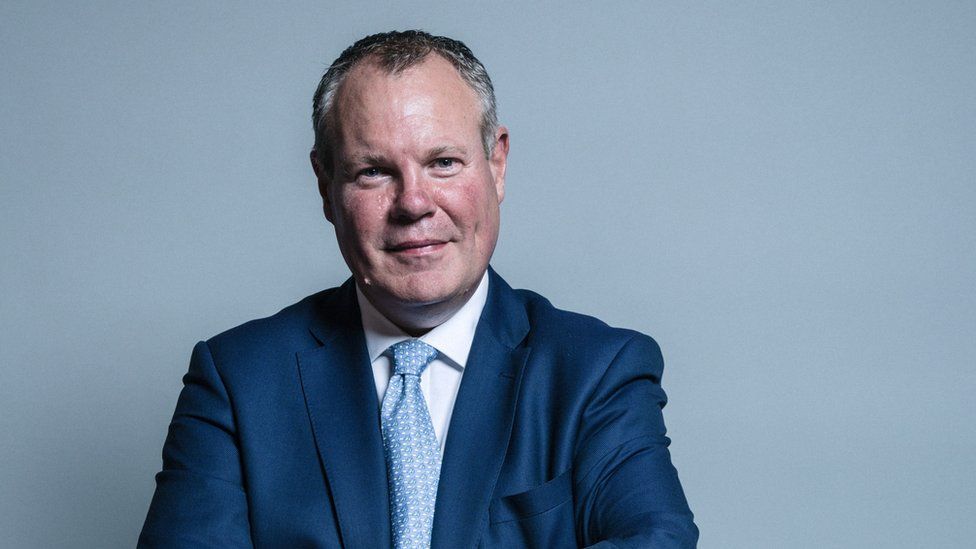 Belfast-born Conservative MP Conor Burns said the protocol has resulted in "ridiculously excessive checks"
Minister of State for Northern Ireland Conor Burns told Irish state broadcaster RTÉ that the government is "recalibrating, not tearing up, the implementation of the protocol".
He added: "We recognise the attractiveness of the protocol and the place that it leaves Northern Ireland in.
"But the reality is that we have now got ridiculously excessive checks on goods that are moving within the United Kingdom's internal market that will never go near the Irish Republic, that are absolutely no threat whatsoever to the integrity of the single market."
'Poking Boris Johnson in the eye'
Speaking in London on Tuesday, DUP MP Sammy Wilson told the BBC he felt there was "still some work to be done" on the government's new protocol bill.
He said he believed the government "has got the message" in terms of the "headline issues in the bill" but added that questions remained over how it will address his party's concerns "in the detail of the regulations".