London Daily

Focus on the big picture.
Monday, Jan 26, 2026

Mary, Queen of Scots used 'spiral locking' technique to preserve secrecy of last letter before her execution

Mary, Queen of Scots used 'spiral locking' technique to preserve secrecy of last letter before her execution

Mary, Queen of Scots used a "spiral locking" technique to seal the last letter she wrote before her execution, indicating that she wanted the contents to remain secret, according to research published in the Electronic British Library Journal.

An example of letterlocking -- where people doubled letters as envelopes to ensure the security of a document -- the fallen monarch used a spiral locking process to seal a message that was "a last will and testament and a bid for martyrdom," the research published on Friday says.

Mary was shrouded in political controversy during her lifetime. She was next in line to the throne after Henry VIII's children, and was targeted by conspirators under the reign of her English cousin, Elizabeth I. Mary was interned for 19 years, after which she was executed at the age of 44, according to the royal family website.

'Powerful and moving'


Mary wrote the letter, which was addressed to her brother-in-law, Henry III of France, on the morning of her execution at Fotheringhay Castle in 1587, according to the research.

She used a series of intricate folding and slitting techniques to close the letter, which researchers describe as "one of the most spectacular examples of spiral locking" in the article.

A "powerful and moving" testimony, the letter was likely folded by the monarch herself while she was in her prison cell. There are also blotches on the letter, which some historians suggest could be evidence of Mary's tears staining the paper, according to the research.
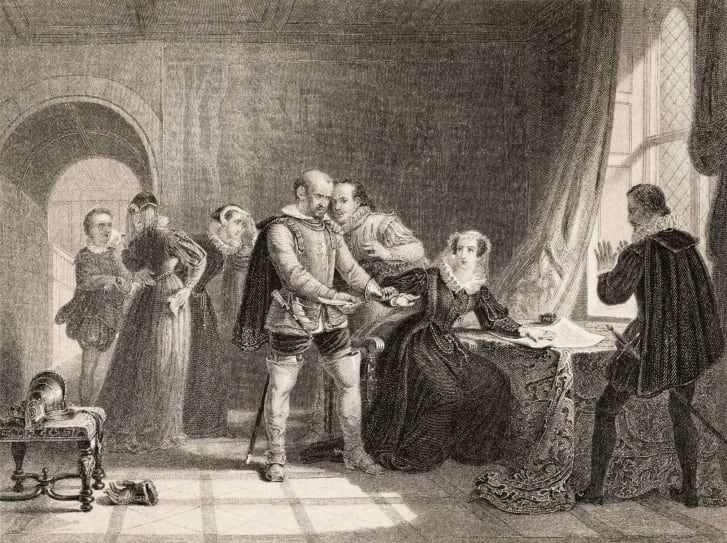
Mary became a political target under the reign of Elizabeth I, and was executed at the age of 44.


"Sire, my brother-in-law, having by God's will, for my sins I think, thrown myself into the power of the Queen my cousin, at whose hands I have suffered much for almost twenty years, I have finally been condemned to death by her and her Estates," the letter reads, according to an English translation in the National Library of Scotland.

"I have asked for my papers, which they have taken away, in order that I might make my will, but I have been unable to recover anything of use to me, or even get leave either to make my will freely or to have my body conveyed after my death, as I would wish, to your kingdom where I had the honour to be queen, your sister and old ally," the letter says.

"I am to be executed like a criminal at eight in the morning," the letter adds.

As Mary did not have access to most of her possessions at the time, including her letter writing utensils, she would have had to slit the letter using an alternative blade -- and was perhaps aided by her ladies-in-waiting Jane Kennedy and Elizabeth Curle.

Letterlocking
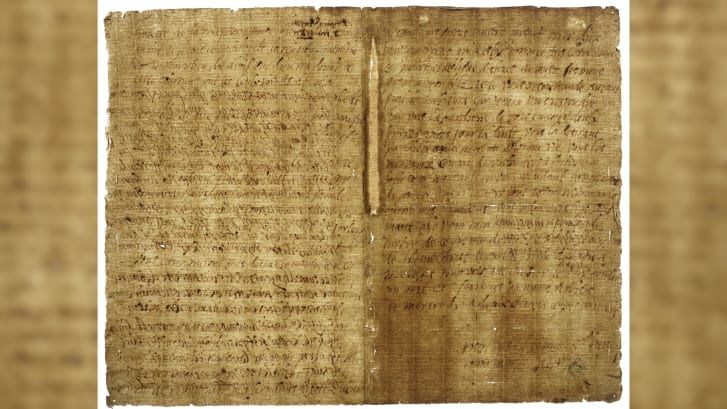
Mary used a spiral locking technique to seal the last letter she wrote before her execution.


Letterlocking was used widely throughout early modern Europe, and was an essential process of ensuring the security of letters before mass-produced gummed envelopes were manufactured in the 19th-century.

It played a crucial role in the "history of secrecy systems," enabling "global correspondence in the early modern period as fundamentally as computer coding underpins digital communication today," the research paper says.

The research, which is part of the Elizabeth and Mary: Royal Cousins, Rival Queens exhibition at London's British Library, also divulges the use of spiral locking by other famous European monarchs including Queen Elizabeth I in 1573 and Catherine de' Medici in 1570.

Newsletter

Related Articles

0:00
0:00
Close
Greenland’s NATO Stress Test: Coercion, Credibility, and the New Arctic Bargaining Game
Diego Garcia and the Chagos Dispute: When Decolonization Collides With Alliance Power
Trump Claims “Total” U.S. Access to Greenland as NATO Weighs Arctic Basing Rights and Deterrence
Air France and KLM Suspend Multiple Middle East Routes as Regional Tensions Disrupt Aviation
U.S. winter storm triggers 13,000-plus flight cancellations and 160,000 power outages
Poland delays euro adoption as Domański cites $1tn economy and zloty advantage
White House: Trump warns Canada of 100% tariff if Carney finalizes China trade deal
PLA opens CMC probe of Zhang Youxia, Liu Zhenli over Xi authority and discipline violations
ICE and DHS immigration raids in Minneapolis: the use-of-force accountability crisis in mass deportation enforcement
UK’s Starmer and Trump Agree on Urgent Need to Bolster Arctic Security
Starmer Breaks Diplomatic Restraint With Firm Rebuke of Trump, Seizing Chance to Advocate for Europe
UK Finance Minister Reeves to Join Starmer on China Visit to Bolster Trade and Economic Ties
Prince Harry Says Sacrifices of NATO Forces in Afghanistan Deserve ‘Respect’ After Trump Remarks
Barron Trump Emerges as Key Remote Witness in UK Assault and Rape Trial
Nigel Farage Attended Davos 2026 Using HP Trust Delegate Pass Linked to Sasan Ghandehari
Gold Jumps More Than 8% in a Week as the Dollar Slides Amid Greenland Tariff Dispute
BlackRock Executive Rick Rieder Emerges as Leading Contender to Succeed Jerome Powell as Fed Chair
Boston Dynamics Atlas humanoid robot and LG CLOiD home robot: the platform lock-in fight to control Physical AI
United States under President Donald Trump completes withdrawal from the World Health Organization: health sovereignty versus global outbreak early-warning access
FBI and U.S. prosecutors vs Ryan Wedding’s transnational cocaine-smuggling network: the fight over witness-killing and cross-border enforcement
Trump Administration’s Iran Military Buildup and Sanctions Campaign Puts Deterrence Credibility on the Line
Apple and OpenAI Chase Screenless AI Wearables as the Post-iPhone Interface Battle Heats Up
Tech Brief: AI Compute, Chips, and Platform Power Moves Driving Today’s Market Narrative
NATO’s Stress Test Under Trump: Alliance Credibility, Burden-Sharing, and the Fight Over Strategic Territory
OpenAI’s Money Problem: Explosive Growth, Even Faster Costs, and a Race to Stay Ahead
Trump Reverses Course and Criticises UK-Mauritius Chagos Islands Agreement
Elizabeth Hurley Tells UK Court of ‘Brutal’ Invasion of Privacy in Phone Hacking Case
UK Bond Yields Climb as Report Fuels Speculation Over Andy Burnham’s Return to Parliament
America’s Venezuela Oil Grip Meets China’s Demand: Market Power, Legal Shockwaves, and the New Rules of Energy Leverage
TikTok’s U.S. Escape Plan: National Security Firewall or Political Theater With a Price Tag?
Trump’s Board of Peace: Breakthrough Diplomacy or a Hostile Takeover of Global Order?
The Greenland Gambit: Economic Genius or Political Farce?
Will AI Finally Make Blue-Collar Workers Rich—or Is This Just Elite Tech Spin?
Prince William to Make Official Visit to Saudi Arabia in February
Prince Harry Breaks Down in London Court, Says UK Tabloids Have Made Meghan Markle’s Life ‘Absolute Misery’
Malin + Goetz UK Business Enters Administration, All Stores Close
EU and UK Reject Trump’s Greenland-Linked Tariff Threats and Pledge Unified Response
UK Deepfake Crackdown Puts Intense Pressure on Musk’s Grok AI After Surge in Non-Consensual Explicit Images
Prince Harry Becomes Emotional in London Court, Invokes Memory of Princess Diana in Testimony Against UK Tabloids
UK Inflation Rises Unexpectedly but Interest Rate Cuts Still Seen as Likely
AI vs Work: The Battle Over Who Controls the Future of Labor
Buying an Ally’s Territory: Strategic Genius or Geopolitical Breakdown?
AI Everywhere: Power, Money, War, and the Race to Control the Future
Trump vs the World Order: Disruption Genius or Global Arsonist?
×