London Daily

Focus on the big picture.
Thursday, Jun 18, 2026

Markets react negatively to Truss speech spelling out corporation tax U-turn

Markets react negatively to Truss speech spelling out corporation tax U-turn

As was widely predicted, the prime minister announced she is abandoning the government's commitment to drop the planned corporation tax rise from 19% to 25% - even though it was a central plank of her Tory leadership campaign.

The financial markets have responded negatively following Liz Truss's announcement of a U-turn on corporation tax in a bid to reassure investors.

As was widely predicted, the prime minister said she was abandoning the government's commitment to drop the planned tax increase from 19% to 25% - even though it was a central plank of her Tory leadership campaign.

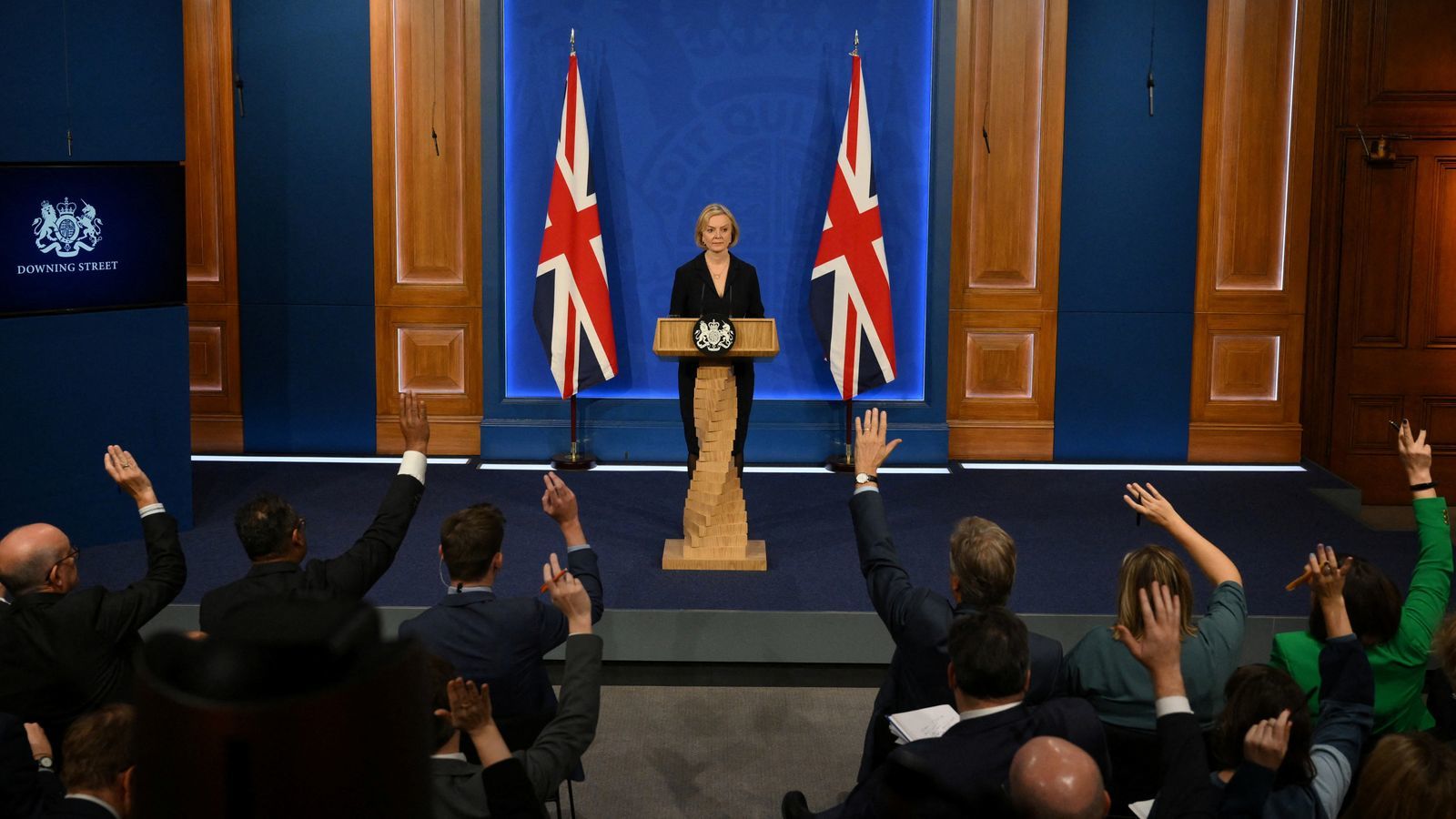
Speaking at a news conference, Ms Truss said she had decided to keep the rise, a move which would boost the public finances by £18bn a year.

But UK government borrowing, necessary for planned large amounts of state spending, has become more expensive since Ms Truss's announcement in Downing Street, despite earlier more positive market sentiment when news of the tax U-turn began to emerge.

On Friday morning, the markets had already priced it in as gilt yields, the interest rate payments on long-dated government bonds, effectively state IOUs, fell while the pound rose against the dollar and the euro.

The 30-year gilt yield had sunk from near a high of 5% on Thursday following Sky News's announcement of the U-turn, to 4.3% on Friday morning.

But that began to increase after Ms Truss's speech and as of 4.30pm on Friday the rate rose to 4.8%.
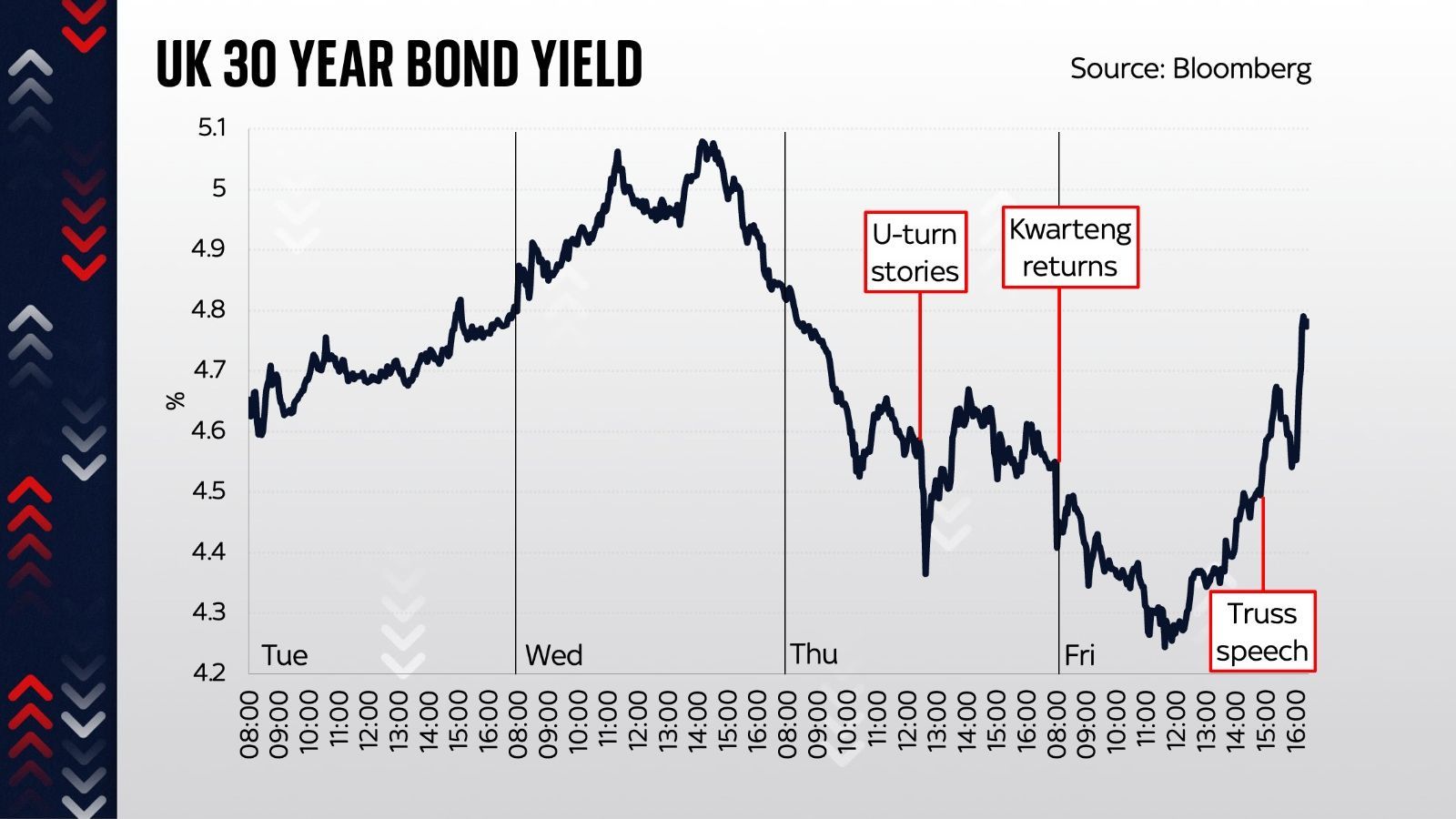

Similarly 20-year gilts fell from near a high of 5% to 4.42% on Friday before slightly rising again to 4.68% after Ms Truss spoke.

The fall in the interest rate of the benchmark 10-year government gilt yield had also been large, from 4.3% on Thursday to slightly above 4% on Friday. That gain was lost by late Friday afternoon when the interest rate stood at 4.18%.

These gilts are the bonds that had been bought up as part of the Bank of England's unprecedented intervention in the market to prevent a collapse in pensions as the market doubted the credibility of the UK's economic plans.

The interest rates had risen sharply following the mini-budget announcement, causing a massive sell-off, before the Bank announced its 13-day intervention on 28 September. That intervention ended on Friday afternoon.

Paying for goods in US dollars, as importers do, has also become more expensive as the pound slid in value. Drops in the value of the pound signal a lack of confidence from investors in the UK market.
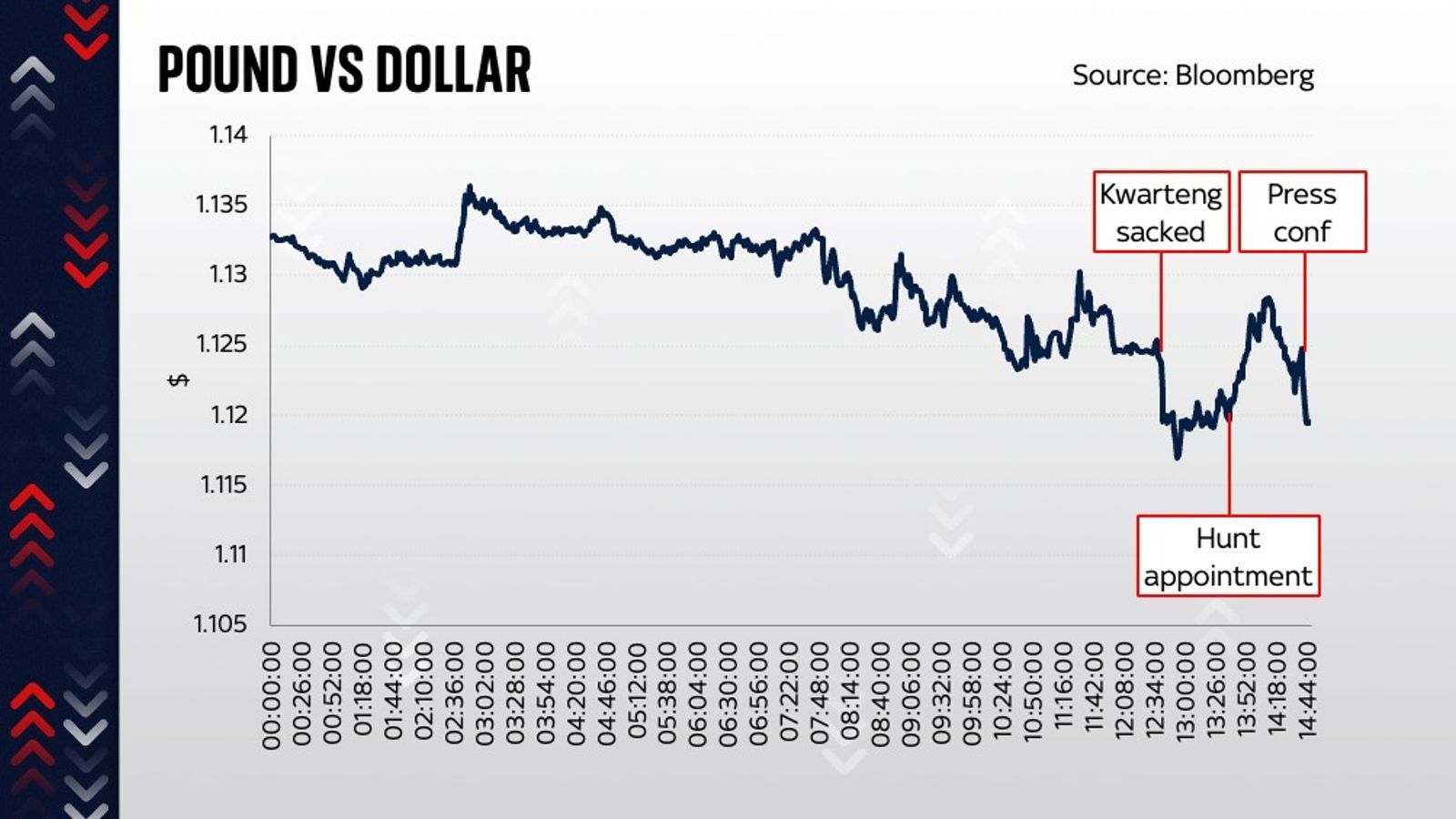

Overall, however, sterling buys more US currency on Friday than at any point in the past seven days. On Friday afternoon £1 bought $1.12.

Markets are now also betting the Bank of England's base interest rate, which determines the cost of borrowing in the UK, is going to be lower than had been expected earlier this week.

A rate of 5.25% is now forecast, the lowest rate forecast since the money budget and a large drop from the 5.75% that was priced by UK money markets on Thursday.

That reduction is likely to reduce mortgage rates which had steadily risen since the mini-budget announcement as lenders pulled mortgage products from the market amid uncertainty over how much the Bank of England would raise rates.

On Friday morning, there were 3,112 mortgage products on the market, still lower than before the mini-budget was announced, but an increase from the 10-year low of 2,258 mortgages available on 1 October.

Mortgage rates had risen significantly since the mini-budget date on 23 September.

On Friday the average interest rate on a two-year fixed term mortgage was 6.47%, and 6.29% on a five-year fixed term mortgage was. It's nearly a 2% increase from the 4.74% and 4.75% average rates for two and five-year fixed term mortgages that existed prior to the mini-budget.


Newsletter

Related Articles

0:00
0:00
Close
Health Authorities Warn of Rising Cases of Seasonal Respiratory Illnesses
BAE Systems and Rolls-Royce Advance Multi-Nation Fighter Aircraft Programme
National Archives Publish Declassified Documents on Cold War Energy Security Planning
British Retail Spending Rises Despite Continuing Cost-of-Living Pressures
Wales Launches Social Housing Pilot to Address Affordability Pressures
British Energy Companies Commit £5 Billion to Geothermal and Hydrogen Projects
Northern Ireland Debates Cross-Border Healthcare Partnership With the Republic of Ireland
UK Establishes National Artificial Intelligence Safety Centre With Leading Universities
UK Reports Decline in Small Boat Crossings After Expanding Intelligence Cooperation With France
Scottish Parliament Launches Inquiry Into Delays to Renewable Energy Projects
National Crime Agency Dismantles Alleged Multi-Million-Pound Money Laundering Network in London
Transport Strikes Disrupt Rail and Bus Services Across Northern England
United Kingdom and European Union Open New Security Dialogue on Defense and Border Cooperation
Bank of England Holds Interest Rates at 5% as Services Inflation Remains Elevated
UK Government Unveils Major National Health Service Reform Focused on Decentralization and Performance Funding
Government Advances New Airport Slot Rules to Ease Airline Operating Constraints
BBC Opens Flagship Science-Fiction Franchise to Competitive Production Bids
Chancellor Meets City Leaders Amid Concerns Over Gilt Market Liquidity
Rathbones Shares Fall Seventeen Percent After Regulatory Review Reveals Compliance Failings
United Kingdom Joins Group of Seven Initiative Using Artificial Intelligence and Quantum Computing for Cancer Research
Parliament Debates Doubling Tax Allowance for Pensioners After Major Public Petition
Measles Cases Exceed Seven Hundred in London and the West Midlands
British Military Leadership Faces Parliamentary Scrutiny After Defence Secretary's Sudden Resignation
House of Lords Begins Debate on Steel Industry Nationalisation Legislation
Parliament Advances Bill to Abolish NHS England and Create Single Patient Records
Parliament Fast-Tracks National Security Bill to Expand Powers Against Foreign Threats
United Kingdom and European Union Set July Summit to Deepen Post-Brexit Cooperation
United Kingdom Imposes Seventy New Sanctions on Russia and Expands Support for Ukraine's Nuclear Sector
United Kingdom Announces Social Media Ban for Children Under Sixteen
0British Government Investigates Reports of Russian Warship Firing Warning Shots Near Isle of Wight
UK Supreme Court Revises Legal Definition of Deprivation of Liberty
King’s Birthday Honours Recognise Contributions Across Science, Culture and Public Service
UK Ministry of Defence Reports Interdiction of Russian Shadow Fleet Vessel
UK and US Launch Joint Regulatory Programme for Medicines and Healthcare Products
Solicitor General Refers Murder Sentence to Court of Appeal Under Unduly Lenient Scheme
UK Launches £1.6 Million Mobile Museum Initiative to Expand Cultural Access
Judicial Pay Structure Undergoes Government Review Following Senior Recommendations
Government Confirms Nearly 180 New Youth Hubs Across the United Kingdom
UK Government Expands Careers Support Through Partnership with LinkedIn
Digital News Report Highlights Growing Global Concern Over AI and Information Overload
UK Chancellor Reaffirms Fiscal Discipline and Borrowing Reduction Strategy
UK Government Invests £219 Million in Sustainable Aviation Fuel Development
Rolls-Royce Small Modular Reactors Secures Major Swedish Export Contract
Government Confirms Locations for Nearly 180 Youth Hubs Across Great Britain
UK Government Partners with LinkedIn to Expand Employment Support Services
Reuters Institute Report Flags Rising Public Anxiety Over News and Information Overload
UK Government Commits £219 Million to Expand Sustainable Aviation Fuel Industry
Chancellor Convenes Market Engagement Group to Assess UK Economic Outlook and Productivity Risks
Rolls-Royce Wins Multibillion-Pound Swedish Contract for Small Modular Nuclear Reactors
Government to Ban Social Media Access for Under-Sixteens Across the United Kingdom
×