London Daily

Focus on the big picture.
Wednesday, Jun 24, 2026

London’s smallest microflat up for sale at £50,000 for 7 square metres

London’s smallest microflat up for sale at £50,000 for 7 square metres

Property in a Victorian conversion in Lower Clapton has a bed, microwave, bathroom and incumbent tenant

Imagine distilling your life to fit in just 7 square metres. There would just about be space for a bed, a toilet and shower, a sink, a microwave and some storage. But no room for a kitchen to cook in, decorations, a place to store equipment for hobbies, or to have anyone round to visit.

This is life in London’s smallest microflat. Located in a Victorian conversion in Lower Clapton, east London it is thought by its sellers to be the smallest to have gone on the market in the capital. The minimum price set by auctioneers is £50,000, but it is expected to go for more as it was bought for £103,500 in May 2017.

The flat is an example of what experts say is a growing phenomenon of tiny homes, driven by soaring rent and property prices. Microflats are becoming more sought-after and even smaller, they say.

The Clapton flat has recently been renovated and has a large window. To maximise space, it has a captain’s bed above storage space and cupboards. The space between the bed and the wall is about wide enough to spread your arms in, and there’s a foldout table for eating or working on. A toilet and shower are in a separate wet room.
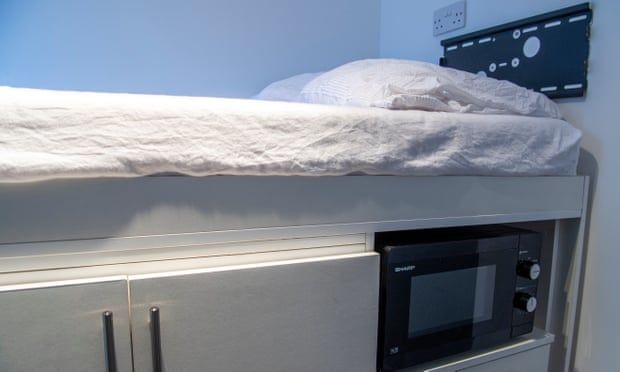
… the bed, microwave and storage …


The owner has already recouped their investment by getting £800 in rent each month. The current tenant lives elsewhere for most of the time and spends just a night or two each week in the flat as it is closer to work.

The auction minimum is well below the average deposit for first-time buyers in London, which Halifax calculated at £130,357 in 2020, but Neal Hudson, a housing analyst, warned that first-time buyers should be aware it is not sustainable to live in a tiny flat long-term and that if they are unable to sell they could find themselves stuck.

The price is a powerful symbol of how inaccessible housing has become. The TV presenter Kirstie Allsopp recently irked millennials by suggesting they could afford to buy their own homes if they spent less on the gym, easyJet flights, coffee and Netflix. Critics have pointed out that when she bought her first flat, the average home cost £50,000 and measured 73.4 sq m – 10 times bigger than the Clapton flat.
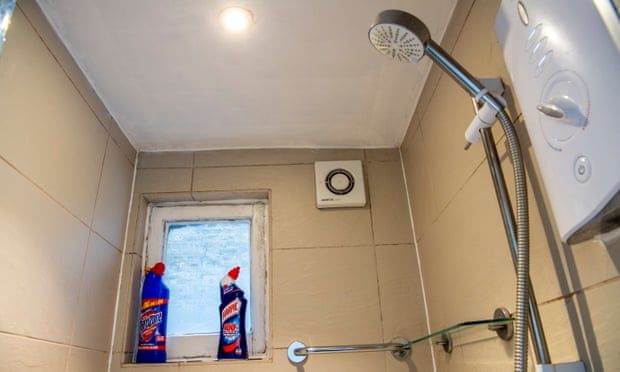
… the bathroom …


Stuart Collar-Brown, the director of My Auction, which is selling the flat, said that although it was the cheapest flat with a long leasehold on the market within a 10-mile radius, he expected it would be bought by an investor rather than a first-time buyer, as high street banks will not lend on properties below 30 sq m.

With rental income estimated at about £10,000, investors were likely to be able to recoup the £50,000 outlay within five years, he said. Suitable tenants would not spend much time at home and would be those who were tired of house-sharing but unable to afford more space, or who lived elsewhere and needed a crash pad for work, he said. For instance, doctors or nurses working in nearby Homerton hospital, or workers in the City, given the area’s good transport links to Liverpool Street.

In 2019 a 9 sq m flat in another part of Hackney was on the market for £130,000. The estate agents Wild & Co said it received two offers, both below the asking price, and it took 28 viewings to find tenants, who paid £600 a month.

Microflats are becoming more popular and their size is shrinking, according to research by Philip Hubbard, a professor of urban studies at Kings’s College London. One in 15 apartments in London fall below the national minimum standard of 37 sq m for a one-bedroom home, while the median size of UK properties below the space standard fell by one square metre to 29 sq m this year.
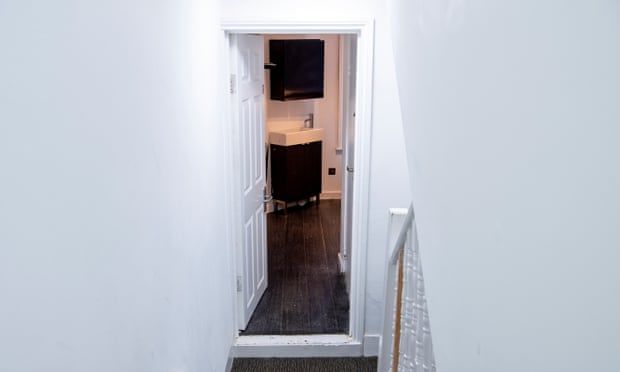
… and back out to the entrance. Tour over.


Hubbard recommended that buyers look for flats above 37 sq m since fewer windows and the inability to divide living, working and leisure space take a toll on sleep and mental health, and smaller properties are more expensive per square metre.

Julia Rugg, a research fellow at York University’s Centre for Housing Policy, said the Clapton sale reflected the “inflated nature of the housing market in London” and said it would be a “worrying development” if microflats were seen as a solution to housing affordability.

“This is accommodation that is barely suitable as a hotel room, and does not constitute sustainable liveable space. The property lacks comfort or amenity and forces reliance on disposable items. The neighbourhood may well be awash with bars and cafes but relying on these for living space makes life very expensive,” she said.

Newsletter

Related Articles

0:00
0:00
Close
UK Biotechnology Sector Receives Increased Public Funding to Support Regional Growth
Police Chiefs Update National Protest Management Guidelines Amid Rising Demonstration Activity
UK Aviation Regulator Expands Support for Regional Airports to Strengthen Domestic Routes
CMA Launches Investigation Into Retail Pricing Across UK Grocery Sector
UK Energy Operator Warns of Winter Supply Pressures Despite Stable Overall Grid Outlook
UK Research Council Expands Funding for Regional Biotechnology and Life Sciences Clusters
UK Compensation Scheme for Post Office Horizon Scandal Reaches 80 Percent Completion
Police Chiefs Issue Updated National Guidance on Managing Large Public Demonstrations
UK Expands Regional Airport Funding Scheme to Boost Domestic Connectivity
UK Competition Watchdog Launches Inquiry Into Grocery Pricing Practices
National Grid Warns of Tight Energy Management Needs During Upcoming Winter Peak Demand
UK Education Department Introduces National Standards for AI Use in Secondary Schools
UK High Court Clears North Sea Carbon Capture Project After Final Legal Challenge Fails
Northern Ireland Leaders Hold Emergency Talks on Trade Disruption Under Windsor Framework
Welsh Government Moves to Expand Social Housing in Response to Severe Affordability Pressures
UK Economy Sees Unexpected Rise in Business Investment in Second Quarter, ONS Data Shows
Scottish Government Unveils Multi-Billion Pound Investment Plan for Renewable Energy and Grid Expansion
UK and EU Agree Enhanced Defence Cooperation Pact Covering Intelligence and North Sea Security
Prime Minister Orders Independent Review of NHS Performance After Record Waiting Lists
Bank of England Holds Interest Rates at 5 Percent as Services Inflation Remains Persistent
UK Heatwave Disrupts Transport, Healthcare and Public Services as Red Weather Alerts Expand Nationwide
Barclays Warns of Growing Cyber Risk Divide Between Large UK Firms and Micro Businesses
European Defence Plans Including Ukraine Integration Prompt UK Strategic Reassessment
UK Equity Markets React as US–Iran Peace Roadmap Eases Oil Price Pressures
United Kingdom Expands Global Clean Energy Partnerships With Brazil, Morocco and Tanzania
Lord David Frost Urges Incoming UK Leadership to Abandon EU Regulatory Reset Strategy
Housing Groups Support Amendment to Strengthen Fire and Gas Safety Access Powers in Social Housing
South London NHS Estates Staff Ballot on Industrial Action Over Pay Structures in Hospital Maintenance Services
United Kingdom Government Invests £60 Million in AI Research Labs at Oxford and University College London
Barclays Cyber Security Report Highlights Rising Threat Exposure Among UK Small Businesses in AI-Driven Attacks
UK Met Office Heatwave Triggers Transport Warnings as Rail Operators Urge Cancellations Amid Infrastructure Strain
South London NHS Estates Workers Ballot for Strike Action Over Pay Disputes Across Major London Hospitals
Barclays Warns of Severe Cyber Security Gap Between Large Corporations and Small Businesses in the United Kingdom
United Kingdom Government Allocates £60 Million for Artificial Intelligence Research Laboratories at Oxford and UCL
National Health Service Approves Teplizumab Treatment to Delay Onset of Type One Diabetes in First European Rollout
Met Office Issues Rare Red Extreme Heat Warning Across London, South East and West Midlands as Transport and Health Systems Face Disruption
Prime Minister Keir Starmer Resigns After Labour Party Revolt Following Economic Stagnation and Local Election Losses
United Kingdom Economy Contracts for Second Consecutive Month as Private Sector Weakens and Job Loss Fears Rise
Taxpayer Support Grows for Higher Digital Levies on Multinational Tech Companies
Bank of England Signals Caution Over Inflation Despite Easing Energy Prices
Lloyds Banking Group Expands Artificial Intelligence Hiring Amid Sector-Wide Automation Shift
Film Producer Corporate Collapse Leaves Creditors Facing Unrecoverable Losses
UK Ten-Year Brexit Anniversary Highlights Ongoing Political and Economic Uncertainty
Nottingham Maternity Scandal Inquiry Reveals Systemic Failings in NHS Care
Met Office Heatwave Prompts Public Health Warnings Across United Kingdom
Concerns Rise Over Fiscal Stability as Political Uncertainty Weighs on UK Borrowing Costs
UK Taxpayers Back Higher Digital Taxes on Global Technology Firms, Survey Shows
Bank of England Holds Interest Rates Steady Amid Persistent Services Inflation
Reform UK and Opposition Leaders Call for General Election Following Starmer’s Departure
Ten Years After Brexit Referendum, UK Faces Ongoing Political Fragmentation and Economic Debate
×