London Daily

Focus on the big picture.
Monday, Apr 27, 2026

Italy's waging a crusade against lab-grown meat. Does it have a point?

Italy's waging a crusade against lab-grown meat. Does it have a point?

Italy is moving to become the first country in the world to ban its companies from producing lab-cultivated meat, threatening fines of up to €60,000.

Upon introducing the bill to the Senate, the country's Agriculture and Food Sovereignty Minister, Francesco Lollobrigida, said:

"It damages small food producers.
It damages the environment.
It standardises food habits.
Studies do not guarantee it's safe."


Does he have a point on health risks?

He may. Most studies haven't progressed far enough to say whether lab-made meat is 100% safe. The answer also changes depending on what part of the world we look at, but the response is largely favourable to the idea.

Singapore became the first country to give the green light to human consumption of cultivated meat in 2020. The US Food and Drug administration followed in November 2022.

And in the EU? Cell-based agriculture is still being researched, but the bloc's Food and Safety Authority says it's a "promising solution" towards achieving its ambitious environmental goals.

Furthermore, the EU already granted companies like BioTech Foods, Nutreco and Mosa Meat millions of euros in research funds. In short, a half "yes", despite the scepticism of many Italian MEPs.


Will local farmers in Italy suffer?

Lab-grown meat isn't on supermarket shelves or restaurant menus yet, so we don't know how it will go down among consumers. And, anyway, Italians don't seem very keen on giving it a go.

Despite the country's love for meat, a recent poll found 84% of respondents said they would never try laboratory-made steaks.

It appears to be enough to rule out risks to local farmers. However, they're still not convinced. So much so that they teamed up with the World Farmers' Organisation to start a global petition against cultivated meat, or, as they call it, "Frankenstein food".

It reportedly has more than half a million signatures already and it's supported by many local authorities, particularly in the meat-producing regions. It also got the support of clerics, over concerns about "the health of the faithful".
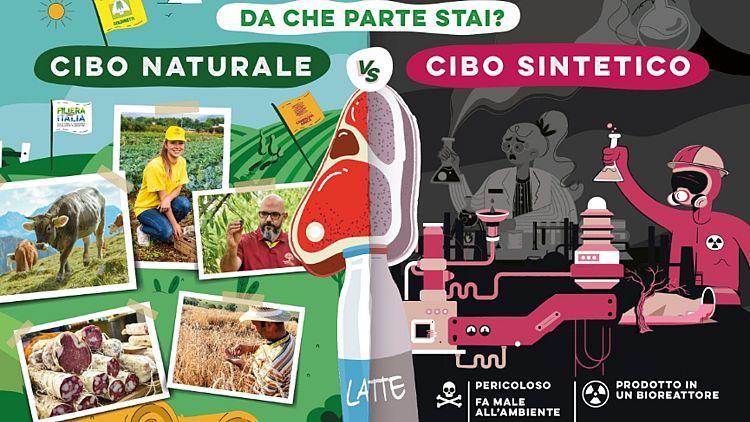
Italian farmers' campaign against cultured food


And yet, all these efforts may just be in vain.

If the EU approves cultivated food, the proposed bill won't be enough to keep it away "from the tables of the Italians", as promised by Italy’s Agriculture Minister.

Yes, it does ban Italian companies from producing it, but doesn't prevent foreign businesses from exporting it to Italy.

The opposition argued that this would only create a competitive disadvantage for Italian businesses, instead of protecting them.

Does it damage the environment?

Cultivated meat works with bioreactors - or fermenters - which are vessels built to "provide an effective environment for enzymes or whole cells to transform biochemicals into products".

And yes, they need "a lot of energy", says Bruno Cell, an Italian start-up researching cultured meat.

"If that energy doesn't come from renewable sources, the environmental impact can be more or less significant", they told Euronews.

On the other hand, lab-grown food needs far less water and soil than traditional meat, cutting greenhouse gas emissions and reducing deforestation. And it eliminates the need to slaughter animals or breed them in intensive farming conditions.

Italy PM Giorgia Meloni tastes a piece of mozzarella at a Coldiretti event in Milan. Oct. 1, 2022


Ultimately, how closely does cultivated meat resemble traditional meat?

"Cultivated meat is made of the same cells as animals", says Bruno Cell.

"The base-product is 100% an animal cell. The tissues are the same, they have the same organoleptic features and when they are cultivated, they receive theoretically the same nourishment that the animals get".

"Hence, so-called 'artificial meat' is not so artificial. [...] This bill basically says that anything that doesn't come directly from the land is dangerous."

"It's just going to delay Italy's research progress in this field."

Comments

Oh Ya 3 year ago
The world is going to hell in a hand basket. The rich elite will be eating real meat and tou get this and crickets and meal worms

Newsletter

Related Articles

0:00
0:00
Close
The Met Gala Meets the Age of Billionaire Backlash
Russian Oligarch’s Superyacht Crosses Hormuz via Iran-Controlled Route
Gunfire Disrupts White House Correspondents’ Dinner as Trump Is Evacuated
A Leak, a King, and a Fracturing Alliance
Inside the Gates Foundation Turmoil: Layoffs, Scrutiny, and the Cost of Reputational Risk
UK Biobank Breach Exposes Health Data of 500,000, Listed for Sale on Chinese Platform
KPMG Cuts Around 10% of US Audit Partners After Failed Exit Push
French Police Probe Suspected Weather-Data Tampering After Unusual Polymarket Bets on Paris Temperatures
CATL Unveils Revolutionary EV Battery Tech: 1000 km Range and 7-Minute Charging Ahead of Beijing Auto Show
Crypto Scammers Capitalize on Maritime Chaos Near the Strait of Hormuz: A Rising Threat to Shipping Companies
Changi Airport: How Singapore Engineered the World’s Most Efficient Travel Experience
Power Dynamics: Apple’s Leadership Shakeup, Geopolitical Risks in the Strait of Hormuz, and Europe's Energy Strategy Amidst Global Challenges
Apple's Leadership Transition: Can New CEO John Ternus Navigate AI Challenges and Geopolitical Pressures?
Italy’s €100K Tax Gambit: Europe’s Soft Power Tax Haven
News Roundup
Microsoft lost 2.5 millions users (French government) to Linux
Privacy Problems in Microsoft Windows OS
News roundup
Péter András Magyar and the Strategic Reset of Hungary
Hungary After the Landslide — A Strategic Reset in Europe
Meghan Markle Plans Exclusive Women-Focused Retreat During Australia Visit
Starmer and Trump Hold Strategic Talks on Securing Strait of Hormuz Amid Rising Tensions
Unofficial Australia Visit by Prince Harry and Meghan Expected to Stir Tensions with Royal Circles
Pipeline Attack Cuts Significant Share of Saudi Arabia’s Oil Export Capacity
UK Stocks Rise on Ceasefire Momentum and Renewed Focus on Diplomacy
UK to Hold Further Strategic Talks on Strait of Hormuz Security
Starmer Voices Frustration as Global Tensions Drive Up UK Energy Costs
UK Students Voice Concern Over Proposal for Automatic Military Draft Registration
Rising Volatility Drives Uncertainty in UK Fuel and Petrol Prices
UK Moves to Deploy ‘Skyhammer’ Anti-Drone System to Strengthen Airspace Defense
New Analysis Explores UK Budget Mechanics in ‘Behind the Blue’ Feature
Man Arrested After Four Die in Channel Crossing Tragedy
UK Tightens Immigration Framework with New Sponsor Rules and Fee Increases
UK Foreign Secretary Highlights Impact of Intensified Strikes in Lebanon
UK Urges Inclusion of Lebanon in US-Iran Ceasefire Framework
UK Stocks Ease as Ceasefire Doubts in Middle East Weigh on Investor Confidence
UK Reassesses Cloud Strategy Amid Criticism Over Limited Support Measures
UK Calls for Full and Toll-Free Access Through Strait of Hormuz Amid Rising Tensions
Starmer Signals Strategic Shift for Britain Amid Escalating Iran-Linked Tensions
UK Issues Firm Warning to Russia Over Covert Underwater Military Activity
OpenAI Halts Stargate UK Project, Casting Uncertainty Over Britain’s AI Expansion Plans
Starmer Voices Frustration Over Global Pressures Driving UK Energy Costs Higher
UK Deploys Military Assets to Protect Undersea Cables From Suspected Russian Threat
Canada Aligns With US, UK and Australia as Europe Prepares Major Digital Border Overhaul
Meghan Markle’s Planned Australia Appearance Sparks Fresh Speculation
Starmer Warns Sustained Effort Needed to Ensure US–Iran Ceasefire Holds
UK to Partner with Shipping Industry to Rebuild Confidence in Strait of Hormuz, Cooper Says
UK Interest Rate Expectations Ease Following US–Iran Ceasefire Agreement
Starmer Signals Major Effort Needed to Fully Reopen Strait of Hormuz During Gulf Visit
UK Fuel Prices Face Ongoing Volatility Amid Global Pressures and Domestic Factors
×
