London Daily

Focus on the big picture.
Friday, Nov 06, 2026

‘It’s going to hit everyone’: warning from town with highest inflation in England

‘It’s going to hit everyone’: warning from town with highest inflation in England

High levels of poverty and poor home energy efficiency make Burnley’s inflation rate 11.5%

Jane* is a mother-of-three who works up to 30 hours a week as a housekeeper. Her oven is turned off at the wall, and for the past few months she has been using a slow cooker to make dinner because she can no longer afford the gas bill. Every night she turns off the wifi and makes sure nothing is left on standby.

She lives in Burnley, Lancashire, which is the place with the highest inflation rate in England at 11.5%, according to the Centre for Cities thinktank. Its latest report found that people in the Lancashire town have been harder hit by the energy crisis because of high poverty levels, poor home energy efficiency and greater reliance on private car use. Energy costs account for about 6% of average wages in Burnley, compared with 3% in London.

With energy and fuel prices predicted to rise even further when the new price cap is announced on Friday, people like Jane are increasingly anxious. How will they survive if forecasts are correct and the cap rises to £3,500 from October, when they are only just scraping by now?

“It’s just constant at the moment. I work really hard. I should be able to afford clothes and treats, like chocolate and crisps,” says Jane. “My mum has given me some curtains for winter and I can’t even afford the curtain rails.”

Families are leaning on local services, charities and the generosity of others to help them afford even the basics. However, the leader of Burnley council, Afrasiab Anwar, says there is only so much goodwill they can rely on as more people struggle to get by and local services are stretched.

In 2020, the council set up a charity in partnership with other local organisations to support the community during the pandemic. People could call Burnley Together for support to set up a debt repayment plan, get emergency food parcels, and advice on what benefits they were eligible for. It was supposed to be a short-term solution. Two years later, its services are expanding.
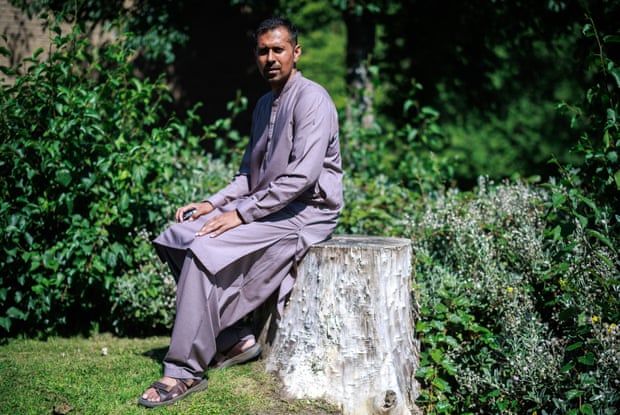
Afrasiab Anwar outside the Burnley Together hub.


“The frightening thing is that it’s not just who you’d typically regard as people who need that support. It’s working families that are struggling to make ends meet and it’s only going to get harder in autumn,” says Anwar. “It’s not just those who are the most vulnerable, it’s going to hit everybody.”

Since 2010, the council’s funding has dropped by 36%, approximately £5m a year. “For a small council like ours, that’s massive,” Anwar says. “The government always talks about levelling up, but we have not seen that. We’ve gone backwards.”

Katarina Coliona lives in a council house not far from the town centre. She is disabled and during the winter her house gets “absolutely freezing cold”. More than three-quarters of homes in Burnley have energy efficiency ratings below energy performance certificate band C, meaning the town has one of the least energy-efficient housing stocks in the country. Coliona has already had to cut back on food, and fears what will happen if she is unable to keep up with her rising energy bills.

Katarina Coliona takes in the sun outside her home on Herbert Street, which has no garden.


“Everything’s gone up,” she says. “It’s the things I need, like heat and gas. It’s putting petrol in to go see my family. It’s the food shop.”

How has she been coping? “My mental health has suffered. The simplest things you rely on to make you feel better you can’t afford.” When asked how she would manage if the price cap was raised, Coliona pauses before answering: “Why would I want to live through winter?”

A short walk from the town centre, St Matthew’s Church is hosting a summer fair. The church has been transformed into a bakery, cafe and toy shop for the day, with many parents attending to pick up second-hand school uniforms.

“We’re giving out free uniforms. That’s fine, but why?” asks Father Frost, the vicar at St Matthew’s. “We’re meant to be one of the richest countries and yet people are just desperate.”

Jane heads home with a bag filled with clothes. Her son now has something to wear when school starts again in September. But charity won’t be enough to offset rising costs for Jane over the winter. As energy and fuel prices rise, many in Burnley will be forced to make painful choices to get their family through the coming months.

Newsletter

Related Articles

0:00
0:00
Close
Office for National Statistics Reports Stable Consumer Confidence and Modest Retail Growth Heading into Winter
Welsh Government Launches Strategic Regional Transport Initiative to Modernize Rail Links Across South Wales
Home Office Expands Digital Border Security Controls and Electronic Travel Authorisations for Inbound Visitors
Scottish Government Announces Emergency Housing Investment Package to Tackle Urban Homelessness Crises
Northern Ireland Executive Reaches Bipartisan Consensus on Public Sector Pay Reform and Budget Allocations
Automotive Manufacturing Sector in the West Midlands Welcomes New Electric Vehicle Supply Chain Investments
Department for Energy Security and Net Zero Approves Offshore Wind Expansion in the North Sea
HM Treasury Finalizes Regulatory Framework for Stablecoins and Digital Asset Markets in London
National Health Service Unveils Comprehensive Digital Integration Strategy to Slash Hospital Waiting Lists
Bank of England Leaves Interest Rates Unchanged Amid Persistent Wage Growth and Inflationary Pressures
United Kingdom and Caribbean Nations Agree to Establish Formal Diplomatic Dialogue Following Reparations Discussions
Cambridge University Appoints Senior Barrister to Lead Independent Review into Death of Academic Jason Arday
Historic Hastings Castle and Kent Dickens Chalet Added to National Heritage at Risk Register Amid Deterioration Concerns
Incoming British Ambassador to Japan Calls for Deepened Bilateral Cooperation on Artificial Intelligence and Semiconductors
Milburn Review Urges Employment Revolution to Unlock Workforce Opportunities for Young Disabled Britons
British Healthcare Worker Evacuated from Democratic Republic of Congo to United Kingdom Following Ebola Exposure
United Nations Refugee Agency Criticises Government Proposal for Thirty-Year Earned Settlement Pathways for Asylum Seekers
Parliamentary Inquiry Warns United Kingdom Remains Exposed to Chinese Critical Mineral Dependencies
Bank of England Prepares Interest Rate Decision as Inflation Pressures Prompt Expectation of Four Percent Benchmark
Department for Business and Trade Overhauls Protection Standards for Digital Animation and Moving Image Files
Intellectual Property Office Introduces Thirty-Month Grace Period for International Product Launches
Intellectual Property Office Targets Anti-Competitive Filings With New Powers to Verify Novelty Before Registration
Creative Industries Minister Ian Murray Praises Regulatory Reforms to Safeguard Small Businesses and Micro-Enterprises
Government Unveils Major Design Framework Overhaul to Protect British Creators and Boost Economy
Global Asset Management Reports Surge in British Dividend Payouts Driven by Strong Financial and Mining Sectors
HM Treasury Confirms Strongest Group of Seven Growth Figures as Fiscal Consolidation Plans Progress
Department for Energy Security and Net Zero Approves Construction of New North Sea Offshore Wind Hub
Northern Ireland Executive Finalizes Public Sector Pay Agreements Following Months of Inter-Agency Negotiations
Welsh First Minister Eluned Morgan Secures Cross-Party Support for Regional Clean Energy Infrastructure Bill
Competition and Markets Authority Launches Formal Investigation Into Dominant Artificial Intelligence Cloud Partnerships
United Kingdom Foreign Secretary David Lammy Concludes High-Level Diplomatic Mission to Washington and Ottawa
Scottish Government Announces Emergency Housing Investment Package to Address Escalating Urban Homelessness
Chancellor Rachel Reeves Finalizes Corporate Tax Adjustments Ahead of Upcoming Business Investment Summit
National Health Service England Unveils Emergency Winter Resilience Plan to Combat Projected A&E Overcrowding
Bank of England Monetary Policy Committee Votes to Hold Base Interest Rate Steady at Four Point Seven5 Per Cent
UK Gross Domestic Product Expands by Zero Point Four Per Cent in Third Quarter Driven by Resilient Services Growth
Northern Ireland Executive Agrees on Multi-Year Public Sector Pay Restructuring Framework at Stormont
Department for Transport Confirms Acceleration of Electric Vehicle Charging Infrastructure Rollout Along Strategic Motorways
Welsh Government Announces Emergency Funding Package to Support Agricultural Sector Facing Severe Weather Impacts
High Court Rules in Favor of Environmental Coalition Over Government Carbon Reduction Plan Deficiencies
Office for National Statistics Reports Stable Retail Sales Growth Supported by Strong Digital Commerce Volumes
Scottish First Minister John Swinney Secures Cross-Party Support for Renewable Energy Export Expansion
National Health Service Digital Reports Major Breakthrough in Reducing Elective Waiting Lists Across England
Chancellor Rachel Reeves Outlines Infrastructure Spending Reforms to Boost Regional Economic Growth Across Northern England
Bank of England Holds Baseline Interest Rate at Five Percent Amid Persistent Core Inflation Pressures
House of Lords Advances Representation of the People Bill to Modernize Electoral Law Ahead of General Election
Financial Markets and Private Equity Assess Tax and Corporate Realignment Following Recent Chancellor Budget Adjustments
Justice Committee Warns Legal Aid Is a Service in Managed Decline Due to Inadequate Government Funding Responses
Royal Navy Intercepts Russian Intelligence Vessel and Warships Across Intensive North Sea Operations
Business and Trade Committee Slams Government Policy on China as Fragmented and Lacking Strategic Direction
×