London Daily

Focus on the big picture.
Monday, Jun 15, 2026

Hungary's Orban extends dominance through university reform

Hungary's Orban extends dominance through university reform

Hungary's parliament passed legislation on Tuesday setting up foundations to take over the running of universities and cultural institutions in a move critics say extends the ideological imprint of the ruling right-wing government.

Currently, most Hungarian universities are owned by the state but have a large amount of academic autonomy.

The bill, drafted by Prime Minister Viktor Orban's deputy, says the universities need to be reorganized and run by foundations because modern conditions require a "re-thinking of the role of the state" and the foundations will manage institutions more efficiently.

Orban's Fidesz party, which has a two-thirds majority in parliament, voted for the legislation on Tuesday.

His government will appoint boards of trustees to run the foundations, which will control substantial real estate assets and benefit from billions of euros worth of EU funds, while also having considerable influence over universities' everyday life.

The government will endow several of the foundations using its stakes in blue chip companies MOL and Richter. It will also allocate over 1 trillion forints ($3.3 billion) in EU recovery funds for the revamp of universities.

"You are planning to give away the remains of the nation's wealth to these foundations for free," opposition MP Erzsebet Schmuck from the LMP party said in parliament on Monday.

In reply, Orban said state-run universities were not being privatized and that his government was investing in higher education by giving these foundations substantial assets.

Orban, who came to power in 2010, has tightened his control over much of Hungarian public life, such as the media, education and scientific research.

'Christian values'


His government, promoting what it calls Christian, conservative values, has strongly opposed immigration and limited gay adoption and legal recognition of transgender people.

Critics say the new legislation is a government power grab aimed at extending its ideological influence.
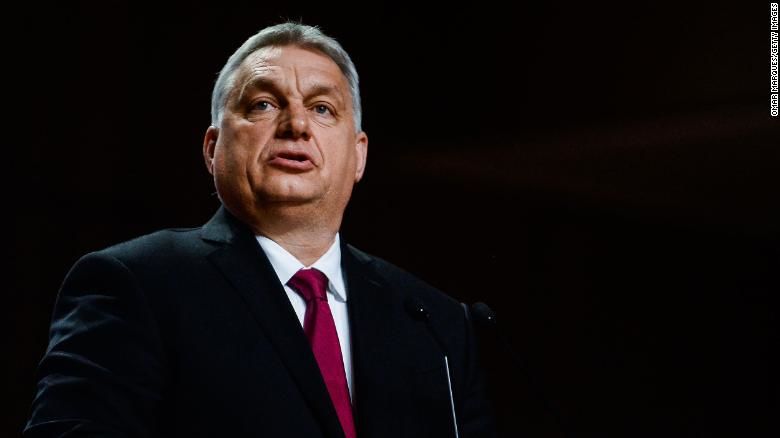
Hungary's Prime Minister Viktor Orban is seen in February.


Attila Chikan, a professor at the Corvinus economics university in Budapest and a former minister in Orban's first government in 1998, said the move was part of an "ideological war" declared by the prime minister.

"They make it no secret: they want to assume intellectual power after political and economic power."

He noted the move came after the government boosted controls over academic research and forced a top liberal school, Central European University, to move to Vienna in 2019.

The bill says "the fundamental expectation is that the foundations actively defend the survival and well-being of the nation and the interests of enriching its intellectual treasures."

The foundations running some of the cultural institutions would be tasked with "strengthening national identity."

The opposition said with supporters of Orban's ruling Fidesz party, and even government ministers, sitting on the boards, Orban could retain a degree of control over universities beyond the 2022 election and could undermine their autonomy.

Gergely Arato, an MP from opposition party Democratic Coalition, said the bill would take away "the property, traditions, community, knowledge" of Hungarian people and give them to government allies controlling the universities.

The government says universities would benefit from the new model. Istvan Stumpf, government commissioner in charge of the changes, declined an interview with Reuters.

In October, students at Hungary's University of Theatre and Film Arts blockaded their school in a row over the imposition of a government-appointed board that protesters said undermined the school's autonomy.

Newsletter

Related Articles

0:00
0:00
Close
Royal Navy Takes Part in Trooping the Colour for the First Time in 350 Years
Think Tank Warns Labour's European Union Reset Could Carry Significant Economic Costs
UK Semiconductor Centre and Japan's Rapidus Forge Advanced Chip Manufacturing Partnership
UK and Japan Launch Offshore Wind Compact Backed by £9 Billion in Investment
Starmer and Trump Discuss Iran Peace Efforts and Reopening of the Strait of Hormuz
United Kingdom and Japan Sign £18 Billion Investment Partnership Focused on Clean Energy and Advanced Technology
Barclays Moves to Acquire GoHenry in Bid to Expand Youth-Focused Fintech Services
UK Lupus Patients Show Remission in NHS Genetic Therapy Trial
London Clean Air Zones Linked to Fewer Emergency Hospital Admissions for Respiratory Illness
UK World Cup Scheduling Research Suggests Energy Bill Savings From Off-Peak Usage
UK Economic Anxiety Rises Among Young People Over Long-Term Job Prospects
NHS Expands Meningitis B Vaccination Programme for School Leavers and New Students
London Ultra-Low Emission Zone Linked to Drop in Emergency Respiratory Hospital Admissions
Derbyshire Police Officer Investigated Over Alleged Use of AI-Generated Evidence in Case Files
UK Parents Back Proposed Under-16 Social Media Ban as Online Safety Concerns Grow
Four Palestine Action Activists Jailed Over Sabotage Attack on Israeli-Linked Arms Facility
Barclays to Acquire GoHenry in Push to Expand Digital Banking for Children and Teenagers
UK Government Reaffirms Defence Spending Commitment Amid Cabinet Pressure and Political Disputes
Belfast Unrest Prompts Security Review as Paramilitary Activity Comes Under Renewed Scrutiny
SpaceX IPO Pushes Elon Musk to Become World’s First Trillionaire After Record Valuation Surge
United States and Iran Near Landmark Peace Framework as Negotiations Reach Final Stages
UK Competition Watchdog Investigates Ryanair Family Seating Charges
Imperial College Study Links London Emissions Charges to Lower Hospital Admissions
Scottish First Minister Launches US Trade Initiative Ahead of World Cup Match in Boston
Fifteen Million Workers Gain Expanded Sick Pay Rights Under UK Reforms
British Retail Investors Secure Record Participation in SpaceX Share Offering
Keir Starmer and Micheál Martin Coordinate Response to Northern Ireland Violence
NHS Prepares for Major Disruption as Resident Doctors Announce Four-Day Strike
Bank of England Expected to Hold Rates as Energy Costs Complicate Inflation Outlook
Britain Moves to Ban Under-16s From High-Risk Social Media Platforms and AI Chatbots
UK Economy Contracts as Middle East Conflict Weighs on Growth
Defence Secretary John Healey Resigns Over Military Spending Dispute With Treasury
Prime Minister Keir Starmer Faces Leadership Crisis After Senior Cabinet Resignations
NHS Trust Secures Funding for AI Tool to Detect Heart Failure Earlier
Government Unveils £4.5 Billion Investment Plan for Walking and Cycling Infrastructure
Nationwide Reports UK House Prices Falling as Borrowing Costs Remain Elevated
Centre for Social Justice Says Two Million Britons Are Using Illegal Loan Sharks
UK Carmakers Warn EU Local Content Rules Could Damage British Manufacturing
UK Government Imposes Emergency Ban on Seven Potent Synthetic Opioids
Royal Navy Completes Major North Atlantic Anti-Submarine Exercise Off Norway
NHS Figures Show Nearly 3,000 Patients a Day Receiving Care in Hospital Corridors
CBI Cuts UK Growth Forecast as Middle East Tensions Drive Inflation Risks Higher
Dan Jarvis Appointed UK Defence Secretary Following Major Government Reshuffle
University College London Study Links Physical Punishment to Higher Risk of Bullying
East Midlands Railway Unveils First Refurbished Train in £60 Million Modernization Programme
RNLI Issues National Water Safety Appeal Ahead of Expected Heatwave
Climate Change Raises Subsidence Risks for Millions of Homes Across Southeast England
Manchester Advances Plans for Underground Piccadilly Station With £1 Million Funding Commitment
Anti-Immigration Violence Continues in Belfast Amid Heightened Security Concerns
UK Law Locks Great British Railways Into Public Ownership
×