London Daily

Focus on the big picture.
Monday, Jul 13, 2026

Households on prepayment meters will not pay more than those on direct debits, chancellor to promise

Households on prepayment meters will not pay more than those on direct debits, chancellor to promise

Most of the households on prepayment meters are vulnerable or low income - those who can least afford to pay the higher costs.

Households on prepayment meters will no longer pay more for their energy than those on direct debits, the chancellor is expected to announce this week.

The "prepayment meter penalty" will end in July, saving more than four million households around £45 a year at a cost of £200m.

It will be managed through changes to the government's energy price guarantee and, after this ends in April 2024, energy regulator Ofgem will be asked for ways the change can be made permanent.

Ahead of his spring budget this week, Chancellor Jeremy Hunt said: "It is clearly unfair that those on prepayment meters pay more than others.

"We are going to put an end to that."

Energy suppliers have said prepayment meters cost more to manage - supplying vouchers and collecting payments, for example - blaming this for the higher prices.

But most of the households on prepayment meters are vulnerable or low income, meaning the higher tariff and inability to spread the cost across the year are hitting those who can least afford to pay.

The chancellor will also be announcing a number of changes to benefits to get more of the sick, disabled and welfare claimants back into work.

The system used to assess eligibility for sickness benefits, for example, will be axed, allowing claimants to receive benefits after they return to work.

Over 50s will be targeted with more skills training, while parents will be given more help with childcare costs, which are among the most expensive in the world.

Mr Hunt will raise the maximum universal credit childcare allowance - which has been frozen at £646 a month per child for years - by several hundred pounds.

The Treasury has not given the exact amount.
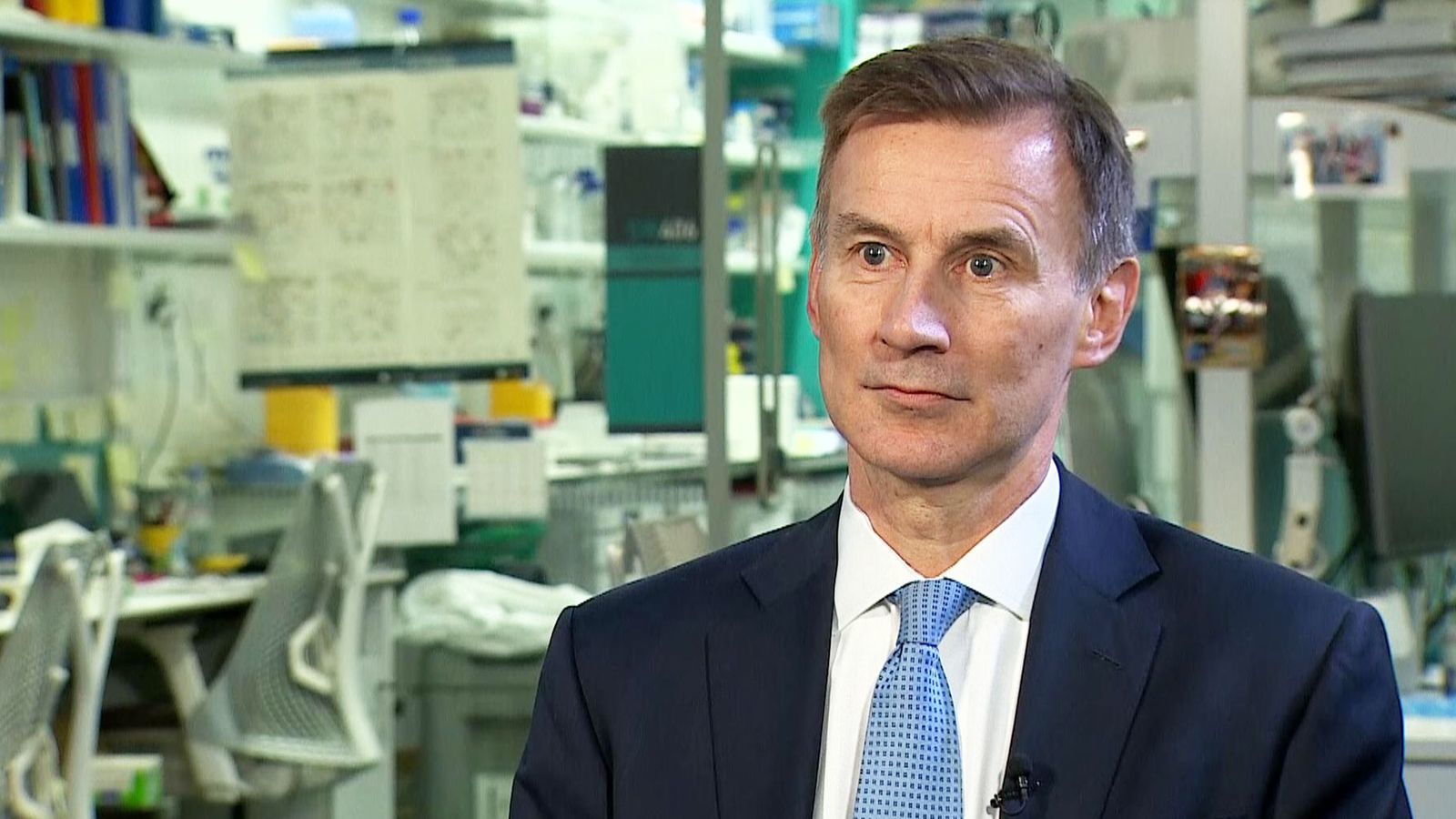
Chancellor Jeremy Hunt


The government will also start paying parents on universal credit childcare support upfront, rather than in arrears.

Government figures show that more than half a million workers have vanished from the workforce since the beginning of the COVID-19 pandemic.

This is among the factors that have been stifling productivity and economic growth.

Syma Cullasy-Aldridge, chief campaigns director at the Confederation of British Industry, said firms are struggling to fill more than one million job vacancies in the economy.

She said it was "absolutely right" that childcare support for those on universal credit will be paid upfront, but called for a review into childcare "to ensure it works for everyone", as well as reform of the apprenticeship levy to help over-50s back into work.

The TUC said changes such as greater childcare support are "long overdue" and welcomed "an end to assessments that cause anxiety instead of helping people achieve their aspirations".

But, the union's general secretary Paul Nowak said proposals to increase the use of sanctions are "worrying".

Scope's director of strategy James Taylor said: "To be successful these proposals must lead to a more person-centred system that offers specialist, tailored and flexible back to work support.

"Those that want to work should be supported. But for some, that's not an option and disabled people shouldn't be forced into unsuitable work."

Labour's shadow work and pension's secretary Jonathan Ashworth said: "Over recent months, Labour has outlined welfare reforms to get Britain back to work and now the Tories are following our lead."


Newsletter

Related Articles

0:00
0:00
Close
United Kingdom Financial Markets Monitor Business Response to Economic Policy Changes
Scottish Renewable Energy Expansion Highlights Need for Faster Grid Development
Wales and Regions Strengthen Focus on Economic Development Through Tourism and Investment
Retail Industry Warns High Street Businesses Remain Under Pressure
Police Chiefs Highlight Growing Challenges Managing Protests and Public Order
Agriculture Leaders Seek Clarity on Post-Brexit Farming Support and Environmental Rules
Transport Unions Warn of Further Industrial Action Over Pay and Working Conditions
Welsh Tourism Sector Reports Strong Growth Driven by Domestic and International Visitors
National Infrastructure Review Gains Support as Leaders Seek Faster Project Delivery
Financial Markets Assess Impact of United Kingdom Corporate Tax Policy Changes
Northern Ireland Assembly Debates Cross-Border Trade and Infrastructure Cooperation Plans
Government Opens Consultations on Housing Reform and Planning System Changes
Scottish Government Faces Pressure to Accelerate Offshore Wind and Grid Expansion
National Energy System Operator Warns Grid Investment Is Needed for Future Electricity Demand Growth
United Kingdom Research Council Invests in Artificial Intelligence and Biotechnology Innovation Hubs
United Kingdom Expands Oversight of Skilled Worker Visa Sponsors Amid Migration Debate
Cross-Party MPs Call for National Infrastructure Strategy Review to Accelerate Economic Growth
Prime Minister Announces One Billion Pound NHS Funding Package Ahead of Winter Pressures
Bank of England Signals Cautious Approach to Interest Rates as Inflation Remains Above Forecasts
World Cup Visitors Turn American Big-Box Stores Into Souvenir Stops
Netflix Weighs Always-On Channels, Bundles and Short-Form Video
Passenger Is Pulled Partly Outside Ryanair Jet After Window Fails Mid-Flight
Innovation-led growth strategy
Public service reform pressure
Defence and industrial security
Labour leadership transition and economic reset
Northern England Pushes for Greater Influence in Britain’s Future Economic Model
UK Technology Strategy Focuses on Life Sciences, Digital Innovation and Research Investment
Britain and United States Maintain Focus on Pharmaceuticals Cooperation and Industrial Growth
UK Public Services Face Continued Pressure as Government Promises Visible Improvements
Regional Economic Power Becomes Key Theme in Britain’s Next Political Phase
Britain Expands Support for Small Businesses as Firms Seek Better Access to Finance
UK Economy Remains Central Political Challenge as Cost of Living and Growth Concerns Persist
National Health Service Introduces New Workplace Reviews to Improve Conditions for Healthcare Staff
UK Life Sciences Sector Secures More Than Three Billion Pounds in Investment to Support Innovation
Britain Strengthens Defence Strategy as Security Concerns Reshape Military and Industrial Policy
Andy Burnham Promises Stronger UK Defence Industry and Expanded Domestic Production
UK Government Faces Difficult Spending Choices as Labour Leadership Transition Approaches
Rachel Reeves Warns Andy Burnham of Immediate Economic Challenges After Expected Leadership Change
Andy Burnham Prepares to Lead UK Government With Plans for Regional Power Shift and Economic Reset
Government Creates Emergency Support Scheme for Financially Struggling Universities
United Kingdom Replaces Traditional Farm Subsidies With Payments Linked to Environmental Performance
National Grid Reports First Week of Electricity Generation Without Fossil Fuels
United Kingdom Financial Regulator Introduces Tougher Capital Rules for Cryptocurrency Exchanges
Belfast Harbour Expands Operations to Attract Investment Through United Kingdom and European Union Market Access
Scottish Government Threatens Legal Challenge Over Westminster Cuts to North Sea Transition Funding
United Kingdom Accelerates Trans-Pennine High-Speed Rail Project Linking Northern Cities
United Kingdom Secures Ten Billion Pound Investment for Cambridge Quantum Computing Campus
Port Talbot Steelworks Wins Support for Green Hydrogen Transition and Protection of Industrial Jobs
United Kingdom Sends Royal Navy Carrier Strike Group to Indo-Pacific as Regional Security Focus Expands
×