

Grade inflation forces ministers to pay for extra medical school places
The government has been forced to fund hundreds of extra places on medical and dental courses at universities in England, as rampant grade inflation unleashed by cancelling exams has meant unexpectedly high numbers of students qualified.
The Department for Education (DfE) announced that the extra places at medical and dental schools would be added because of the huge increase in applications and universities reporting applicants with historically high levels of A-level grades.
The government’s abrupt move comes after the Guardian learned the DfE had approached medical schools in England, asking them to take applicants from heavily oversubscribed courses elsewhere in the country when it became clear that hundreds more students had reached their qualifying grades than anticipated.
Gavin Williamson, the education secretary, said in January that formal exams for A-levels and GCSEs would be scrapped this year, and instead asked teachers to assess individual marks despite fears it could lead to widespread grade inflation.
An admissions officer told the Guardian: “We are seeing roughly one grade of grade inflation compared to last year.” If repeated nationwide this would outstrip the 2020 A-level grade inflation that saw the proportion of A*s and As awarded double in several subjects.
High levels of acceptances are also being seen on courses such as nursing, with one vice-chancellor warning that students at her university would be asked to delay matriculation until next year to ease demand.
Universities this week received official A-level grades for this year’s applicants, with the jump in the highest marks meaning many more students have met the terms of their offers. Students will be given their grades on Tuesday.
The DfE said: “For this academic year, universities that can accommodate an increase to medical and dentistry places for students that have met the grades and hold a firm offer at a university with pressure on places will be supported to do so.
“For these universities that can take on more students that have met the grades whilst also ensuring teaching, learning and assessments standards are maintained, there will be flexibility to add to their numbers.”
Higher education sources said that only 250 additional places would be created, which would not be enough to satisfy the hundreds of students with valid offers. In 2019 there were 8,340 places taken and the government had already announced an extra 450 for this year.
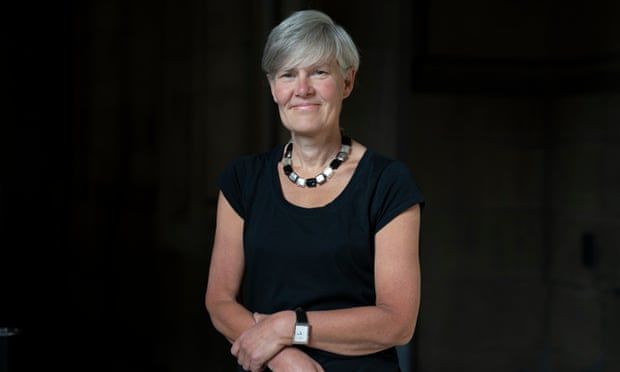 Kate Green, the shadow education secretary:
‘The Conservatives were warned they needed to get a contingency plan in
place for exams, but they refused to listen.’
Kate Green, the shadow education secretary:
‘The Conservatives were warned they needed to get a contingency plan in
place for exams, but they refused to listen.’
The DfE said up to 9,000 places could be made available in total, depending on universities’ capacity to expand.
Williamson said: “Medicine and dentistry have always been popular courses and we have seen significant demand for places this year alongside other subjects like engineering and nursing. We want to match student enthusiasm and ensure as many as possible can train this year to be doctors and healthcare professionals.”
Kate Green, the shadow education secretary, said: “The Conservatives were warned they needed to get a contingency plan in place for exams, but they refused to listen.
“Their systematic refusal to plan ahead left teachers to pick up the pieces but without a consistent national framework to support them in awarding grades. Now ministers are operating in panic mode and desperately appealing to universities to clean up their mess.”
The Guardian has also learned that members of the Russell Group of universities are resorting to financial incentives for applicants to delay taking up their places, hoping students will take a year out rather than start in September.
Earlier this year it was revealed the University of Exeter was offering £10,000 bursaries and free accommodation to successful applicants who delayed entry into its medical school until 2022.
It was also reported on Thursday night that more universities are considering setting their own entrance exams in the coming years due to the ongoing chaos with A-levels.
Medical schools face the greatest difficulties if they make too many offers because the government sets a hard cap on the numbers of students each can accept.
A university administrator said: “We had a call from some worried people at the Department for Education. They’re in a flap about medicine overshoots. They were asking hypothetically if we could take extra medicine students.”
One vice-chancellor of a university with a medical school said: “There is a major problem because teacher-assessed grades mean that hundreds more students have qualified than there are places for. The issue is both short-term capacity and clinical training places in a few years.”
In 2020 hundreds of students had to delay entry to medical school after higher grades meant many more qualified than expected.
Graham Baldwin, the vice-chancellor of the University of Central Lancashire, said his institution had discussed taking on medical students from oversubscribed courses with the DfE and the Department of Health and Social Care earlier this year: “We’ve said we would. We have some spare capacity within our programmes. We’ve developed a new school which we built with growth in mind.”
The Medical Schools Council, which represents the UK’s 41 medical schools, declined to comment.
Jane Harrington, the vice-chancellor of the University of Greenwich, said all health subjects including nursing, midwifery and paramedic science were “really oversubscribed”. Harrington said her university would not be able to take on all students who received offers for this autumn, and they may need to delay their start until January or April.
The surge in A-level awards appears to have taken some universities by surprise, despite earlier reports that many were being conservative in their offer-making.
“We’ve been predicting that there will be larger numbers and we’ve been planning for that for eight months, and so have other universities,” said Harrington.
One university admissions officer said: “I’m mystified why some universities have allowed themselves to be in this position. Yes, there is grade inflation, but there was time to adjust your offers once you have seen the full field.”
A report by the Institute for Government thinktank this week castigated the government for refusing to make contingency plans if formal exams could not be held. Instead, Williamson and Boris Johnson insisted exams would go ahead even as a second lockdown became inevitable in January.
Williamson, the DfE and the exam regulator Ofqual instead put the onus on schools and universities by replacing exams with teacher-assessed grades but without setting out national guidelines.
Clare Marchant, the head of the Ucas admissions service, said record numbers of students were likely to meet their offers this year but warned: “The gap between the most advantaged students and the most disadvantaged students has been reducing over a number of years so we want to keep an eye on that this year.”