

Good Friday Agreement: The woman behind the first secret peace talks
On 20 June 1972 - as the Troubles raged across Northern Ireland - representatives from the security service MI6 and the IRA gathered for the first time in the dining room of a house on the outskirts of Londonderry.
Their hosts, Aileen and Col Michael McCorkell, left a chocolate cake on the table for the negotiators and then made themselves scarce.
Aileen was well known for her humanitarian work as the president of the Derry City Red Cross. Her husband Michael was a member of the territorial army and came from a well-known local family.
They were asked to host the secret gathering, in part, because of their reputations, but also because of the rural location of their home.
Their house in Ballyarnett was just 400 yards from the border with the Republic of Ireland.
'We were staggered'
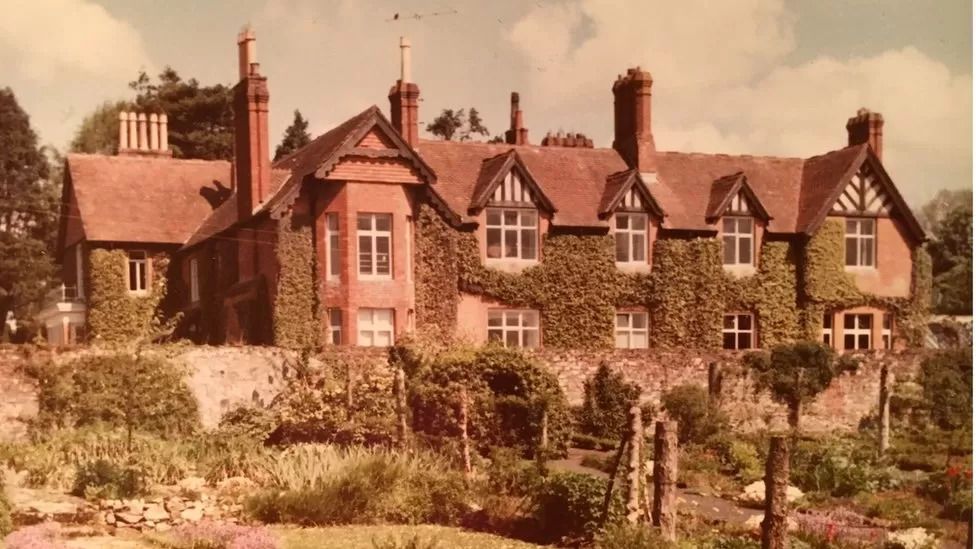 The family's home at Ballyarnett provided the setting for the historic talks
According to state papers released some 30 years later, the IRA was represented by Dáithí Ó Conaill and a young Gerry Adams.
Amazingly, Aileen and Michael didn't tell anyone about the gathering for another three decades.
"We were all staggered," their son David told BBC News NI from his home in Lisburn.
"They never told us about those talks until the government papers were published on New Year's Day 2002. I don't think at that time they realised what a momentous thing it was."
The meeting at Ballyarnett came just months after Bloody Sunday, when the British Army opened fire on a civil rights march in Derry, killing 13 people.
As the death toll from the Troubles grew, so did calls for peace.
Publicly the British government stated that it could not respond to IRA ultimatums - but privately the state papers revealed that MI6 was pursuing contact.
The boss
Ballyarnett became the preferred setting because of its proximity to the Irish border at County Donegal.
"It's really very easy to come up from the southern side through the back fields," David explained.
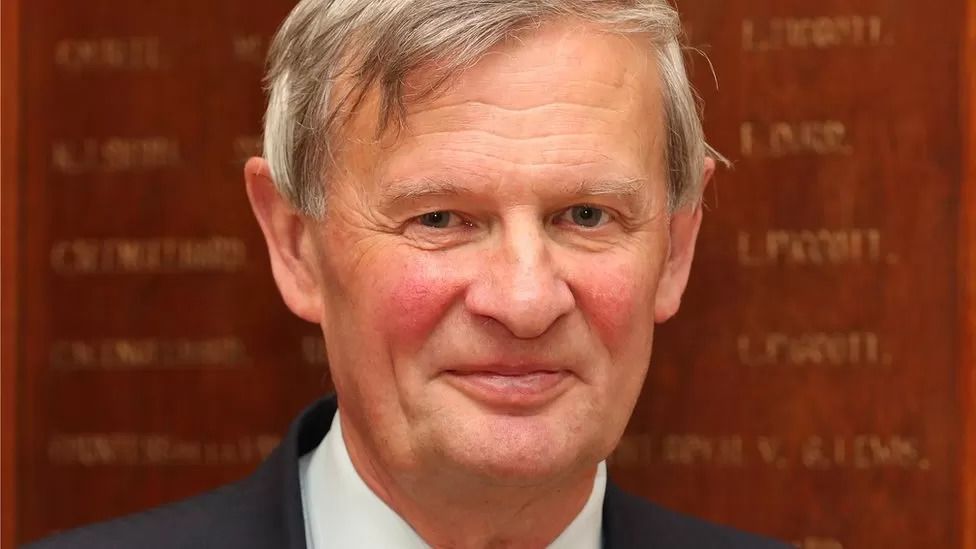 David McCorkell said he was stunned his parents kept the meeting from their children for so long
Both sides also trusted the McCorkells.
"One of my mother's great expressions was 'the Red Cross is neutral even in Northern Ireland'," said David.
"She'd built up a terrific reputation of helping everyone. And that obviously leads on to the 1972 talks.
"After the war, my father joined the territorial army. So people knew of him. He was asked to go to Stormont and he was taken in and told 'my boss wants to talk to you'.
"The boss was Willie Whitelaw, the secretary of state. So he made the request.
"On the other side John Hume [later SDLP leader] was asked where these talks could be held and because of my mother's reputation that's who he suggested. So both sides were happy.
"Luckily for them, we were all away at school. So arrangements were made."
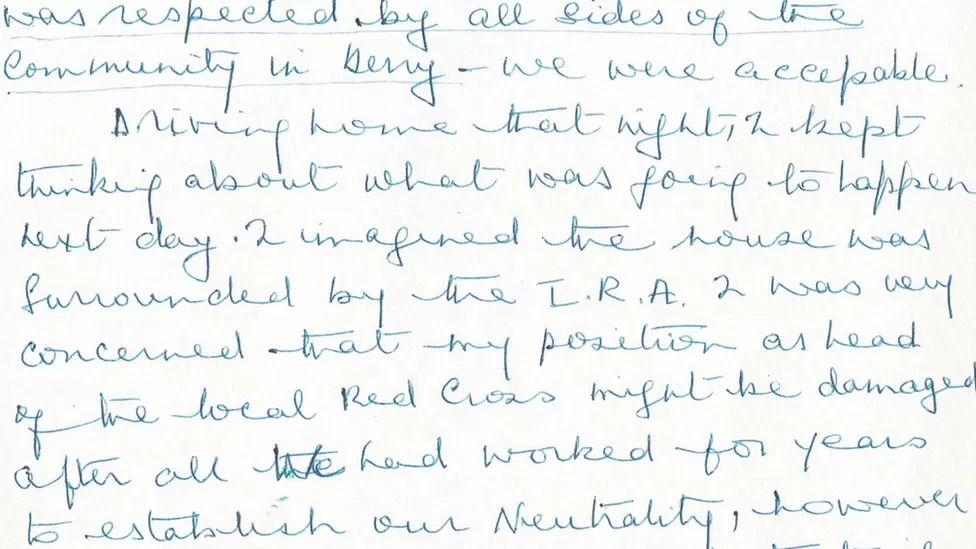
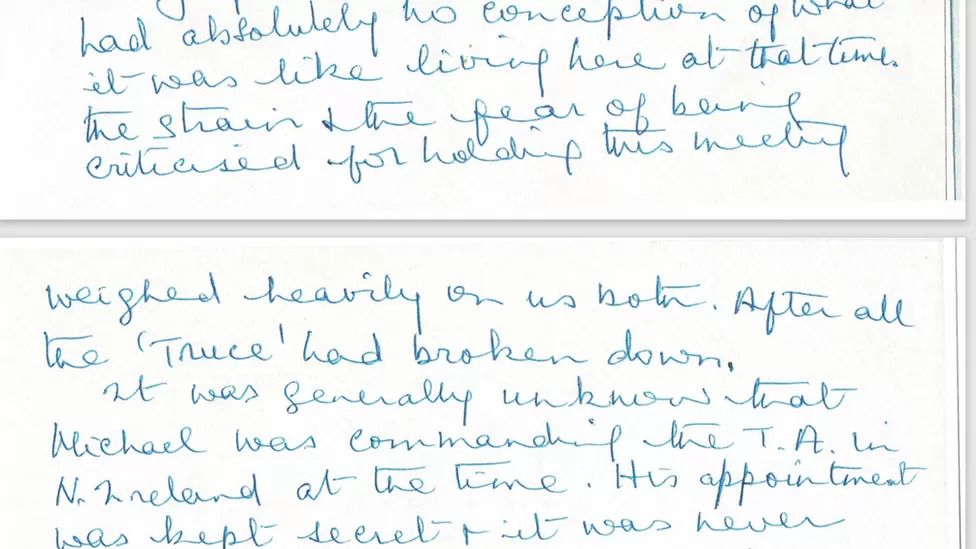
Although Aileen never spoke about the meeting, she did keep a secret record of the event.
In it, she recalled the moment her husband told her about the plan.
"Driving home that night, I kept thinking about what would happen the next day. I imagined the house surrounded by the IRA," she wrote.
Aileen's diary
Aileen McCorkell was born in India, but grew up in County Louth.
She married Michael McCorkell in 1950, before settling in Ballyarnett with their four children.
"She saw the need to help people in Derry, particularly those that were disabled. So she set up the Derry City Red Cross," said David.
"They did meals on wheels and trolley shops in the hospitals. But 1968 changed all that with the advent of the Troubles."
Aileen began to help those caught up in the violence and administered first aid on Bloody Sunday.
"That was the one thing she would never talk about," David added.
Among Aileen's concerns about the meeting was a worry it would jeopardise the Red Cross' neutrality.
But "on reflection she realised that it would be very important", said David.
'A strange man'
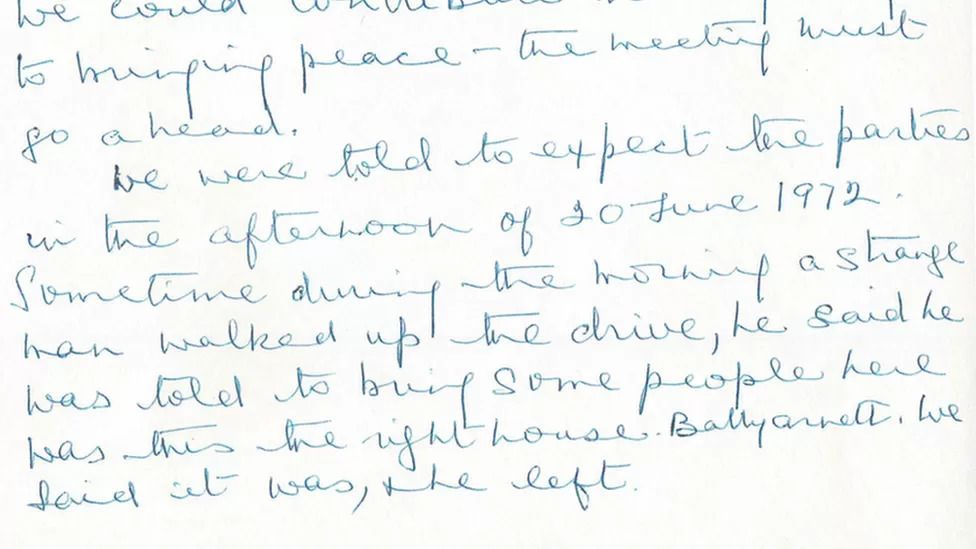
Writing about 20 June 1972, she said: "Sometime during the morning a strange man walked up the drive. He said he was told to bring some people here.
"The two government officials arrived in the early afternoon... they never gave any indication what was going on. After nearly four hours, they all left."
State papers include a top secret note written by British official PJ Woodfield after the meeting.
He revealed terms for temporary ceasefire were discussed, as were plans to bring the IRA leadership to London.
He also remarked Adams and Ó Conaill seemed to genuinely want "a permanent end to violence".
One week later, a delegation, including Gerry Adams and Martin McGuinness, went to meet the secretary of state at Cheyne Walk.
The talks were fruitless and violence soon restarted - but the meeting at Ballyarnett undoubtedly set in motion decades of negotiations.
In 2019, the McCorkells' story briefly featured in BBC Spotlight documentary with Darragh McIntyre.
"Darragh said to me at the time that was the first contact and that was the start of what eventually led to the Good Friday Agreement," said David.
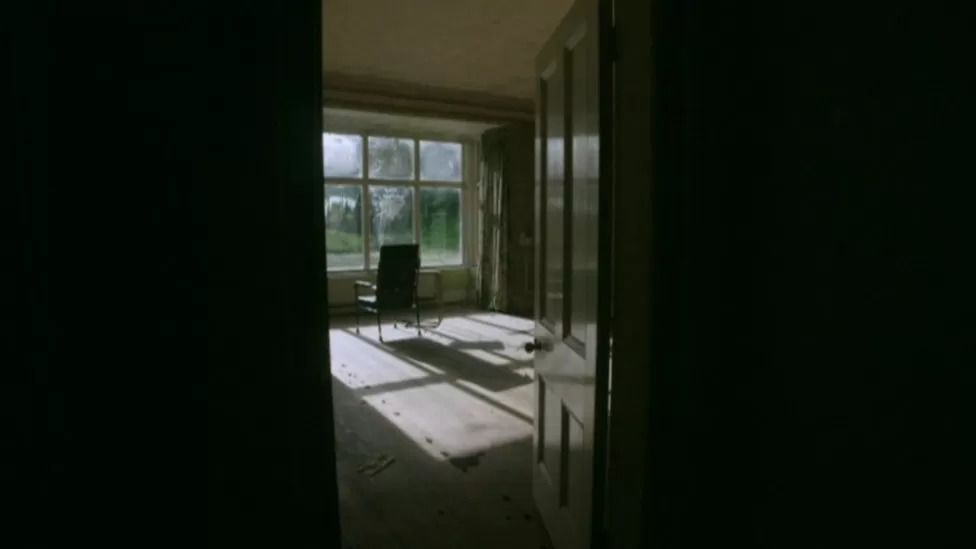 In 2019 BBC NI's Spotlight programme visited the room where the talks were held
Michael McCorkell died in 2006 and Aileen passed away in 2010.
Both remained modest about the role they played in the peace process.
In her notes, Aileen wrote: "The strain and the fear of being criticised for holding this meeting weighed heavily on us both."
But David feels his parents' contribution should be celebrated.
"There was a lot going on in that area during the Troubles and one always worried were they safe.
"But they were probably being protected by both sides because of what they done."
For her work during the Troubles, Aileen was appointed OBE.
The family home has since been sold - but its significance remains.
"We're all very proud of the role they played and how they kept it a secret for 30 years," said David.
"Hopefully that small thing has moved to make Northern Ireland a better place."