

Football, flights and food: how the EU reshaped Britain
Historians of the future will judge the politics of the half century before the Brexit transition ended on 1 January 2021. What, though, of social and cultural historians, those who study how we live?
Perhaps the most symbolic cultural artefacts of the last 50 years will turn out not to be a blue flag but a bottle of Blue Nun, a block of mozzarella, a Ryanair boarding printout or a ticket to a Bayern Munich v Manchester City football match.
Despite half a century of belonging to the EU club, most British people say their emotional bonds to Europe are not strong. “Nearly 60% of Britons do not identify as European at all,” says Anand Menon, a professor of European politics at King’s College London.
Allegiance to an abstract notion or a set of institutions is a stretch even for Europhiles. The early weeks of the pandemic in March tested solidarity even among the diehard founding member states. Yet lives and lifestyles across the continent are closer than imaginable in 1973 and in ways that cannot be measured by a survey. Even if no European “society” exists for Britain’s departure to disrupt, an informal convergence of tastes and cultural assumptions that could be called “Europeanisation” has taken place over the last five decades.
We may be familiar with how burgundy passports transformed migration, education and work. Scientists, researchers, countless professionals and the Erasmus generation will be affected by the loss of freedom of movement. EU citizens who made lives in the UK, especially after the opening up to eastern Europe from 2004, are bracing for a new precarity.
But what about the majority of Britons who never married a Swede, bought a holiday home in France, got an engineering job in Eindhoven or spent a year studying in Madrid? How bumpy a ride will their sociocultural readjustment be?
For good or ill, the boring business of trade – integrated supply chains, the free movement of goods and common rules for everything from energy to eggs – has shaped their lives too, even if few saw themselves as participants in a post-national experiment let alone expressed it as a form of identity.
The greatest irony is that much of the Europeanising process that Boris Johnson’s hard divorce settlement aims to end was not driven from Brussels but from London.
Britain entered the bloc in 1973 entirely for transactional reasons and not because it “bought into the narrative” of political integration, says Menon. If GDP alone is the benchmark of success, membership paid off. Income per person is approximately 8.5% higher than it would have been had the UK stayed out, Nicholas Crafts, a professor of economic history at the University of Sussex, estimates. He attributes this extra prosperity to increased competition, lower trade costs and higher productivity.
Margaret Thatcher may have let her antipathy to the federalist dream seed the culture war that led to Brexit, but she backed the 1985 project that would from 1992 become the EU’s most far-reaching achievement: the single market. Unwittingly, in pursuing its own interests via an expansive “common market”, the UK ended up selling EU citizens a common European lifestyle and perhaps even a common identity.
British fingerprints, says Crafts, were all over the project. It meant goods could be packaged, labelled, transported and safely sold across Europe without any additional paperwork. “We were pushing strongly for it,” says Crafts. “It’s very simple: if you reduce the costs of doing business, the volume of trade goes up.
“British business found standardisation a bonus. Because a regulatory union – which is exactly what the single market is – reduces costs much more than tariff-free trade does.”
Food, glorious food
How Europeans eat and drink in 2020 compared with 1973 is probably the clearest illustration of how the single market influenced habits and at least partially rewired Britons’ expectations. The Daily Mail recently published a pictorial guide to dealing with Brexit-related food disruption. Pizza, brie and avocado could be replaced by chips, toast and mutton, it suggested.
The Christmas Eve Brexit deal spares Britain hefty tariffs on food imports but new barriers and costs could reduce the year-round availability of certain foods and make them more expensive.
The Mail’s much-mocked food chart was an even more useful reminder of the socio-gastronomic transformation that EU membership delivered to Britain. The shift in food quality and the democratisation of Britain’s food culture has been “staggering”, says Tim Lang, a professor of food policy at City, University of London. Food, he says, has been a symbol of European integration ever since the common agricultural policy (CAP) was founded to banish the memory of wartime starvation.
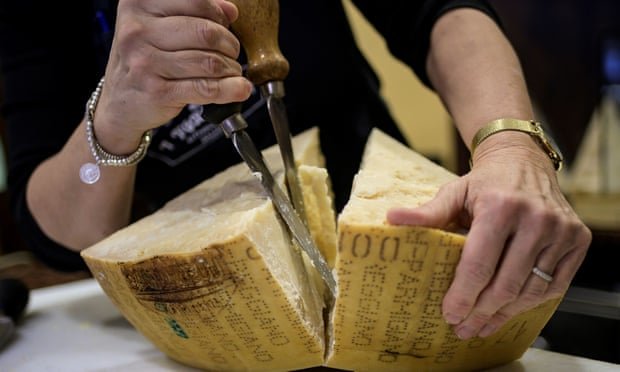
In 1973, the ONS retail price index reflected the pre-common-market British palate: that year’s representative shopping basket included mutton, Smash instant mashed potatoes and tinned corned beef. Olive oil may have been on the tables of the Elizabeth David-reading English middle classes, but most people cooked with lard. Wine didn’t figure even in 1977: sky-high tariffs put anything more than the occasional bottle of Blue Nun out of most people’s price range.
We can partly blame EU agricultural policy for the disappearance of traditional fruit varieties but British supermarkets found it cheaper to import granny smith or golden delicious apples, Dutch-grown tomatoes and Spanish strawberries at the volumes British customers had started to demand. Muesli, ground coffee, pitta bread, fromage frais, riesling and pesto all joined the ONS shopping basket between 1980 and 2000. “The Europeanisation of the British diet is something even Brexiters have to acknowledge,” says Lang. “Mediterranean foods and pizza-eating cafe culture used to be for the British elite. That completely changed and it is remarkable.”
In 1988, domestically produced food accounted for 66% of all food sold in Britain. Today, the figure has fallen to 50% while more than 60% of the UK’s fresh food is imported from the EU. For dairy products, the EU is almost the sole supplier.

Post-Brexit, the nutritional range could narrow for poorer British families and as a House of Lords select committee report warned, food inequality could widen with those who can afford it still able to buy high quality local fresh produce.
A tightly woven “highly Europeanised” ecosystem of food safety oversight, meanwhile, evolved to protect consumers, which necessarily deepened integration between EU governments, says Lang. “If there is contamination in a tin of tomatoes in Italy every member state is alerted simultaneously.”
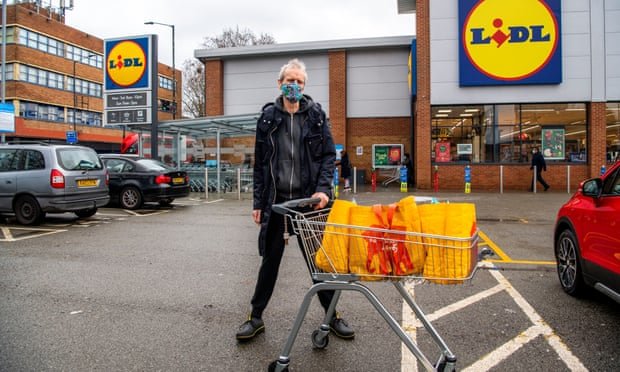
Less palatable, he says, is the concentration of giant food manufacturers – which account for half of all European food sales – and the power of a few big retail corporations. Not only have they shaped the food system, they also make “taking back control” a challenge. “The single market allowed that process to accelerate,” says Lang. “Tesco, Carrefour, Aldi and Lidl were able to go everywhere and they have done so.”
Households also reflect the UK taste revolution that coincided with seamless trade. Terence Conran brought the first “continental quilts” to Britain from Sweden in the 1960s with their promise of uncluttered easy living. Duvets, used on the continent for a century before that, weren’t in the ONS British shopping basket until the early 80s. A few years later, Brits were being sold flatpack modernism and the Scandinavian dream, with the arrival in the UK of the first Ikea store.
In driving down prices, and making linguistic differences irrelevant – although another legacy of Britain’s membership is English as a lingua franca – the single market, with its network of consumer protection laws helped to turbo-charge a consumer revolution. “It might have happened without EU membership but not at the same pace,” Crafts says. “You expect, with greater integration, that relative prices become similar and that affects consumption.”
A broadening of horizons
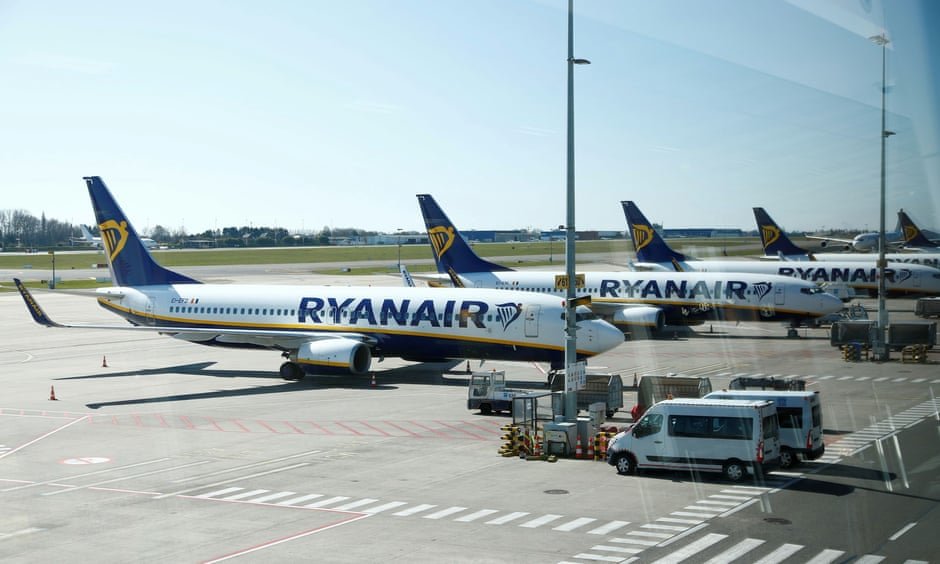
The soft power of the single market reshaped the culture in other ways. A Milan to Paris airfare cost the equivalent of at least €400 in 1992. Between 1993 and 1997, the EU liberalised aviation. Enter no-frills Ryanair, initially in the UK and Irish markets, now Europe’s biggest airline. Cheaper travel has been a mixed blessing for weekend hen and stag do destinations, and disastrous for the climate. But another genie was out of the bottle: air traffic in the EU trebled in the first 20 years of the single market. Trips within the EU accounted for most British holiday travel in 2019.
A “symbiotic” relationship grew, too, between budget air fares and another British institution, says Simon Chadwick, a professor of Eurasian sport at Emlyon Business School in France. Football fans didn’t historically travel in big numbers to continental games, but from the late-1990s, La Liga, Serie A and Bundesliga entered the collective vocabulary as short-haul football tourism exploded.
“Europeanisation has been built through football,” says Chadwick.
In 1995, a seminal European court of justice verdict revolutionised the hiring and transfer of EU players by insisting on their freedom to work in any member state. Football, it turned out, was also governed by the single market.
The Bosman ruling kicked off a new era. The Italian player Fabrizio Ravanelli caused a sensation by quitting Juventus for Middlesbrough weeks after his club won the 1996 Champions League. Players, managers, coaches and staff at all levels of the game flocked to the UK. European mainland fans arrived too, fuelling a football economy for Manchester, Liverpool, Glasgow and other UK cities.
“Fast forward 20 years, the psyche of English fans had changed,” says Chadwick. “We don’t talk now about ‘foreign players’ ,they are just players.” Wenger, Klopp and Guardiola have become household names. “People just accepted their style and approach to the game as part of the culture of English football. Many people are not aware that this exchange is part of freedom of movement within the EU.”

Brexit makes signing EU players by Premier League clubs more cumbersome with points-based work permits now required. Young English footballers such as Jude Bellingham, who plays for Borussia Dortmund, may find doors closing to them.
The single market has allowed the proliferation of football broadcasting rights and any free trade impediments created by Brexit could also undermine the lucrative nature of Premier League TV deals with EU countries, says Chadwick, especially as services are not covered by the Johnson government’s deal with the EU. The Premier League’s most lucrative overseas deal, for example, is with Scandinavian EU member states.
Free trade difficulties could also have an impact on Uefa’s marketing of broadcast rights, both across Europe and elsewhere in the world. “We take a lot for granted but we are on the cusp of something different,” says Chadwick. “Football is so deeply embedded in the life of the nation that people don’t realise what they have, or what they might lose.”
The EU is today far more than the marketplace Thatcher helped to craft. It has a single currency, legally binding environmental standards, worker protections, social policies, a budgetary policy that attempts to level out regional disparities and a human rights charter. Its critics say the pandemic and the need for a green recovery should be the impetus for a more progressive, less “Anglo-Saxon” EU political economy to emerge.
Will the same realities drive the UK’s direction, or will the conscious repudiation of a European identity built on seamless trade and integration become tangible?
Perhaps, as the Lithuanian novelist and historian Kristina Sabaliauskaitė predicted, the moment that Britain starts to experience life outside the EU is the moment it learns “with a shock, how very European it was after all”.