

Eurovision Song Contest 2023: Why it's about more than music for Liverpool
In a souvenir shop in Liverpool, some new additions are on display alongside the usual Beatles and football merchandise.
There's a blue-and-yellow woolly hat with "Liverpool" on one side, "Ukraine" on the other, and the date 2023 (yours for £19.99).
There are heart-shaped fridge magnets with the city's Liver Bird mascot against a similar blue-and-yellow background, next to magnets with the faces of the Fab Four.
There's a flag saying "Liverpool song contest" and the dates 9-13 May 2023. The word Eurovision doesn't appear - presumably for trademark reasons, as these are unofficial mementos.
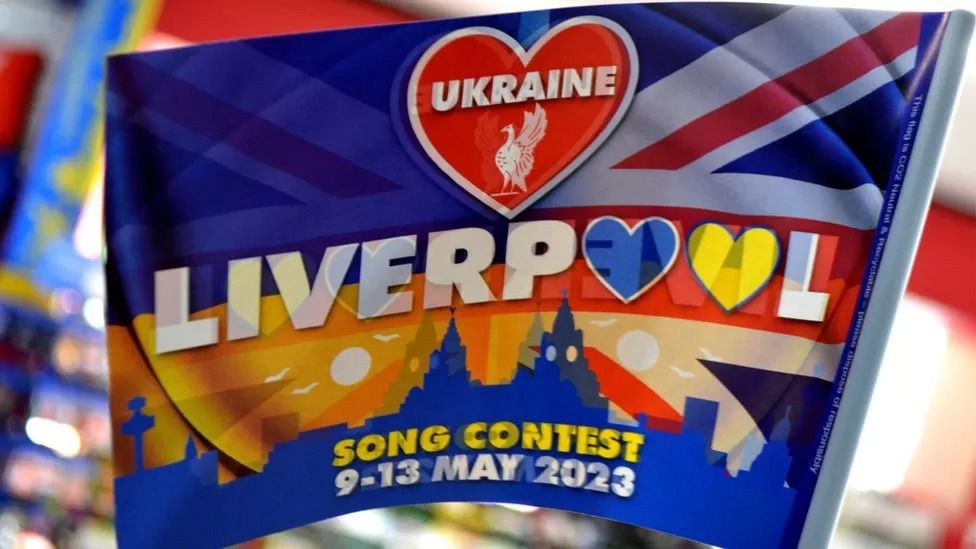 Around 100,000 fans are expected for Eurovision and related events
But the products are ready for the visitors who are expected to flood here for the annual continental music competition. It was awarded to the city after organisers decided it was too dangerous to be staged by 2022's winners Ukraine, following Russia's invasion.
And while Liverpool is promising to put the country front and centre in its activities, and merchandise, it is also taking its own chance to harness the power of Eurovision.
There are hopes that around 100,000 visitors and the exposure to 160 million TV viewers will boost the local economy. It's been transformed by tourism over the past two decades but also hit by the Covid pandemic.
Eurovision could be worth £25m to Liverpool this year and a further £250m from an upturn in visitor numbers over the next three years, according to council estimates.
Meanwhile, NatWest has estimated that visitors will spend £40m in the city across Eurovision week alone.
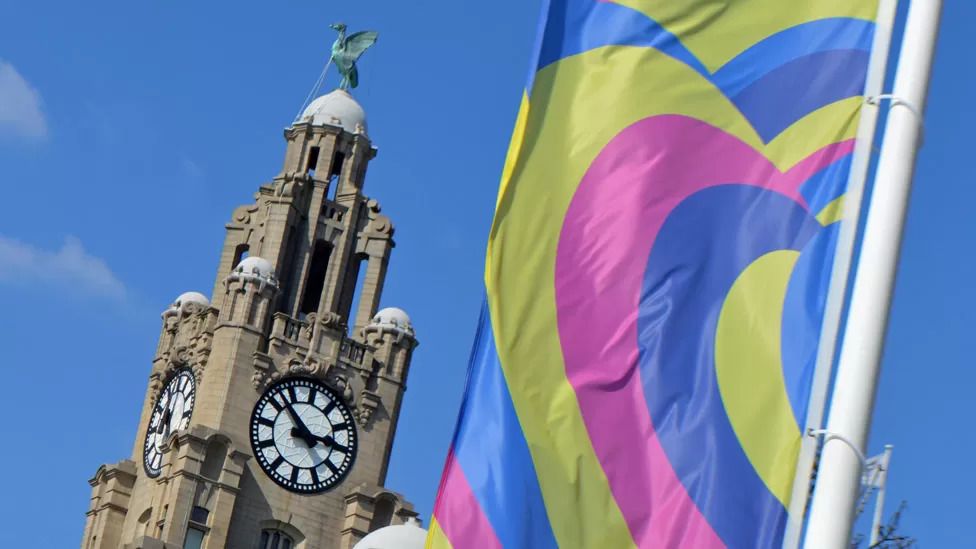 The Eurovision 2023 heart logo incorporates the blue and yellow colours of the Ukrainian flag
"It is a tremendous shot in the arm for the economy," says Dr Michael Jones, a senior lecturer in music industries at the University of Liverpool.
"The city council is determined to maximise it, to put the flags out and say, 'We're back as a city, come to Liverpool.'
"And I don't think that's at all cynical. It's an expression of self-confidence, and the city has struggled. This is an opportunity. It's maximising it, I think, in a thoughtful and sensitive way."
Last year's contest attracted 55,000 tourists to Turin, despite some Covid measures still being in place. The Italian city said those visitors generated 23m euros (£20m), with the media exposure worth an extra 66m euros (£58m).
Liverpool is hoping Eurovision's global spotlight will allow it to build on a 15-year period in which it has reinvented its image from declining post-industrial city to popular destination.
In the decade before Covid, Liverpool saw an 87% rise in international tourists (compared with 37% overall for the UK).
Music has played a big part in the city's fortunes, and Beatles tourism was estimated to be worth £100m to the city in 2019.
Although Beatles tourism is not new, it has boomed in recent years, according to Jon Keats, a director of the company that runs the famous Cavern Club as well as an annual Beatles convention, which began in the late 1970s.
"When we started doing the Beatles convention, there were three hotels in the city, I think," he says.
Now, Liverpool's global appeal is reflected in the audience when Keats performs as a singer in the Cavern himself. "The other day I had [fans from] Honolulu on one side and Ecuador on the other side, wedged between Australia and Cleethorpes."
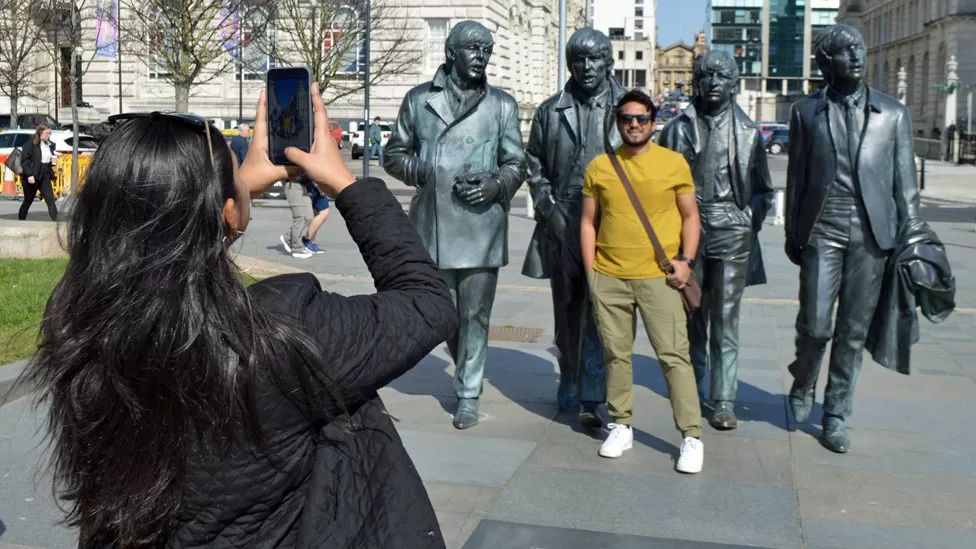 Tourists flock to have their photos taken with the Beatles statue on the Liverpool waterfront
Back in 2009, there weren't enough customers to open the Cavern all week. "Then it just kept on getting busier and busier, to the point where we now have live music from 11:00 every day and it doesn't stop," he says. "So there's been a massive change."
This new Beatlemania is centred on Mathew Street, where the Cavern (resurrected in 1984 a few doors down from the original) has been joined by more themed bars, pubs and a museum.
"It's a busy street," Mr Keats says. "There are many Beatle-themed [things], rightly or wrongly. This is another challenge for Liverpool - we need to make sure we don't turn Liverpool into a Disney version of the Beatles."
While The Beatles are the main attraction, Liverpool is trying to draw attention to other strands of its musical identity.
In the late 1970s and 80s, venues like Eric's - opposite the Cavern - produced bands like Frankie Goes To Hollywood, Echo and the Bunnymen, Julian Cope's The Teardrop Explodes and Orchestral Manoeuvres in the Dark.
"Eric's for me is way more important than the Cavern because of what came after it," says Frankie Goes To Hollywood guitarist Brian Nash.
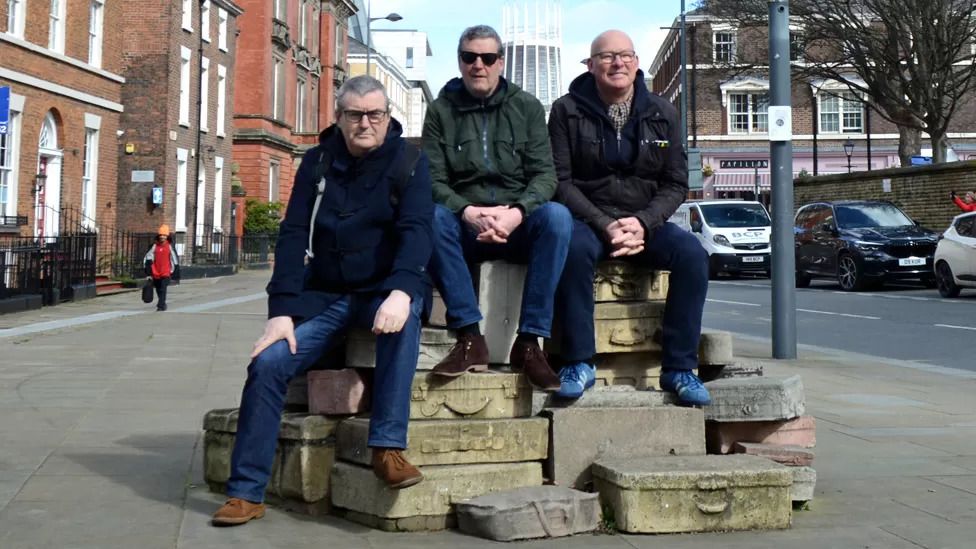 Left-right: Keith Mullin and Peter Hooton of The Farm and Brian Nash of
Frankie Goes To Hollywood are running the Liverpool Music Icons walking
tours
Left-right: Keith Mullin and Peter Hooton of The Farm and Brian Nash of
Frankie Goes To Hollywood are running the Liverpool Music Icons walking
tours
Nash has recently formed a supergroup of sorts with Peter Hooton and Keith Mullin of 1990s band The Farm. Instead of making music, they are leading guided tours of the city's post-punk and alternative music scene, as well as some Beatles-related heritage.
"There's so much more to Liverpool than that," Nash says. "What we want to talk about is our time, and the changes that have happened in the city since then."
Music was a bright spot in the 80s. At the time, riots, unemployment and poverty led Chancellor Sir Geoffrey Howe to urge Prime Minister Margaret Thatcher to consider abandoning the city to a fate of "managed decline".
Nash says residents of the 80s would "never have predicted" how far the city would come since then. "If you were standing here in 1984, you'd have gone, 'No chance'. We were written off."
"OK, this is a nostalgia tour," adds Hooton. "But it's also a tour of hope - to say, look, this can happen from nothing."
Eurovision and Liverpool's wider musical pedigree will now be used to brand it as a music city, not just as Beatles city.
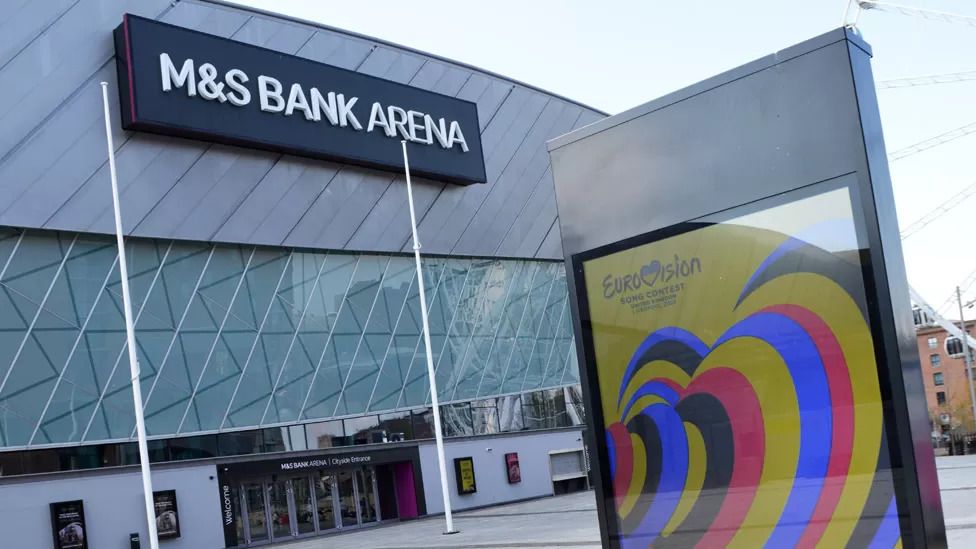 Liverpool's arena was built for the Capital of Culture year in 2008
Another key moment in Liverpool's regeneration came when it was European Capital of Culture in 2008.
"I don't think anyone would have believed you, pre-Capital of Culture, if you said Liverpool's economy would be run by visitors," says Claire McColgan, the council's director of culture.
Today, almost half of the council's business rates come from the visitor economy sector, she says.
The song contest does have a cost for Liverpool. The council is spending £2m on the event, with another £2m coming from the Liverpool City Region Combined Authority.
Some will question whether that's the best use of public money during a cost of living crisis.
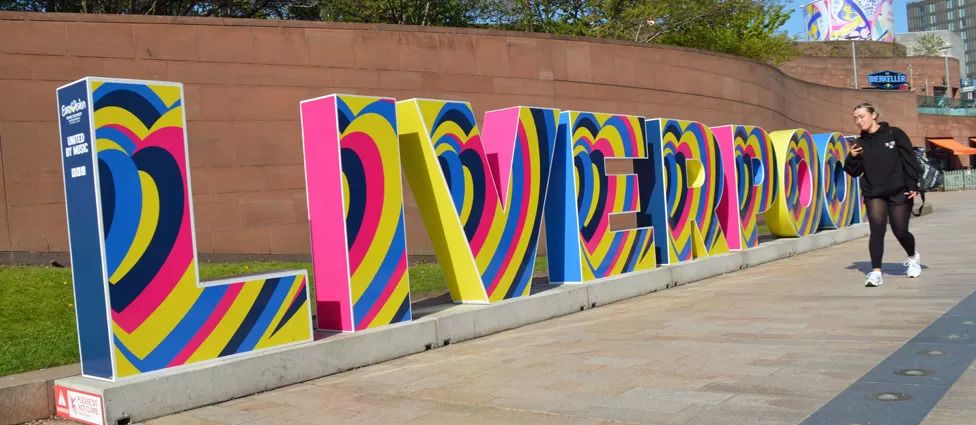 The Eurovision colours appear on signs and banners across the city
McColgan says most in the city now understand that culture can bring big returns.
Eurovision is "an investment into the city's future", she continues. "It's investment into jobs, into people wanting to invest here, people wanting to come to college here. It's part of a much bigger picture, and we see it like that here.
"And it's a small investment compared to the return that we're going to get from it. And not just Liverpool - the wider region and also the UK."
Eurovision has already brought £15m in to the city, McColgan says, while bars and hotels - and souvenir shops - will feel the benefit when the visitors arrive.

