London Daily

Focus on the big picture.
Tuesday, Aug 04, 2026

Covid: Don't hug elderly relatives at Christmas warns Chris Whitty

Covid: Don't hug elderly relatives at Christmas warns Chris Whitty

Families have been warned against hugging and kissing elderly relatives at Christmas "if you want them to survive to be hugged again".

People "just have to have sense", said the UK government's chief medical adviser, Prof Chris Whitty.

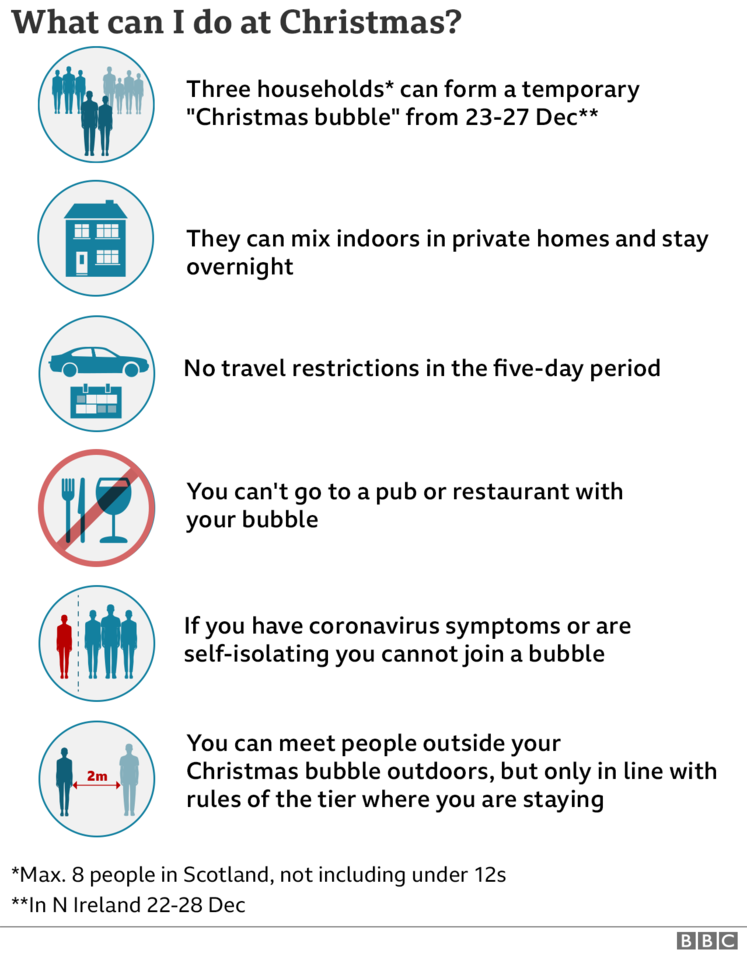
Coronavirus rules announced this week mean three households can form a bubble and mix for five days over Christmas.

From 23 to 27 December, three households in can mix indoors in homes, at a place of worship or outdoors.

The rules apply to the whole of the UK, although in Scotland the number of people who can be in the Christmas bubble is limited to eight.

And in Northern Ireland, the rules are relaxed from 22 to 28 December, to allow time to travel between the nations.

Speaking at a Downing Street press conference on Thursday, Prof Whitty - who revealed he would be "on the wards" over Christmas - said: "Would I want someone to see their family? Of course, that's what Christmas is about.

"But would I encourage someone to hug and kiss their elderly relatives? No, I would not.

"It's not against the law - and that's the whole point. You can do it within the rules that are there, but it does not make sense because you could be carrying the virus and if you've got an elderly relative, that would not be the thing you'd want to do in the period where we are running up to a point where we actually might be able to protect older people.

"So I think people just have to have sense. The fact that you can do something - this is true across so many other areas of life - doesn't mean you should."
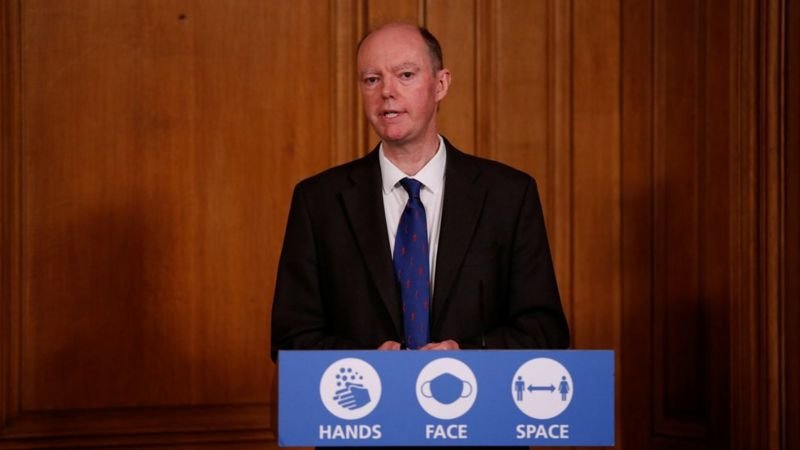

Mr Whitty urged people not to do "stupid things" at Christmas


Sir Patrick Vallance, the government's chief scientific adviser, added: "It's not going to be a normal Christmas but if you want to make those connections with family, it has to be done in a way where you try and make sure that you don't increase the risk.

"I think hugging elderly relatives is not something to go out and do. It will increase the spread to a vulnerable population."

Prof Whitty added: "If you want them to survive to be hugged again."


Prime Minister Boris Johnson also responded to the question about hugging elderly relatives, urging people to be "common sensical".

"Until the vaccine comes on stream, we are not out of the woods yet and we have to be very, very vigilant."

'Don't be stupid'


Prof Whitty also said it was "not a secret" that Christmas would increase the risk of transmission.

"Take it really seriously during Christmas. Don't do stupid things. Don't do unnecessary things just because the rules say you can. Think sensibly."

Scotland's First Minister Nicola Sturgeon has that said the "default advice" and "safest position" was still that people should avoid contact.

"Just because we are allowing people to meet up in a limited way does not of course mean people have to do so, and people should not feel under pressure to do so," she said.

The government's official guidance on Christmas bubbles advises people with loved-ones who are vulnerable advises to take personal responsibility to limit the spread of the virus.

The NHS considers anyone 70 and over as "clinically vulnerable" and at moderate risk from coronavirus.

The government guidance also has specific advice for people considered extremely vulnerable, as well as care home residents.

It suggests forming a Christmas bubble is "a personal choice" for extremely vulnerable people, while those in care homes should only visit families if they are of working age.

Under the government's rules, the three households must be fixed, so you will not be able to mix with two households on Christmas Day and two different ones on Boxing Day. Households in your Christmas bubble can't bubble with anyone else.

Scotland has announced that the bubbles of three households should contain no more than eight people - but children under 12 are exempt.

People who are self-isolating should not join a Christmas bubble. If someone tests positive, or develops coronavirus symptoms up to 48 hours after the Christmas bubble last met, everyone will have to self-isolate.


How you and your family can celebrate Christmas and minimise the spread of coronavirus


Newsletter

Related Articles

0:00
0:00
Close
Reform UK Wants the Royal Navy to Return Channel Boats to France
US and Japan Step In to Support the Yen in Rare Joint Intervention
The AI Pricing Problem: Companies Cannot Predict Their Own Bills
Europe’s Heat and Drought Are Now Disrupting Power, Shipping and Tourism
Apple’s OpenAI Lawsuit Becomes a Public Fight Over AI Hardware
UK Man Jailed After Keeping His Mother’s Body in a Freezer and Claiming £78,000
A SpaceX Rocket Is About to Crash Into the Moon — and Scientists Hope to Watch
World War II munitions discovered after wildfires in southern France
BP profits reach four-year high amid Middle East conflict
Europe’s Drying Rivers Trigger Power Cuts, Factory Shutdowns and Wildfire Emergencies
UK Driver Sentenced to Four Years for Staged Electric Vehicle Brake Failure Fraud
Conservative Party and Reform UK Face Scrutiny During Clacton By-Election Campaign
Ministry of Justice Reviews Early Release Rules After Public Anger Over Police Killer Cases
NHS Radiographers Report Rising Racist Abuse From Patients Across UK Hospitals
UK Banking Regulators Face Pressure After Customer Loses Fourteen Thousand Pounds in AI Voice Scam
Research Challenges Treasury Control Over UK Public Spending and Calls for Greater Local Decision-Making
Home Office Begins Four-Week Weapons Surrender Campaign Across Major English Cities
Southern England Records Driest July in Nearly Two Centuries as Drought Concerns Grow
Apple Challenges UK Government Request for Access to Encrypted User Data in Legal Fight
BP Reports Sharp Profit Increase as Middle East Conflict Drives Global Oil Prices Higher
Nigel Farage Expresses Openness to Potential Alliance with Restore Britain
AstraZeneca Merger Talks Reflect Intensifying Pharmaceutical Consolidation
University Merger May Set Template for Higher Education Reform
Apple's Legal Challenge Highlights Growing Tension Over Encryption and Surveillance
Prime Minister Andy Burnham's Agenda Signals Shift Toward Greater Regional Devolution
Mental Health Trust Faces Criticism Over Planned £25 Million Budget Cuts
Scientists and Cultural Leaders Call for Funding to Save Jodrell Bank Observatory
UK Manufacturing Output Reaches Highest Level in Nearly Two Years
University of Greenwich and University of Kent Complete Landmark Merger
Nigel Farage Unveils Naval Border Proposal Amid Questions Over £5 Million Donation
Prime Minister Andy Burnham Pledges Tougher Action on Small Boat Crossings
Apple Challenges UK Government Over Encrypted Data Access Demands
AstraZeneca Shares Fall After Reports of $400 Billion Bristol Myers Squibb Merger Talks
Triple Lock Lifts UK State Pension but Leaves a Wider Retirement Gap
Danube Drought Forces Hungary’s Paks Nuclear Plant Into Full Shutdown
Ceuta Death Toll Rises as Spain and Europe Clash Over Border Response
Cuba’s Grid Fails Again as Fuel Crisis Deepens
Nazca Lines Flight Crash Kills Thirteen as Peru Suspends Aerodiana
Modern Slavery Decisions Broaden the Al Fayed Inquiry’s Frame
FIFA’s Retreat Leaves a Larger Question Over Who Guards the Game
Two Firefighting Crew Members Die in Helicopter Collision West of Athens
Public Sector Automation Through Artificial Intelligence
Regional Investment Beyond London
Protection of Strategic Technology Assets
UK Competition Regulator Blocks Major Foreign Takeover of British Quantum Computing Firm
UK Government Commits Two Billion Pounds to Modernise Northern Rail Network
UK Parliament Approves Planning Reforms to Accelerate Housing Construction on Green Belt Land
Scotland Approves Major Floating Offshore Wind Expansion in the North Sea
United Kingdom and European Union Sign Defence and Critical Minerals Cooperation Agreement
NHS Invests Five Hundred Million Pounds in Artificial Intelligence Diagnostics to Reduce Waiting Lists
×