London Daily

Focus on the big picture.
Wednesday, Jul 15, 2026

Courts waved through warrants for prepayment meter fitting

Courts waved through warrants for prepayment meter fitting

Courts waved through applications by energy firms to forcibly install prepayment meters in people's homes, according to internal advice from a top magistrate leaked to the BBC.

Previous guidelines required careful scrutiny of warrant applications, but new advice to courts deems those rules "disproportionate".

Energy firms can apply for warrants when bills go unpaid for a long period.

But suppliers were told to stop force-fitting meters earlier this week.

The energy regulator Ofgem told energy companies not to forcibly install the meters following a report from The Times showing debt agents had broken into vulnerable people's homes.

But in recent days warrants are still being issued. Privately industry voices are concerned that having ruled out disconnecting customers, and pausing prepayment meters, there is now a "charter for non-payers".

The new advice for magistrates was posted within the last month on an internal website for magistrates, by the National Leadership Magistrate Duncan Webster.

In an internal FAQ post for magistrates, Mr Webster told magistrates the "advice given to justices has not kept up with changes in the way utility companies operate". As the remedy sought by energy companies for unpaid bills is no longer disconnection, but installation of a prepayment meter, "checks magistrates have been asked to make are now disproportionate and go far beyond the legal requirements".

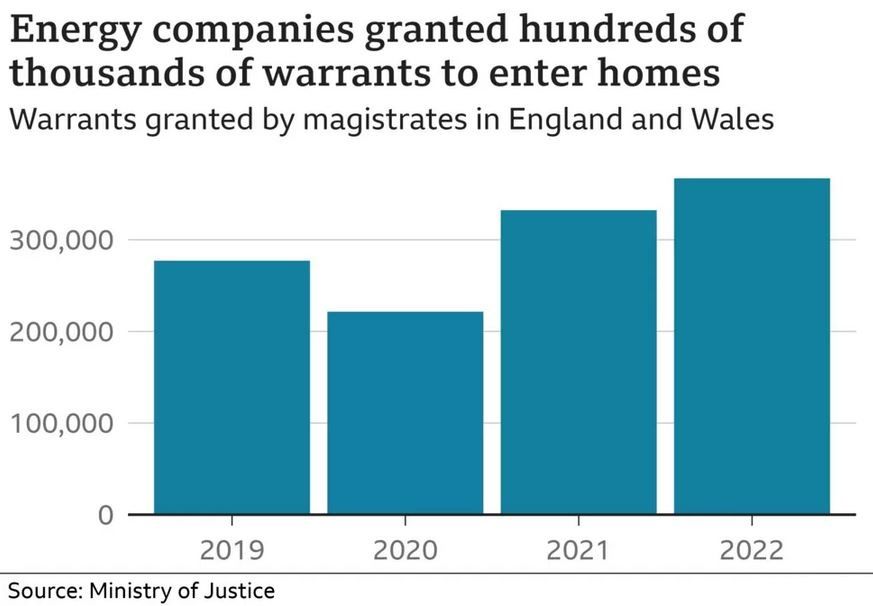
In 2022, as the cost of living crisis took hold, magistrates approved more than 1,000 warrants a day. Almost all of these claims are now authorised electronically or over the phone, by specific magistrates courts allocated to each energy company.

Energy company agents apply by telephone and send in large spreadsheets with between 100 and 1000 cases, where customers are told they do have the right to contest the warrant, but many do not respond. The hearings will sign off, issue and send all the electronic warrants in "a maximum of 15 minutes" according to evidence from pilots.

Legal experts suggest that the advice showed that magistrates were no longer safeguarding vulnerable people and were instead accepting the word of big energy companies "in good faith".

Calls are being made for the almost automated system of approval for warrants to be overhauled. Caroline Flint, chair of the government's Committee on Fuel Poverty, said it was making the situation "worse for already fuel-poor households".

The committee said no action by an energy company should make it harder for anyone to heat their home and that the system needed a complete overhaul.

The court system earns a per case fee from the arrangement, an important source of income after a decade when funding for the judicial system has been cut back substantially.

One magistrate, and former Justice of the Peace, stepped down last August after being left unable to check vulnerable people were being protected when a warrant for a prepayment meter was sought.

Robin Cantrill-Fenwick told BBC Newsnight changes to the court system meant magistrates "were doing nothing more than rubber stamping" warrants.

He said the lack of scrutiny is putting vulnerable households at risk.

Government officials have suggested current advice is a matter for the judiciary. A judicial source said "it just explains what the current law and processes that magistrates are bound to apply".

Scotland's court service has said it will review the process for utility warrants following outcry over forced installation of pay-as-you-go meters.

The Magistrates' Leadership Executive has been approached for comment.

Watch: The Times footage shows British Gas debt agents preparing to break into vulnerable family's home

Watch: The whole system of prepayment meters needs review


Newsletter

Related Articles

0:00
0:00
Close
Beer Industry Warns UK Rules Could Limit Growth of Alcohol-Free Market
Home Office Faces Legal Challenges Over Asylum Seeker Accommodation Closures
UK Heatwaves Linked to More Than Two Thousand Seven Hundred Deaths as Climate Debate Intensifies
Home Secretary Faces Pressure Over Political Security After Ann Widdecombe Murder Investigation
United Kingdom Opens Trade Consultation With Indonesia, Philippines, United Arab Emirates and Uruguay
Robert Jenrick Joins Reform UK After Leaving Conservative Party Leadership Role
Counter-Terrorism Police Take Over Investigation into Murder of Former MP Ann Widdecombe
Andy Burnham Secures Strong Labour Backing in Race to Succeed Keir Starmer
Global Markets Slide as Middle East Conflict Escalation Sends Oil Prices Higher
UK Prime Minister Keir Starmer Offers Condolences Following Death of Qatar’s Father Amir
UK Regional Innovation Policy Focuses on Research Clusters Across Scotland, Wales, and Northern England
UK Corporate Transparency Rules Set to Become More Strict Under Modern Slavery Reform Plans
UK Civil Service Estate Strategy Shifts Government Activity Away From London
UK Strengthens National Security Powers Through New Threat Designations
Greater Manchester Police Conduct Drink and Drug Driving Operations After Football Events
UK Government Advances Darlington Economic Campus With Construction Milestone
UK Authorities Increase Football-Related Security Operations After Tournament Fixtures
UK Invests Fifty-One Million Pounds in National Cryogenics Facility and Regional Innovation Hubs
UK Moves Toward Tougher Modern Slavery Reporting Rules With Corporate Penalties
UK Government Reports Forty-Three Million Pounds in Savings From Office Estate Reform
UK Government Expands Civil Service Regional Strategy With Manchester and Darlington Campus Projects
UK Designates Iran’s Islamic Revolutionary Guard Corps as National Security Threat
United Kingdom Financial Markets Monitor Business Response to Economic Policy Changes
Scottish Renewable Energy Expansion Highlights Need for Faster Grid Development
Wales and Regions Strengthen Focus on Economic Development Through Tourism and Investment
Retail Industry Warns High Street Businesses Remain Under Pressure
Police Chiefs Highlight Growing Challenges Managing Protests and Public Order
Agriculture Leaders Seek Clarity on Post-Brexit Farming Support and Environmental Rules
Transport Unions Warn of Further Industrial Action Over Pay and Working Conditions
Welsh Tourism Sector Reports Strong Growth Driven by Domestic and International Visitors
National Infrastructure Review Gains Support as Leaders Seek Faster Project Delivery
Financial Markets Assess Impact of United Kingdom Corporate Tax Policy Changes
Northern Ireland Assembly Debates Cross-Border Trade and Infrastructure Cooperation Plans
Government Opens Consultations on Housing Reform and Planning System Changes
Scottish Government Faces Pressure to Accelerate Offshore Wind and Grid Expansion
National Energy System Operator Warns Grid Investment Is Needed for Future Electricity Demand Growth
United Kingdom Research Council Invests in Artificial Intelligence and Biotechnology Innovation Hubs
United Kingdom Expands Oversight of Skilled Worker Visa Sponsors Amid Migration Debate
Cross-Party MPs Call for National Infrastructure Strategy Review to Accelerate Economic Growth
Prime Minister Announces One Billion Pound NHS Funding Package Ahead of Winter Pressures
Bank of England Signals Cautious Approach to Interest Rates as Inflation Remains Above Forecasts
World Cup Visitors Turn American Big-Box Stores Into Souvenir Stops
Netflix Weighs Always-On Channels, Bundles and Short-Form Video
Passenger Is Pulled Partly Outside Ryanair Jet After Window Fails Mid-Flight
Innovation-led growth strategy
Public service reform pressure
Defence and industrial security
Labour leadership transition and economic reset
Northern England Pushes for Greater Influence in Britain’s Future Economic Model
UK Technology Strategy Focuses on Life Sciences, Digital Innovation and Research Investment
×