London Daily

Focus on the big picture.
Tuesday, Jun 23, 2026

Cost of living crisis: Liz Truss considers 'nuclear option' of cutting VAT to 15%

Cost of living crisis: Liz Truss considers 'nuclear option' of cutting VAT to 15%

Estimates suggest such a VAT cut would save the average household more than £1,300 a year - but rival Rishi Sunak says the plan is "incredibly regressive".

Liz Truss is considering a "nuclear" option that could see VAT cut from 20% to 15%, according to reports.

A source told Sky News that Ms Truss "will consider options to help people, but it would not be right for her to announce her plans before she has been elected prime minister or seen all the facts".

Estimates suggest such a VAT cut would save the average household more than £1,300 a year, while the Institute for Fiscal Studies said it would cost taxpayers £3.2bn a month, or £38bn for a year.

Rishi Sunak's team criticised the plan as expensive and "incredibly regressive".

A source close to Ms Truss's discussions told The Sunday Telegraph: "They [the Treasury] have talked about the Gordon Brown approach that he took at the time (of the financial crisis), when it looked as though consumer confidence was falling.

"They are talking about the last big economic shock that hit the whole economy and consumers in 2008, and the Treasury's response to that."

And another claimed she "doesn't have time" to offer targeted support, warning: "People are going to start going out of business from the minute she takes office."

Mr Brown announced a year-long cut in VAT from 17.5% to 15% in December 2008 in response to the financial crisis.

Liz Truss and Rishi Sunak have been under growing pressure to say how they will help the millions of Britons struggling with record energy prices and inflation.

Conservative MP Simon Hart, who is backing the former chancellor in the leadership race, told Sky News any plan to tackle the cost of living crisis needed to be "serious, affordable, and targeted".

He defended Mr Sunak for not declaring "precisely" how much he would invest, arguing it would be "irresponsible".

Other possibilities being considered by Ms Truss include extending the 5p cut in fuel duty beyond March, and resuming help for businesses that was seen during the worst of the COVID-19 pandemic, such as a larger reduction in VAT for hospitality, tourism and agriculture.

Sacha Lord, Greater Manchester's night-time economy adviser, said on Saturday: "There is no energy price cap for hospitality. An untenable situation.

"Without intervention, we will sadly see closures like never before in our lifetime. It's criminal."

He retweeted a post from the owners of the Rose and Crown pub in Merseyside, which said it had received a quote of £61,000 for its electricity bill.


The Sunday Times said Ms Truss's team is also considering lifting the personal tax-free allowance, raising the point at which people pay the 40% rate of tax, and cutting the basic tax rate below 20%.

An insider told the newspaper that if Ms Truss decided against immediate tax cuts, they could be incorporated into a longer-term review of the tax system, which she is expected to announce alongside a fiscal package.

Mr Sunak wrote in The Times on Saturday that help with energy bills should be directed at low-income households and pensioners, delivered through the welfare system, winter fuel and cold weather payments.

He also acknowledged that providing "meaningful support" would be a multibillion-pound undertaking".

A Treasury spokesperson said the department is making the "necessary preparations" to ensure the next government has options to deliver extra help "as quickly as possible".

Meanwhile, in his final days as PM, Boris Johnson said that the UK's future "will be golden", despite some "very tough" months ahead.

Writing in The Mail On Sunday, he blamed Vladimir Putin for the worsening crisis, saying: "It was Putin's invasion of Ukraine that spooked the energy markets. It is Putin's war that is costing British consumers.

"That is why your energy bill is doubling. I am afraid Putin knows it. He likes it. And he wants us to buckle."

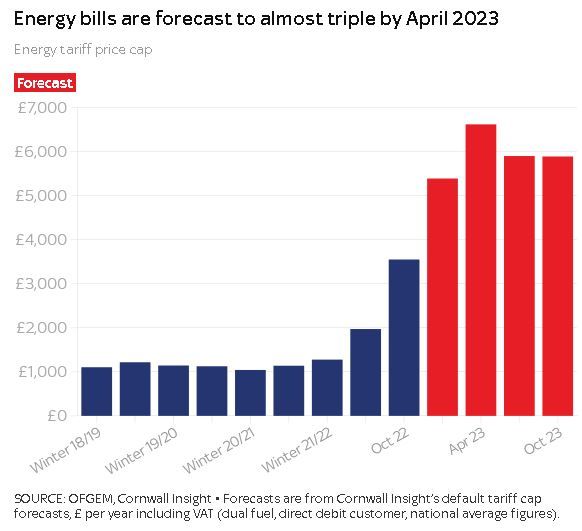
Last week, energy regulator Ofgem announced that the price cap would rise by 80% from October, meaning a typical default tariff customer will pay £3,549 a year.

The latest predictions from energy consultancy Cornwall Insight are that the price cap will breach £6,600 in April.

It prompted calls for more government help directed at the most vulnerable, but Chancellor Nadhim Zahawi said that even those on higher salaries could struggle in the months ahead.

He says Britons on £45,000 may also need support to pay their energy bills.

Newsletter

Related Articles

0:00
0:00
Close
UK Biotechnology Sector Receives Increased Public Funding to Support Regional Growth
Police Chiefs Update National Protest Management Guidelines Amid Rising Demonstration Activity
UK Aviation Regulator Expands Support for Regional Airports to Strengthen Domestic Routes
CMA Launches Investigation Into Retail Pricing Across UK Grocery Sector
UK Energy Operator Warns of Winter Supply Pressures Despite Stable Overall Grid Outlook
UK Research Council Expands Funding for Regional Biotechnology and Life Sciences Clusters
UK Compensation Scheme for Post Office Horizon Scandal Reaches 80 Percent Completion
Police Chiefs Issue Updated National Guidance on Managing Large Public Demonstrations
UK Expands Regional Airport Funding Scheme to Boost Domestic Connectivity
UK Competition Watchdog Launches Inquiry Into Grocery Pricing Practices
National Grid Warns of Tight Energy Management Needs During Upcoming Winter Peak Demand
UK Education Department Introduces National Standards for AI Use in Secondary Schools
UK High Court Clears North Sea Carbon Capture Project After Final Legal Challenge Fails
Northern Ireland Leaders Hold Emergency Talks on Trade Disruption Under Windsor Framework
Welsh Government Moves to Expand Social Housing in Response to Severe Affordability Pressures
UK Economy Sees Unexpected Rise in Business Investment in Second Quarter, ONS Data Shows
Scottish Government Unveils Multi-Billion Pound Investment Plan for Renewable Energy and Grid Expansion
UK and EU Agree Enhanced Defence Cooperation Pact Covering Intelligence and North Sea Security
Prime Minister Orders Independent Review of NHS Performance After Record Waiting Lists
Bank of England Holds Interest Rates at 5 Percent as Services Inflation Remains Persistent
UK Heatwave Disrupts Transport, Healthcare and Public Services as Red Weather Alerts Expand Nationwide
Barclays Warns of Growing Cyber Risk Divide Between Large UK Firms and Micro Businesses
European Defence Plans Including Ukraine Integration Prompt UK Strategic Reassessment
UK Equity Markets React as US–Iran Peace Roadmap Eases Oil Price Pressures
United Kingdom Expands Global Clean Energy Partnerships With Brazil, Morocco and Tanzania
Lord David Frost Urges Incoming UK Leadership to Abandon EU Regulatory Reset Strategy
Housing Groups Support Amendment to Strengthen Fire and Gas Safety Access Powers in Social Housing
South London NHS Estates Staff Ballot on Industrial Action Over Pay Structures in Hospital Maintenance Services
United Kingdom Government Invests £60 Million in AI Research Labs at Oxford and University College London
Barclays Cyber Security Report Highlights Rising Threat Exposure Among UK Small Businesses in AI-Driven Attacks
UK Met Office Heatwave Triggers Transport Warnings as Rail Operators Urge Cancellations Amid Infrastructure Strain
South London NHS Estates Workers Ballot for Strike Action Over Pay Disputes Across Major London Hospitals
Barclays Warns of Severe Cyber Security Gap Between Large Corporations and Small Businesses in the United Kingdom
United Kingdom Government Allocates £60 Million for Artificial Intelligence Research Laboratories at Oxford and UCL
National Health Service Approves Teplizumab Treatment to Delay Onset of Type One Diabetes in First European Rollout
Met Office Issues Rare Red Extreme Heat Warning Across London, South East and West Midlands as Transport and Health Systems Face Disruption
Prime Minister Keir Starmer Resigns After Labour Party Revolt Following Economic Stagnation and Local Election Losses
United Kingdom Economy Contracts for Second Consecutive Month as Private Sector Weakens and Job Loss Fears Rise
Taxpayer Support Grows for Higher Digital Levies on Multinational Tech Companies
Bank of England Signals Caution Over Inflation Despite Easing Energy Prices
Lloyds Banking Group Expands Artificial Intelligence Hiring Amid Sector-Wide Automation Shift
Film Producer Corporate Collapse Leaves Creditors Facing Unrecoverable Losses
UK Ten-Year Brexit Anniversary Highlights Ongoing Political and Economic Uncertainty
Nottingham Maternity Scandal Inquiry Reveals Systemic Failings in NHS Care
Met Office Heatwave Prompts Public Health Warnings Across United Kingdom
Concerns Rise Over Fiscal Stability as Political Uncertainty Weighs on UK Borrowing Costs
UK Taxpayers Back Higher Digital Taxes on Global Technology Firms, Survey Shows
Bank of England Holds Interest Rates Steady Amid Persistent Services Inflation
Reform UK and Opposition Leaders Call for General Election Following Starmer’s Departure
Ten Years After Brexit Referendum, UK Faces Ongoing Political Fragmentation and Economic Debate
×