London Daily

Focus on the big picture.
Sunday, Jul 19, 2026

COP28 climate team queried over ties to national oil company

COP28 climate team queried over ties to national oil company

The UN is inquiring if the climate team is independent of the Abu Dhabi National Oil Company, as both are headed by the same person.

The U.N. is querying the presidency of this year's COP28 climate talks over its ties to state-owned Abu Dhabi National Oil Company (ADNOC), a person with knowledge of the matter told POLITICO.

The United Arab Emirates (UAE) recently appointed ADNOC’s Chief Executive Officer and Industry Minister Sultan Ahmed Al Jaber to lead global climate talks that will be held in Dubai in December.

The main COP28 team is using two stories of an 11-floor office building in Abu Dhabi also used by the Ministry of Industry and Advanced Technology located next to ADNOC’s headquarters.

That prompted the secretariat of the United Nations Framework Convention on Climate Change (UNFCCC) to send a series of questions to the presidency of the climate talks enquiring about whether the presidency will be independent of the oil company, according to the person familiar with the discussion.

The questions include whether there is a firewall between the two institutions; whether ADNOC has access to COP28 meetings and strategic documents; if the staff working on the climate conference are relying on the oil giant’s IT systems; if part of the work will be devoted to protecting ADNOC's interests; and whether the climate team is being paid by the oil company.
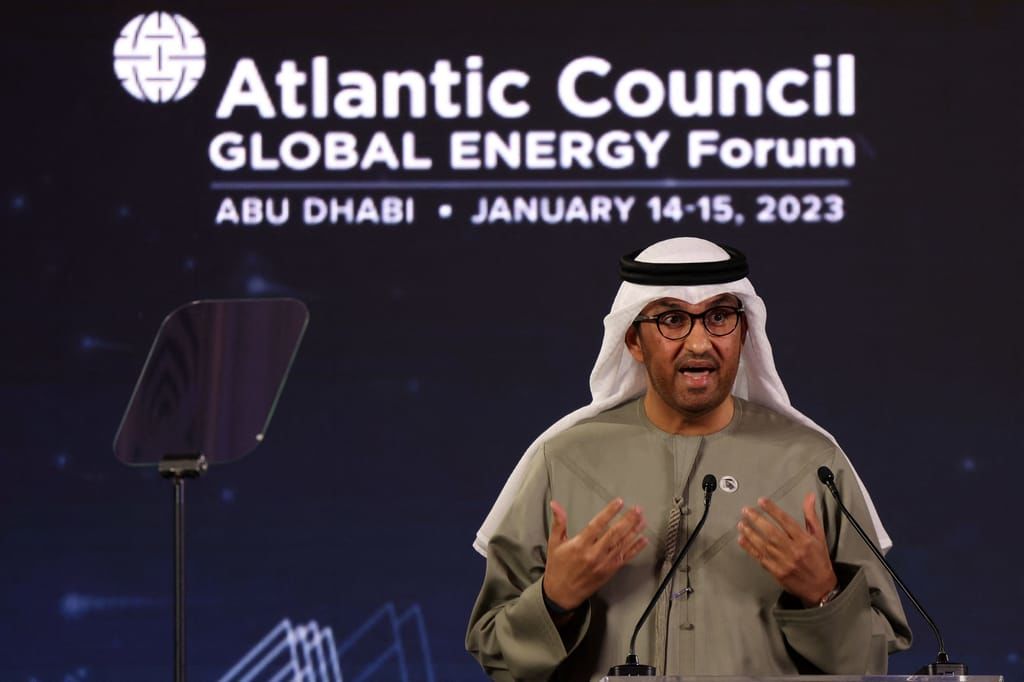

United Arab Emirates' Minister of State and CEO of the Abu Dhabi National Oil Company (ADNOC), Sultan Ahmed al-Jaber

The COP28 office told POLITICO: "The COP28 team is still being established and staff are housed in several different locations. Their dedicated office space is due to be available before the end of the month. In the meantime, there are clear governance guidelines in place to ensure the team can operate entirely independently from any other entity. The funding for the team and its activities have been entirely provided by the UAE government."

The UNFCCC did not respond to a request for comment.

Al Jaber confirmed earlier this month he has no intention of stepping back from his role of head of the state-owned oil company — a decision that seems to have prompted the U.N. agency to ask about how much time he's planning to devote to the new obligation, and whether senior members of staff will be ready to replace him at times when he will be unavailable due to duties linked to his other jobs.

The decision to name him as COP28 president — a role that calls for leading the talks — has sparked concern from campaigners.

NGOs like Oil Price International spoke of a “breathtaking conflict of interest” and said that Al Jaber’s selection amounted to “putting the head of a tobacco company in charge of negotiating an anti-smoking treaty.”

In addition to holding the reins of the national oil firm, Al Jaber also founded the renewable energy company Masdar in 2006 and has shaped the UAE’s climate action since becoming a minister in 2013.

His appointment has been largely endorsed by climate heavyweights.

EU climate chief Frans Timmermans said he was “ideally placed to help us move forward” in global climate talks, and noted how Al Jaber "has built up a huge reputation as a sustainability champion in the sector.”

U.S. climate envoy John Kerry called Al Jaber's appointment a “terrific choice” because he runs a company that will have to be part of the energy transition.

"Sultan Al Jaber has strong political clout and a decarbonization strategy for his country," said Agnès Pannier-Runacher, the French minister for the energy transition, saying the "UAE was one of the most advanced countries in the region, including on the climate front."

Newsletter

Related Articles

0:00
0:00
Close
Brothers Andrew and Tristan Tate Who Turned "Toxic Masculinity" Into a Brand Arrested in Miami as Britain Seeks Their Extradition
Passenger Bound for Germany Refused to Sit Beside a Woman on a Plane — Then Slapped a Flight Attendant
Ukrainian Drone Barrage Kills Eight and Strikes Russian Logistics Network
Key Trends to Watch
Financial Conduct Authority Warns Cloud and Digital Risks Are Becoming a Financial Priority
Jeffrey Donaldson Appeals Sexual Abuse Conviction as Democratic Unionist Party Opens Review
Welsh Health Authorities Launch Emergency Meningitis Vaccination Programme for Students
Scottish Business Activity Falls for Third Month as Companies Face Rising Costs
Bank of England Regulators Demand Better Access to Digital Banking Services
United Kingdom Cuts Bilateral Aid to Several African Countries by Up to Ninety Per Cent
United Kingdom Introduces Tougher Deportation Rules After Rochdale Exploitation Scandal
NHS England Launches Wearable Technology Plan to Reduce Sepsis Deaths
Amazon Web Services Billing Error Sends Trillion-Dollar Invoices to British Companies
Bank of England Takes Direct Regulatory Role Over Major Global Cloud Providers
Extreme Summer Heat Drives Record Fire Risk and Rising Deaths Across Britain
United Kingdom Nationalisation of British Steel Sparks Diplomatic Dispute With China
United Kingdom Economy Shows Weak Growth Ahead of Major Autumn Budget
Andy Burnham Set to Become United Kingdom Prime Minister After Labour Leadership Victory
The Ten World Cup Finals That Defined Football History
Smartphones Are Getting More Expensive, Sales Are Collapsing, and Even Apple Admits: "Prices Will Rise"
The Monaco Bombing Has Become a Test of Ukraine’s Intelligence Accountability
Leadership Change and Strategic Rivalry Redraw the Political Map
Energy Risk, Uneven Growth and the New Geography of Global Capital
The AI Race Enters Its Infrastructure Era
Security and resilience remain long-term national priorities
Britain balances growth ambitions with public finance pressures
Regional devolution becomes a defining theme of the next Labour era
Industrial strategy returns to the centre of British economic policy
Political Instability Remains a Challenge for UK Investment Confidence
Brexit Economic Debate Continues as Public Concerns Over Long-Term Impact Remain
UK Climate Risks Rise as Met Office Warns Extreme Weather Is Becoming More Common
Housing Shortages and Regional Inequality Become Key Priorities Under Incoming Labour Leadership
National Health Service Reform Remains One of Britain’s Biggest Political Challenges
Bank of England Remains at Centre of UK Economic Debate Over Inflation and Growth
UK Economy Shows Recovery Signs but Households and Businesses Remain Under Pressure
Britain Deepens European Defence Cooperation as NATO Allies Seek Stronger Security Capabilities
United Kingdom Expands Sanctions Against Russian Cyber Networks Over Security Threats
UK Industrial Strategy Faces Test After Government Takes Control of British Steel
British Businesses Seek Policy Clarity as Andy Burnham Prepares to Lead Labour Government
Andy Burnham’s Labour Leadership Signals Major Shift Toward Regional Power and Devolution
British Steel Nationalisation Creates New UK-China Tensions Over Control of Strategic Industry
For 36 Years, He Scammed About 300 Luxury Hotels — Until He Was Caught
England's World Cup Exit Expected to Cost Hospitality and Retail £334 Million
Former ICC Prosecutor Aide Speaks Publicly About Allegations Against Karim Khan
Opposition Raises Questions Over June Heatwave Power Grid Pressures
Mastercard Explores Sale of Majority Stake in UK Payments Operator Vocalink
Boeing Forecasts Global Commercial Aircraft Fleet Will Double by 2045
London GP Surgeries Receive £18 Million to Expand Primary Care Capacity
Health Advisers Recommend Nationwide Meningitis B Vaccination for Teenagers
OECD Warns UK Economy Faces Slower Growth and Weak Productivity
×